Tom Segev, one of Israel’s most renowned historians, has broken a decades-long silence. On his 80th birthday, he declared that Zionism—Israel’s founding ideology—was a mistake.
In a deeply personal interview with Haaretz, Segev said, “Zionism is not such a great success story. It also doesn’t provide security to Jews. It’s safer for Jews to live outside Israel.” He added that Zionism created myths instead of solutions.
Born in Jerusalem in 1945 to Jewish German parents who fled the Nazis, Segev has spent more than 50 years researching Israel’s history. His books include 1967, The Seventh Million, and Soldiers of Evil, all known for challenging Israeli narratives.
In the interview, Segev shared a painful truth about his father’s death. He grew up believing his father was killed by an Arab sniper during the 1948 war. “I was able to say that he was killed during the War of Independence and that I was a war orphan.”
But later, Segev’s sister revealed a different story. Their father had actually died in a freak accident—falling from a drainpipe while trying to deliver coffee to guards. He stated that he was brought up on a lie.
This moment of reckoning made him question everything—including the stories Israel tells about itself.
Segev now says the Zionist project was never meant for people like his parents. “My parents started to plan their return to Germany”, he revealed. “They were never Zionists and they wanted to go home. A month after the last letter my father wrote to a friend about how much he wanted to go back – he was killed.”
Despite growing up in Israel, Segev never fully embraced Zionist ideals. He stressed that much of what Israelis were told was myth.
In his academic work, Segev often turns to documents rather than oral testimonies. He famously challenged former Prime Minister David Ben-Gurion in a 1968 interview, questioning the idea that Ben-Gurion became Zionist at age three.
Segev believes the Holocaust has been politically weaponized. In The Seventh Million, he argued that instead of teaching democracy and human rights, Israel used the Holocaust to fuel fear and justify wars.
He also criticized internal discrimination within Israeli society. In his book 1949: The First Israelis, Segev exposed how Jewish colonial settlers from Arab countries were pushed into camps, while Europeans were given hotels.
Segev insists he isn’t ideological. “People have also said I am anti-Zionist, but I am not an ideologue and not a philosopher, and I don’t think in terms of ideologies,” he says. “It was said that I want to shatter myths. But that’s not true, either. I was not part of the ‘New Historians’ but rather of the ‘First Historians.’ With respect to the state’s establishment there was no history here – just mythology and a great deal of indoctrination. In the 1980s we opened documents in the archives and said, ‘Wow, this isn’t what we were taught in school.’”
“We need to remember that the majority of the Holocaust survivors did not come to live in Israel and that the majority of Jews in the world are not coming to Israel”, he stressed. “They can, but they don’t want to live in this country. So Zionism is not such a great success story. It also doesn’t provide security to Jews. It’s safer for Jews to live outside Israel,” as reported in the Quds News Network.
When Donald Trump become US president and just before, many in the world and the Middle East thought he would have the imagination to end the Israeli war on Gaza.
But everyone, including this writer, were sadly mistaken. He appears to be fueling the conflict on the little enclave and satisfying the inclination of Israeli Prime’s Benjamin Netanyahu’s appetite for repeated genocide on the territory.
It has become quickly, and blatantly obvious that Trump was not in interested in wrapping up this catastrophic war and ending it but to follow the machinations of the previous Joe Biden administration of adding fuel to the fire, giving Israel more open-cheque, deadly arms under the pretext of finishing the presence of Hamas in Gaza.
The fact that the Israelis with the help of the Americans were only killing more helpless civilians most of whom are babies, toddlers, children and women was neither here nor there. Their bombs fall on what used to be residential areas and certainly not on Hamas fighters and other operatives.
While Trump must be credited for achieving a ceasefire on Gaza in 19 January, 2025, just days before he officially entered the White House, he did nothing to stop Netanyahu when he re-started the war on the strip exactly two months later on 19 March and continues to do so today with no end in sight.
Despite the diplomatic trips of his personal envoy in the name of Steve Witkoff, Netanyahu is thought to be telling Trump that the war on Gaza will continue till Israel roots out Hamas from the enclave regardless of the mostly-Israeli hostages, now standing at 59 and half of whom are in body bags, thanks to the constant Israeli bombardment of the Palestinian enclave.
Despite his “peace” boasts, Trump has long appeared to be giving Netanyahu the green light to continue the war on the strip as he already stated he wants to displace the Gaza Palestinians to safer places such as Jordan and Egypt while the United States goes into the Strip and clns up the Israeli-purpetrated ruins and develops into a so-called Middle East Riviera under the pretext that Gaza has become an unlivable area.
It would have been nice of the new peace-tainted US president to say that Gaza was unlivable because of the mass Israeli bombing but Trump is well-aware of that since America has been the superpower behind this genocide since 7 October, 2023.
While he may have since backtracked on the transfer issue because of the mass opposition to it not least of all from Arab countries and the Palestinians themselves Trump’s displacement idea has since become a catchphrase for Netanyahu and other Israeli politicians in his extremist government as a feasible idea to be carried out on a “voluntary” basis and which they are now preparing the ground framework for.
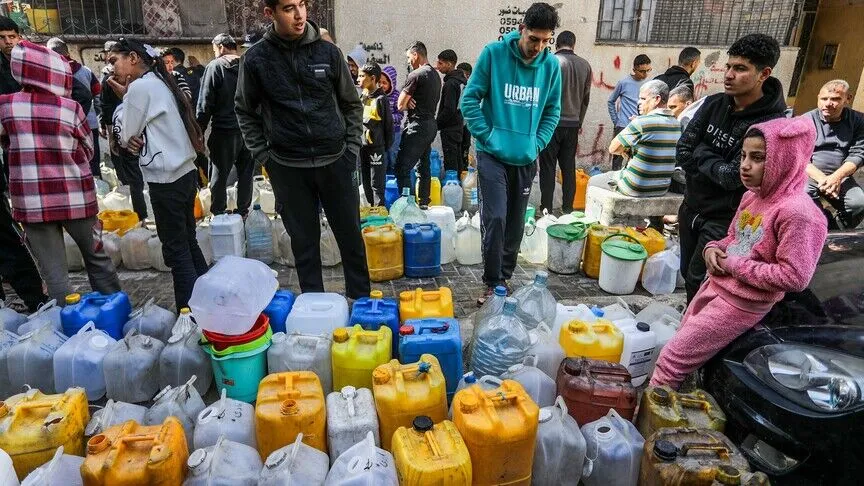
Today Gaza is in a ruinous state. After the 19 January ceasefire, UN food and aid trucks started to enter the beseiged enclave, however all that has stopped when Israel re-started its war on the lone-standing territory. Israel has reinstated the sieged, sealing the Strip with no aid lorries being allowed with the trucks once again standing on the dfifferent entry points of Gaza including Rafah.
For Gaza it is back to the bad old days of starvation, Israeli bombardment, targetting at civilian tents in places like Mawasi and bombing hospitals, a bloody status quo that continued from just after 7 October, 2023 till 19 January 2025 and is resumed today.
Only Trump can stop the present carnage. Only he can put an end to the bloody actions that are being dictated by Natanyahu who is hell-bent on continuing to destroy and kill the people of Gaza who presently stand at 2.1 million.
It is ‘sealed’ starvation for Gaza. It has been now over 50 days when nothing has been allowed to enter the strip but the road is long and the people are bracing themselves for more deaths, not to mention the deadly strikes carried by Israeli planes and drones carried out on a daily basis.
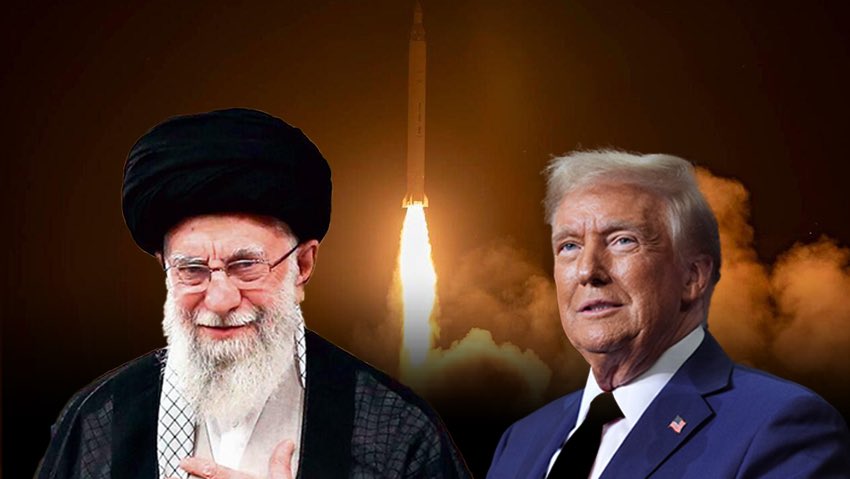
All eyes now are on the new game in the Middle East: The US-Iran negotiations. One would say the aim here is far more advanced than the Iranian nuclear programme when the agreement was torn up by US President Donald Trump himself who was more concerned with details which would eliminate all threats against Israel, and would that in all liklihood, transform the whole region.
It seems that in this early intense stage, the ambiance is for reaching an amicable agreement through the recognition that no matter of the outcome, there will be nothing divisive. Trump will continue creating crisis just for the sake of showing that he can control those crises, and act in the manner of the old Arabic adage, for neither the wolf to die nor the sheep to parish. While for the Iranians, they have everything to gain from a positive outcome to those negotiations.
Of course, the Iranian nuclear programme is an important component of these negotiations, and most often than not, at times Iran and at times its enemies, exaggerate the potential of the country to making nuclear weapons for political purposes.
Yet the fact remains that despite the possibility of Iran being still far from creating weapon-grade enrichment programme, if carried on unchecked, it is inevitable that at one point in the future it will have nuclear weapons. Consequently the fact remains, the onus is on Iran to prove credibly that its nuclear programme is for peaceful purposes, and accept periodically, the checks of the international nuclear inspectors.
The other dimension is the relationship of Iran with its proxies in the region, which falls under the category of threats to Israel. Well, and under the circumstances, Iran has to decide the reasons for its continued alliances with its proxies – whether such alliances served their purpose, or have become a burden than an asset – or if it can maintain these alliances with definte no threat commitment Israel but with political clout in Arab world affairs, which incidentally may not seem such a bad idea for Trump.
After all eliminating the threat against Israel is the primary concern, while at the same time his rich Arab allies buy their protection from him, a protection which Iran cannot dare to test.
But what is in it for Iran to reach an accord with the United States? One would say plenty. For a start it’s reintegration back into the region. After all it kept claiming it’s nuclear programme, is in reality, a peaceful programme and Tehran never had the intention of enriching weapons grade uranium.
Well, and with an accord it can now easily prove, and then can start dealing with the issue of not being a threat to Israel by either dissociating itself from these proxies which have become costly to its image and/or work in their transformation to political, unarmed forces and parts of the political structures wherever they exist in the Arab region.
Essentially if the sanctions against Iran are lifted and its assets are no longer frozen, Iran will be able to assume a very strong position in the Middle East region based on its economic strength and its enormous trade potential. In fact, Trump knows that any military action he takes against the Iranian nuclear installations, and any possible response will not have a decisive result. Therefore, the most likely decisive result will be, a new Iran, big in the region as well as moreover, that will owe him a favour.
In the meantime , we are still at the very early stage to even try to guess, but we can safely assume, that no matter how those negotiations proceed, nothing tangible is likely to happen before the visit of President Trump to the Gulf region in May.
Dr Khairi Janbek is a Jordanian analyst based in Paris, France
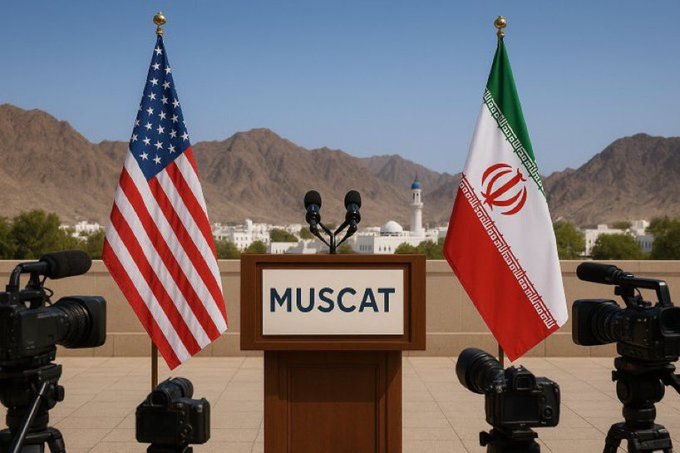
EDITOR’S NOTE: This editorial, written by Abdul Bari Atwan, chief editor of the Arabic Al Rai Al Youm website, on Saturday, 12 April, relates to the first talks of the Tehran-Washington negotiations that started in Muscat, Oman relating to the Iran nuclear file.
Iran succeeded in scoring a major goal against the United States in the clash of wills that began today, Saturday, in the Omani capital, Muscat, by insisting that the negotiations be “indirect,” contrary to what its American adversary wants: Namely “direct” negotiations as announced by US President Donald Trump at the White House in his meeting with Israeli Prime Minister Benjamin Netanyahu last week, who was surprised by this shocking announcement.
The US delegation, led by Trump’s Advisor Steve Witkoff, is participating in these talks from a weak and defeated position, especially after the failure of the US plan to impose tariffs on more than 200 countries worldwide. America has become friendless, and even turned its friends into enemies, especially in Europe and Southeast Asia like South Korea and Japan.
Strategies of negotiations
Iran, represented in the negotiations by veteran Foreign Minister Abbas Araqchi, the man who led the negotiations for the first nuclear agreement with the six major powers in 2015 and possesses extensive experience in the art and strategies of negotiation, did not submit to the “threats and intimidation” adopted by President Trump.
They imposed their conditions in full on their American opponents and insisted on limiting the negotiations to the nuclear issue, not addressing other issues such as missile and drone systems, and severing ties with the arms of the resistance in Gaza, Lebanon, Yemen, and Iraq. And they got what they wanted.
The one who called for a return to a diplomatic solution to the Iranian-American crisis and backed down from his threats of a devastating military strike was President Trump. This happened when he realized the threats of military strikes, coupled with the dispatch of three American aircraft carriers and squadrons of giant B-52 bombers, backfired.
These did not intimidate the Iranians, but prompted a response from Iran’s Supreme Leader Ali Khamenei, who declared a state of emergency in the Iranian military, placed giant missile platforms, advanced submarines, and ground and naval forces on high alert, and threatened to destroy all of the 10 military bases surrounding his country and housing 50,000 soldiers, close the Strait of Hormuz, and prevent Gulf oil exports to the entire world.
The Iranians do not trust President Trump, who tore up the nuclear agreement in 2018, and is well aware he has become an Israeli puppet. He also realizes that America, defeated in Ukraine, did not simply march to Moscow waving white flags, ready to sell Ukraine and its people to the Russians and surrender to all of its conditions, including the annexation of a fifth of Ukrainian territory to Russia, without consulting its European allies, whom it has become embroiled in this war.
When President Trump demands that the Muscat negotiations reach a quick agreement within two months, this is due to his bitter experience in the Vienna negotiations, which lasted a year-and-a-half and ended in failure due to Iran’s cunning use of the “yes, but” theory, without offering any concessions.
Globally hated…
We do not believe that this theory will be abandoned in the Muscat negotiations, especially since America, which is now globally hated and has lost all of its allies in the West and the East, has become weak, and is on the brink of bankruptcy due to the huge deficit in its annual general budget ($1.4 trillion) and its public debt that has reached more than $42 trillion.
What will encourage Iran to harden its position in these negotiations is China’s strong and defiant stance in the trade war against the United States. Its president, Xi Jinping, declared he will respond in kind to America and its president, and will fight this war to the end, no matter how costly the results.
He has decided to raise customs duties on American goods by a historic rate of more than 125 percent, and has given the green light to his allies in the BRICS group to declare war on the dollar and the global SWIFT financial system, through which America controls the global economy and financial movement.
Trump, wounded by the failure of his gamble to ignite a trade war, and the internal and global revolt against it, with the beginning of the decline in the value of the dollar and the escalation of the recession in the American economy as its first fruits, was forced to stop this war less than three days after its announcement under the cover of a three-month freeze on the application of customs duties.
Crushing military strike
Hence, his threats, i.e. Trump’s necessity of quickly to reach a nuclear agreement didn’t have any effect despite the threat of a crushing military strike. Iran’s respond to Trump forced him to make a major, unprecedented concessions to save face.
Iran, which has suffered significant losses in Lebanon, with the weakening of its powerful military arm in that country (Hezbollah), and in Syria with the fall of the President Assad’s regime, undertook rapid reviews internally and regionally, abandoning many of its policies pursued in recent years, after realizing that the knife is approaching its neck, and that the American-Israeli conspiracy does not only seek to destroy it and remove its military claws and fangs, but also to change the Islamic regime there.
The results of these reviews reflected in the transition from a phase of patience and long-suffering to a phase of confrontation in its military and political aspects, and the strengthening of its allied military arms, starting with the striking Yemen whose arm there is waging heroic wars not only against aircraft carriers and American warships in the Red and Arabian Seas, but also by intensifying ballistic missiles and drone bombardment of the occupied Palestinian interior in Jaffa, Haifa, and Eilat, accelerating the recovery process for Hezbollah in Lebanon, and finding other ways to deliver military supplies to it.
After the historic Syrian corridor was closed with the fall of the Assad regime, America became a farce in the first months of Trump’s rule. It’s no surprise that Iran and its allied proxies are among the biggest beneficiaries and gloaters. He who laughs last laughs loudest… and the days will tell!
The Arab world lies in one of the most important global strategic locations, controlling most of the major commercial transportation routes. It is rich in natural agricultural and industrial resources and has always been a prime target for Western colonial powers, which periodically launched military campaigns to occupy and control our world, starting from the heart of the Arab world, Palestine, known as the Holy Land, and expanding to the Levant in the north — Lebanon, Syria, Iraq, and Jordan— then to Egypt, and it’s rich in its fertile Nile River, and finally to the Arabian Peninsula in the south.
When we look back in history, we find these military colonial campaigns against the Arab world—especially Palestine—were numerous, even dating back to before Christ, such as the campaign of Alexander the Great (336 BC–323 BC) and the Roman colonial rule (63 BC–324 AD). Moving on to the ages after Christ, we recall, for example, the eight Crusades over nearly two centuries (1096–1291), followed by Napoleon Bonaparte’s campaign (1799–1801), and finally the Talmudic Zionist campaign initiated by Theodor Herzl in 1896, which continues into the present day.
These post-Christ colonial campaigns were primarily charged with religious fervor and can be termed as religious wars. In fact, Pope Urban II in 1095 described them as a “holy war” to liberate the holy city of Jerusalem from the “brutal” Muslim Arabs. As for Napoleon Bonaparte, who was defeated at the walls of Acca, he promised the Jews he would help them reach the “Promised Land,” holy Jerusalem, if they aided him in his colonial campaign.
Finally, at the present time, Britain, France and Germany came first, followed by all the US presidents who started supporting Zionist colonialism financially, politically and militarily to “recover” the “Promised Land” promised by a “racist” god biased towards the Jews to “rebuild” the alleged Temple of Solomon in the city of Jerusalem and to build Greater Israel.
All these colonial campaigns attempted to divide the Arab world into small, weak states by perpetrating genocides against their many Arab peoples. They destroyed and burned cities, tortured and killed civilians, and raped women, girls, and even boys, just as Zionist Israel is doing now in Palestine. However, past genocides cannot be compared to the brutality and brutality of the Zionist genocide against the Arabs of Palestine, from 1947 to the present day, due to the power of modern, highly destructive and lethal weapons.
The Arab nation was able to defeat all past colonial campaigns because of the people’s sense of belonging to their homeland and their unity, undivided by distance or borders, and led by brave, honorable, national leaders who sought the best for the entire nation.
The western colonialists noticed this inherent sense of belonging within the nation and decided to target it. After World War II, Britain, then the Great Power, agreed with France in the Sykes-Picot Agreement, to break the pact it signed with Sharif Hussein bin Ali. This agreement divided the Middle East into small states, appointing rulers loyal first to Britain and then to the current American administrations.
How can the men in the Arab world sit back while the carnage is unfolding in #GazaGenocide ? Have you all forgotten who you are? Children of Azzam, Mukhtar and the Ouled Darradj? Here are the words from a brother in Khan Younis less than an hour ago. “The Israelis have killed 490… pic.twitter.com/ZhECfHaic3
— Yvonne “Newcastle 🏆” Ridley (@yvonneridley) April 6, 2025
To further weaken these Arab states, the Western Axis powers divided the economies and financial systems of these states, rendering them alien and compete with each other. They also sowed division and religious, regional, and ethnic animosity among the Arab nation, allowing Zionist colonialism to penetrate the Arab world, beginning with Palestine.
Unfortunately, most Arab leaders failed to attempt to restore Arab unity and unify the people, economy, and currency, as the late Egyptian President Gamal Abdel Nasser attempted to. Instead, what was spread was division, hatred, competition, animosity, and even war among Arab peoples, as has happened in Lebanon, Iraq, Syria, and Yemen, and what is currently happening in Arab African countries such as Libya, Algeria, Morocco, and Sudan.
Worst of all is the spread of the philosophy of distancing oneself from the problems of any neighboring Arab country. Some leaders consider that the wars that take place in a neighboring Arab country do not concern them as long as these wars do not affect their country, even in the short term. We see this now clearly in what is happening in Palestine, especially the extermination of the Arabs of Gaza.
The heads of neighboring Arab countries are trying to convince their people that their national interest requires non-interference and to distance themselves to avoid destructive wars and to leave the Palestinians to resist the Israeli occupation alone.
Israel, launching pad
It would be better for these leaders to warn and inform their people that Israel is a launching pad for a broad western colonial campaign aimed firstly at destroying the Arab homeland and colonizing it by planting Zionist terrorism in the form of the Israeli entity which aims to expand from the Nile to the Euphrates, from the far south of the Nile – on the Sudan borders – to the far north of the Euphrates – to the Turkish borders – to build what is called Greater Israel in the Promised Land promised by a racist land broker god to a criminal, savage, genocidal people.
Secondly, for this Zionist entity to grow from Great Israel to Greater Israel it is going to move to the south to include all of the Arabian Peninsula – to recover Khaybar and Yathrib and their dependencies – then move west to the northern coast of the African continent, extending to Morocco and control the entire Arab world, monopolizing the most important strategic locations internationally, and global maritime trade routes between East and West, including the Strait of Hormuz on the Persian Gulf to the Arabian Sea, passing through Bab al-Mandab Strait to the Red Sea, then via the Suez Canal to the ports of occupied Palestine, and from there to the Western world via the Mediterranean Sea to Europe. And across the Giberalter Strait to the Americas – the ultimate goal of the Greater Israel Project.
All we have to do is listen to and understand the Israeli (and American) statements, both public and broadcast, clearly and vociferously, that the goal of Israel and the West is to exterminate all Arabs, just as they did to the Native Americans—they call them Red Indians— to build Greater Israel and control the Arab world and its natural resources. The evidence of these goals is clear, such as the destruction of Iraq and the theft of its wealth, and the establishment of American military bases along the Arab states on the western coast of the Persian Gulf.
We also witnessed how the Western colonial powers destroyed, divided, and weakened Libya and stole its wealth, then spread enmity between Algeria and Morocco, waged a war of extermination in Sudan, and then divided Syria and Lebanon, weakened Jordan, and effectively occupied it with American, British, and French military bases. All that remains is Egypt, which is subjected to economic occupation through conditional World Bank debt and by allowing other countries to purchase Egyptian land, real estate, and companies, which will ultimately lead to Egypt’s economic collapse.
Many people from all over the world, regardless of their ethnicity, religion, or language, are taking to the streets in massive, daily and weekly marches and demonstrations in solidarity with the Arabs of Palestine, against Israeli brutality, against Western countries, and against their own governments, which fund and supports Israel politically and militarily.
They wonder why the Arab peoples don’t take to the streets in solidarity with the Arabs of Palestine, demanding that their Arab governments personally intervene to protect and assist the Palestinians, instead of these governments begging for assistance from the powerless United Nations. Have the Arabs lost their humanity and solidarity with their Arab brothers in Palestine, or are they simply cowards and selfish and unable to do anything?
Dr. Elias Akleh is a Palestinian writer who contributed this article the Arabic Al Rai Al Youm website. This is a translated piece that was slightly edited at the end for the sake of brevity.

 CrossFireArabia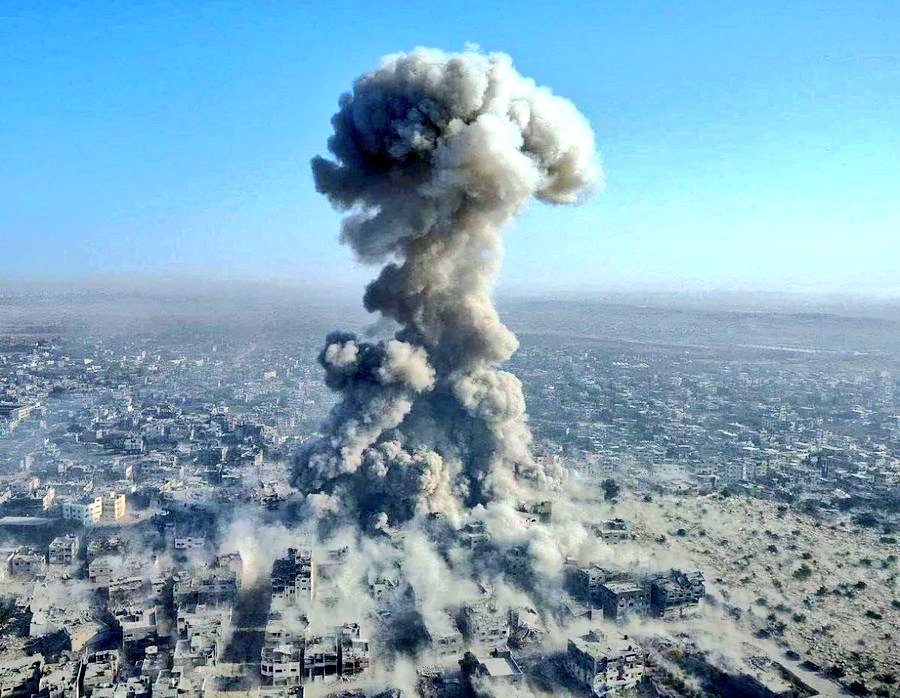
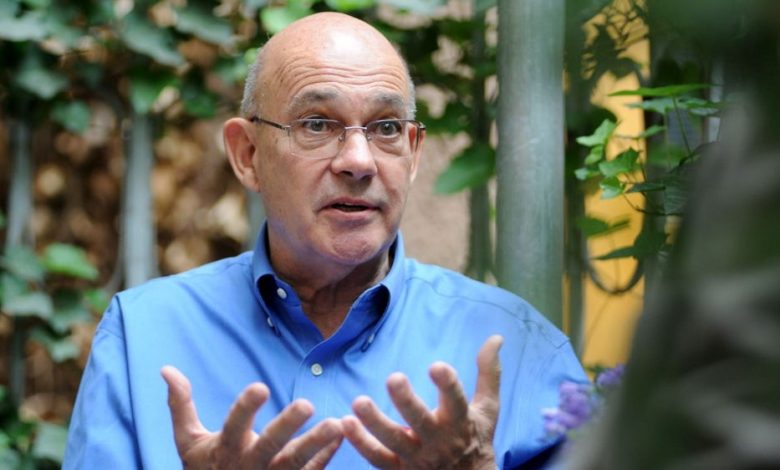
 Dr Khairi Janbek