Rafah Crossing Reopens Under Strict Conditions

The Rafah crossing officially reopened on Monday, marking a partial resumption of movement between the Gaza Strip and Egypt after more than a year and a half of closure imposed under Israeli military control.

Egyptian official media confirmed that the crossing began operations with an initial exchange of travelers, allowing a limited number of Palestinians to leave Gaza and a smaller number to return. According to Egyptian and Israeli media reports, approximately 50 people were expected to cross in each direction on the first day, while around 150 patients and their companions were scheduled to exit Gaza for medical treatment in Egypt.

The Palestinian side of the crossing began operating on a trial basis on Sunday, following Israel’s completion of a new security corridor inside the terminal. Israel has controlled the Palestinian side of Rafah since May 2024, during its military campaign on Gaza that began in October 2023.

Strict Controls and Israeli Oversight

Under the current mechanism, all movement through Rafah is subject to prior Israeli approval. Israeli authorities have established a screening corridor—referred to by Israeli officials as “Regevim”—where identities are checked against pre-approved lists. Security procedures reportedly include physical searches and facial-recognition technology.

Palestinian personnel are operating the crossing under European Union supervision, while Israel maintains control over security approvals. The EU’s foreign policy chief described the reopening as a “positive step,” confirming that European monitors are present on the ground.

However, Palestinian officials say the process remains opaque and heavily restricted. Gaza’s government media office warned that the reopening risks becoming a “new form of siege” if Israel continues to impose unilateral conditions.

Medical Emergency

The limited reopening has underscored the scale of Gaza’s medical catastrophe. Gaza health officials estimate that at least 22,000 patients and wounded individuals urgently require treatment outside the enclave, including thousands of children and critically ill patients.

Dr. Mohammad Abu Salmiya, director of Al-Shifa Medical Complex, said Gaza hospitals were informed that only five critically ill patients would be allowed to leave on the first day, a figure he described as “catastrophically insufficient.”

Health authorities report that more than 1,200 patients have died over the past months while waiting for permission to leave Gaza for treatment.

Who Can Leave—and Who Cannot

According to Israeli and Egyptian officials, movement through Rafah is currently restricted to Gaza residents only. Israel approves exit lists in advance, while Egypt reviews entry requests. Palestinians who left Gaza during the war may return only after coordination with Egyptian authorities and Israeli security approval.

Foreign journalists are not permitted to enter Gaza through Rafah under the current arrangement.

Criticism and Political Reactions

Palestinian officials and rights groups say the reopening fails to address Gaza’s broader humanitarian needs. While movement of individuals has resumed on a limited scale, there has been no corresponding easing of restrictions on humanitarian aid, fuel, or essential goods.

Hamas warned that any Israeli obstruction at Rafah would constitute a violation of ceasefire understandings, urging mediators and guarantor states to closely monitor Israeli conduct at the crossing.

Critics argue that the gap between Gaza’s medical needs and Israel’s imposed movement quotas highlights the punitive nature of the current system. At the present rate, it would take months for critically ill patients to exit Gaza—assuming no further disruptions.

Siege Intact

While the reopening of Rafah has been welcomed as a symbolic break in Gaza’s isolation, Palestinians stress that the crossing remains firmly under Israeli control. For thousands of patients, families, and displaced residents, Rafah’s reopening has so far offered limited relief—raising fears that the enclave’s humanitarian crisis will persist despite the appearance of movement – Palestine Chronicle

Continue reading
‘Iran Ready For Diplomacy’

Iran is ready for diplomatic negotiations, the country’s foreign minister said Monday, as tension continues to rise between Tehran and Washington.

“We are ready for diplomacy, but diplomacy also has its own principles. I hope we will see results soon,” Abbas Araghchi said during a visit to the shrine of Ayatollah Ruhollah Khomeini, the architect of Iran’s 1979 Revolution according to Anadolu.

“Iran’s enemies, who failed to achieve their goals,” whether through last year’s 12-day war or recent protests “have now turned to diplomacy.”

“These same parties are talking about diplomacy today, even though Iran has always been ready for this option, provided there is mutual respect and consideration of interests,” he added.

In June 2025, Israel, backed by Washington, launched a 12-day attack on Iran that targeted military and nuclear sites as well as civilian infrastructure and killed senior commanders and scientists. Iran responded by striking Israeli military and intelligence facilities with missiles and drones before the US announced a ceasefire.

Araghchi’s remarks came amid heightened tensions between Iran and the US, with the American military fleet reportedly heading toward the region, as announced by President Donald Trump.

Trump confirmed that a large US “armada” was en route to the region, warning Iran to enter negotiations over its nuclear program or face potential military action.

In recent days, there has been intense diplomatic activity, with several regional countries – including Turkiye – intervening to ease tensions between the two nations.

Continue reading
Latest Massacre is Evidence There is No Ceasefire – Expert

The latest massacre perpetrated by the Israeli occupation army in the Gaza Strip, which resulted in the martyrdom of 31 Palestinian civilians, including at least 8 children and 9 women, is clear evidence that there is no genuine ceasefire except on the Palestinian side, said Secretary-General of the Palestinian National Initiative Dr. Mustafa Barghouti.

He explained to Jordan 24 that Israel does not take any political or legal obligations seriously, emphasizing that the situation on the ground proves that the occupation continues to commit crimes against civilians, while the international community refrains from imposing any deterrent sanctions or holding it accountable for its ongoing violations.

Barghouti pointed out the continued bombardment and targeting of civilians confirms that Israel does not recognize international law. He noted the occupation is not content with killing civilians, but also disregards international humanitarian law and UN Security Council resolutions, thus undermining any real opportunity for a ceasefire.

Barghouti stressed that the responsibility of international mediators is not limited to managing communications, but also requires them to speak the truth clearly: That the occupation is the party violating the ceasefire and undermining political efforts. He called on the international community to take immediate action to stop the crimes and hold those responsible accountable.

He emphasized the international community’s silence encourages the occupation to continue its policies and provides it with political cover to continue targeting civilians. This necessitates a firm international stance to put an end to these repeated violations.

Continue reading
Israel Kills 31 Palestinians in One Day

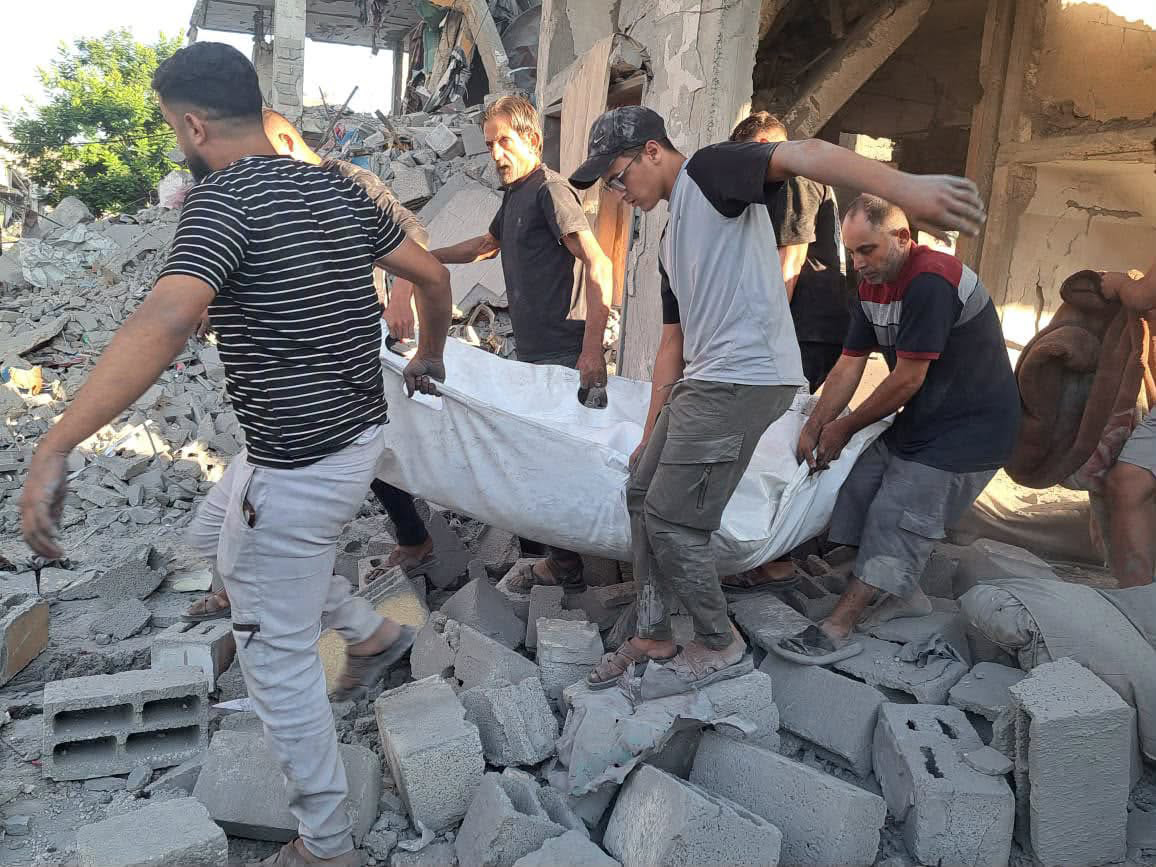
Israeli forces killed at least 31 Palestinians in Gaza on Saturday as airstrikes and shelling continued across the besieged enclave, despite a Trump-brokered ceasefire.

The Ministry of Health said dozens of civilians were killed or wounded in new attacks by the Israeli army, while Hamas stated that Israel is deliberately undermining the ceasefire agreement and committing fresh massacres across the strip.

Hospital sources said Israeli fire killed 31 Palestinians outside Israeli deployment zones in Gaza City and Khan Younis, in central and southern Gaza, since dawn on Saturday. At least 24 of the victims were reported in Gaza City and northern areas of the enclave.

Al-Shifa Hospital said the death toll rose after Israel attacked a police headquarters in Sheikh Radwan neighborhood of Gaza City. Emergency and ambulance services also confirmed that two Palestinians were killed in an Israeli strike on Al-Nasr neighborhood in western Gaza City.

Field reports showed that Israeli attacks focused on residential neighborhoods and areas sheltering displaced families. These areas included Al-Tuffah and Sheikh Radwan in Gaza City, as well as displacement camps and tents in Al-Mawasi area west of Khan Younis.

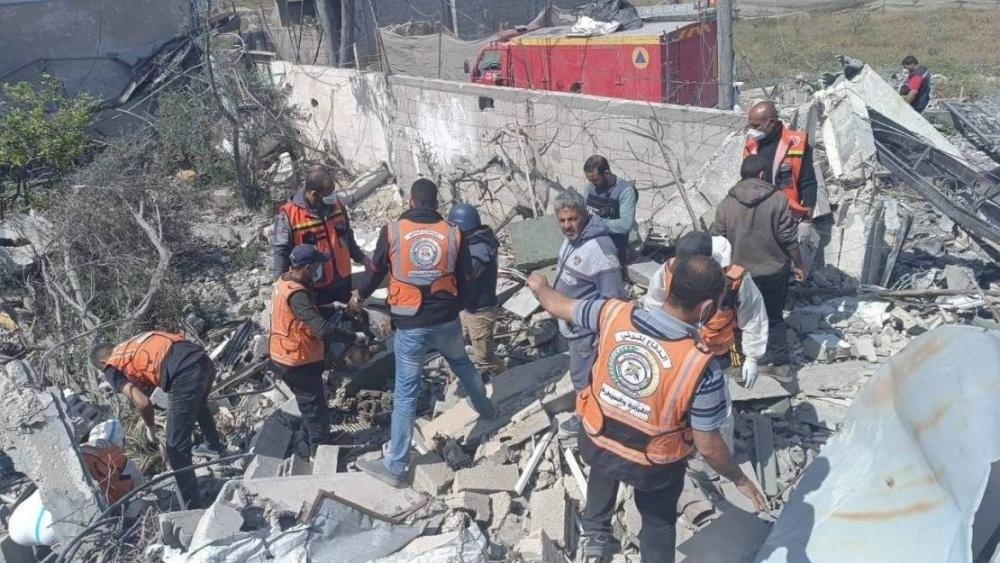
The latest strikes triggered large fires in displacement tents at “Ghaith” camp west of Khan Younis, according to Gaza Civil Defense. Rescue teams said the fires added a heavy burden as they responded to bombardment and widespread blazes at the same time.

Gaza’s Interior Ministry said the Israeli attack on Sheikh Radwan police headquarters showed clear disregard for the ceasefire and the international mediators backing it. The ministry said the strike killed five police officers and injured 15 others, in addition to civilians and displaced people who were near the site.

The ministry urged mediators to take responsibility and pressure Israel to stop its violations and spare civilians and civilian facilities from continued attacks.

Earlier on Saturday, hospital sources said Israeli fire killed 12 Palestinians, including six children, in Gaza City and Khan Younis.

In southern Gaza, an Israeli airstrike on “Ghaith” displacement camp in Al-Mawasi killed seven members of one family after their tent was hit in a densely populated area for displaced civilians. The Civil Defense said several others were wounded in separate strikes that targeted tents sheltering displaced families.

Israeli artillery shelling in areas inside Israeli troop deployment zones in Al-Tuffah neighborhood, northeast of Gaza City. Ambulance services also said Israeli strikes hit a residential apartment in Gaza City, killing and injuring several Palestinians.

Gaza Civil Defense spokesperson Mahmoud Basal said most of Saturday’s victims were children. He said Israeli strikes do not distinguish between civilians and fighters and described the situation as a systematic humanitarian catastrophe. He added that Israeli forces used high-explosive missiles, causing widespread destruction and fires.

Palestinian Red Crescent spokesperson Raed Al-Nims said ambulance crews face unprecedented challenges as Israeli attacks continue to hit homes and displacement camps, while most medical facilities remain damaged. He called on the international community to pressure Israel to halt its violations and allow medical teams to work without obstruction according to the Quds News Network.

Israeli Claims and Palestinian Response

The Israeli newspaper Maariv quoted the Israeli army as claiming that its air assaults in Gaza would continue, claiming it responds to alleged “serious incidents” that allegedly violated the ceasefire. The army claimed that it targeted Hamas and Islamic Jihad commanders, weapons depots, and military infrastructure.

Hamas rejected the Israeli claims and said the continued targeting of displaced people’s tents marks a dangerous escalation and a deliberate collapse of the ceasefire. The resistance movement described the attacks as a new massacre and a blatant violation of the agreement.

Hamas said Israeli actions confirm the continuation of a war of destruction against Gaza and a disregard for mediation efforts. It called on guarantor states and the US administration to intervene and stop policies that undermine the ceasefire.

The movement also demanded an immediate transition to the second phase of the agreement, including opening the Rafah crossing in both directions and enabling the national committee to operate freely in Gaza.

Since the ceasefire took effect in October, Israeli forces have killed 524 Palestinians and wounded 1,360 others.

The International Committee of the Red Cross said continued Israeli bombardment places extreme pressure on Gaza’s collapsed health system. Egypt’s Foreign Ministry also condemned repeated Israeli violations of the ceasefire, warning they pose a direct threat to the political process.

Continue reading
Little Hind Rajab: Killed by Israeli Bullets

On the second anniversary of Israel’s killing of five-year-old Hind Rajab who pleaded by phone to be rescued during the Gaza genocide, human rights organizations and advocates have renewed their calls for accountability and justice for Palestinians amid Israel’s ongoing attacks.

On January 29, 2024, Hind was killed while trying to flee to safety after the car she was traveling in with her relatives was fired on by an Israeli tank. Everyone in the vehicle was killed except Hind and her 15-year-old cousin, Layan, who called the Palestinian Red Crescent begging for help.

Layan was killed shortly after, leaving Hind alone on the line.

Two medics dispatched in a clearly marked Palestinian Red Crescent ambulance to rescue her were also targeted by Israeli tank fire as they approached. Despite coordinating their route with Israeli forces and maintaining direct contact during the mission, their ambulance was struck, killing both medics instantly. The destroyed vehicle was later found near the site where Hind’s car had been attacked with 335 bullet holes.

A recording of the phone call was widely shared on social media after her death, causing renewed international outrage over Israel’s attacks on civilians.

Rajab is heard sobbing and telling the Red Crescent Society, “Please come to me, please come. I’m scared”, while bullets were fired in the background.

Hind’s mother, Wissam Hamada, said, “The whole world has left us to die, to go hungry, to live in fear and to be forcibly displaced without doing anything.”

In June 2024, Al Jazeera investigated the attack, providing a detailed reconstruction of the incident, in collaboration with nonprofit investigative groups Forensic Architecture and Earshot and revealed that an Israeli tank was just 13 to 23 metres (42 to 75 feet) away when it opened fire on Rajab’s car.

Moreover, a United Nations report in July 2024 found, citing forensic analysis, that Rajab’s car was shot at from “very close range using a type of weapon that can only be attributed to the Israeli forces”.

Marking the second anniversary, the The Hind Rajab Foundation, a Belgium-based pro-Palestine group which leads a legal push against Israeli soldiers’ war crimes and crimes against humanity in Gaza and was named after the five-year-old child , said, “Many — including Israeli leaders and the thousands of soldiers and officers under their command — act as if justice will never catch up with the crimes Israel commits. Many believe the relentless assault on the universal values enshrined in international law will continue without consequence.”

“We build files. We compile forensics. We gather testimony. We track perpetrators. We prepare arrests, extraditions, and charges.

The pathway from filing a case to conviction is arduous.”

“This does not mean justice will never be served. It means justice is a process — and we, the lawyers, advocates, and war-criminal hunters, will not be deterred.”

Social media activists shared posts recalling Hind’s final moments, along with her photographs, accompanied by messages of ‘Rest in peace’ and ‘Never Forget’.

Amnesty International said, “Hind is one of the at least 20,179 children who have been killed by Israeli forces in Gaza since October 2023 – according to the latest reports from the United Nations. The real figure is likely much higher.”

“Justice for Hind Rajab requires not only her killers to be brought to justice. The architects of the genocide in Gaza must be held accountable too. Benjamin Netanyahu and Yoav Gallant must face trial at the International Criminal Court for war crimes and crimes against humanity,” according to the Quds News Network.

Continue reading