Britain Hires US Jet to Spy Over Gaza

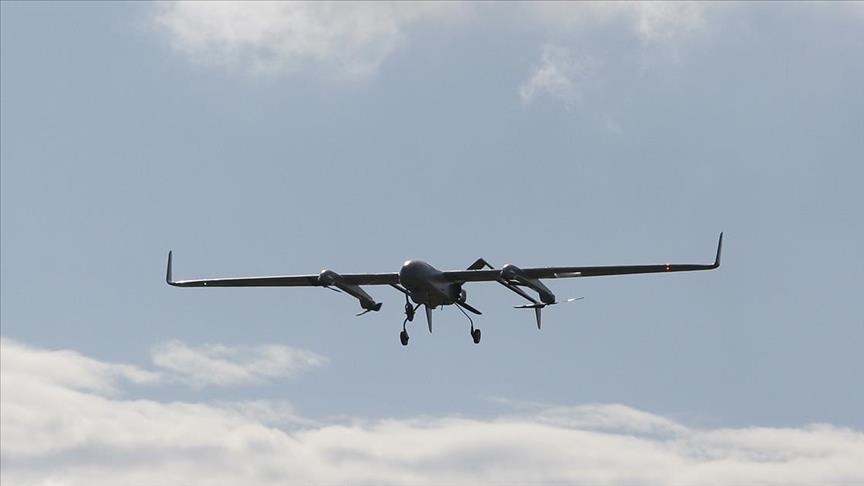
The British military has secretly hired a US private company to conduct aerial surveillance over Gaza in search of Israeli soldier prisoners, according to The Times.

Due to a shortage of available RAF reconnaissance planes, the Ministry of Defence (MoD) turned to a Nevada-based firm, Straight Flight Nevada Commercial Leasing LLC. The company is a subsidiary of Sierra Nevada Corporation, one of the largest US military contractors.

The aircraft used, a Boeing Beech King Air 350i registered as N6147U, flew over southern Gaza on July 28. Its flight path was unintentionally revealed after the crew failed to switch off the transponder. This mistake exposed the plane’s presence over Khan Yunis, raising questions about Britain’s role in supporting Israeli operations.

Two UK defence sources confirmed to The Times that the government is paying for the aircraft and its missions. The plane is contractor-owned and operated, meaning British pilots are not flying it. The MoD has declined to disclose the cost or duration of the contract.

Sources say the MoD’s own fleet of Shadow R1 aircraft, which previously flew over Gaza, is either undergoing maintenance or assigned to other missions. One source described the outsourcing as a “privatization” of military intelligence and called it “shocking.”

“This is about supporting Israel,” a senior British military official told The Times. “Instead of sending a message that we’re pulling back, we’re hiring American contractors to do the job.”

Between December 2023 and July 2025, the RAF’s Shadow fleet reportedly carried out over 600 surveillance flights over Gaza. Intelligence gathered during those missions was shared with Israel to allegely help locate israeli soldier prisoners according to the Quds News Network.

Continue reading
Open Letter to End The Gaza Genocide

What follows below is an open letter in the British Lancet called “Break The Selective Silence on The Genocide in Gaza.”

Substantial and well-documented evidence indicates a catastrophic public health emergency in Gaza (appendix pp 1–5), marked by severe food insecurity and alarming levels of malnutrition-related deaths.1 Life expectancy at birth reportedly declined by approximately 35 years in 2024.2 This represents a greater collapse in longevity than that recorded during the genocide in Rwanda, where life expectancy at birth declined from age 42·9 years in 1993 to age 12·2 years in 1994.3

Palestinian children have been disproportionately affected. Since October 7, 2023, Gaza has recorded more child deaths than any other conflict zone and has the highest number of children with amputations per person in the world.4 The health-care system has also been systematically dismantled. Between October, 2023 and May, 2025, there were 720 documented attacks on health-care targets, including 125 health facilities, 34 hospitals, and 186 ambulances.5 Gaza has recorded the highest numbers of health-care worker fatalities (over 1400 deaths), UN staff deaths (295 deaths), and journalist fatalities (212 deaths) in any recent conflict zone.6

Starvation is being used repeatedly and relentlessly as a weapon of war.7 Leading human rights organisations, UN agencies, and UN Special Rapporteurs have officially recognised the genocide in Gaza.8 This position is also supported by a broad and distinguished group of genocide scholars.9 However, most public health, medical, and social science associations have either remained silent or issued vague statements—a response that contrasts sharply with their rapid and vocal support in other conflicts, such as with Ukraine.10 This pattern suggests a selectively empathic response: a tendency to express solidarity with people who are perceived as being part of a so-called in-group and neglect those classified as an out-group based on nationality, ethnicity, religion, or geopolitical alignment.11

To challenge this selective silence, we issued an open letter urging professional and academic associations in the fields of health care, public health, and the social sciences to publicly recognise the genocide in Gaza and to revise their official positions accordingly (appendix pp 6–20).12 Within days, the letter gathered over 3300 signatures, including 1300 from academics and professionals. Moreover, the initiative prompted three major public health associations—the European Public Health Alliance, the European Public Health Associations, and the World Federation of Public Health Association, who represent over 5 million health professionals globally—to issue a joint statement acknowledging the genocide.13

The genocide in Gaza is a defining ethical test for the global public health community, social scientists, and academic associations. Silence is not an option. As scholars and health professionals, we face a stark choice: either we uphold our collective ethical responsibility and speak out to prevent further mass violence and starvation, or we will be remembered for our selective silence and inaction during one of the most urgent moral and public health crises of our time.

Reliefweb

Continue reading
‘Aid Trickle’ Mean People Die Before Reaching Hospitals

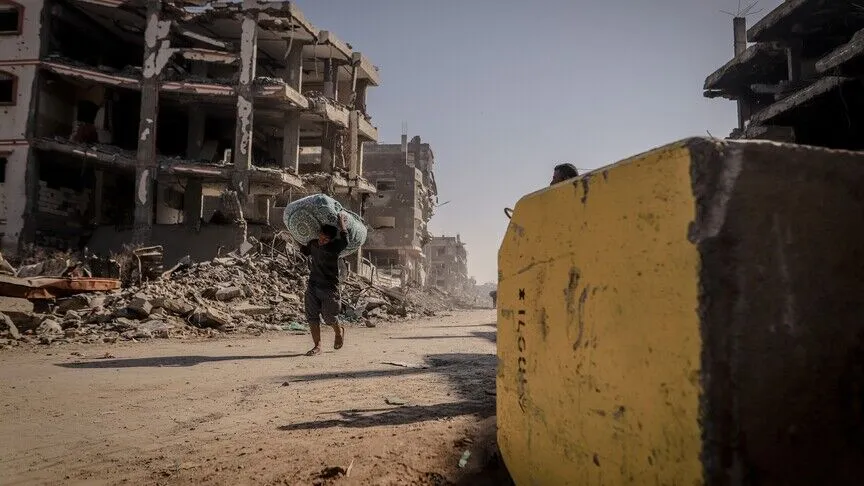
Children in Gaza are dying not just from hunger, but from the total collapse of the systems meant to protect them, UN agencies warned on Tuesday.

With 96 per cent of households lacking clean water, many malnourished children are not surviving long enough to receive hospital care.

James Elder, Spokesperson for the UN Children’s Fund (UNICEF), told a media briefing in Geneva that it would be a mistake to assume that the situation was improving.

There’s a sense through the world’s press that things are improving,” he said. “But unless there is sustained humanitarian aid…there will be horrific results.

He emphasised the scale of need: “When food comes in which supports 30,000 children, there are still 970,000 children not getting enough. It is a drop in the ocean.”

Aid still a trickle

The UN relief coordination office, OCHA, said that although unilateral pauses have allowed some aid into Gaza, the current trickle is vastly insufficient.

“There should be hundreds and hundreds of trucks entering Gaza every day, for months or years to come,” said Jens Laerke, OCHA spokesperson. “People are dying every day. This is a crisis, on the brink of famine.

Thousands of tons of pre-funded aid remain stuck just outside the enclave, he added, as bureaucratic delays and lack of safe access continue to block distribution.

Urgent scale-up needed

In New York, UN Deputy Spokesperson Farhan Haq also noted the impediments to bringing in and distributing sufficient aid.

“Massive food shortages continue to impact people’s chances for survival,” he said. “As malnutrition levels rise, children’s immune systems are weakened, hindering their development and growth far into the future.”

Last Thursday alone, 71 kitchens delivered over 270,000 hot meals across Gaza, including 10,000 to health facilities. But that figure falls far short of what’s needed to feed more than two million people.

We need an urgent scale-up of supplies, as well as an environment that allows humanitarians to reach people in need safely, rapidly and efficiently,” Mr. Haq added.

Health challenges continue

Some medicine has entered Gaza in recent days, but supplies remain limited. Health workers continue to operate under extreme pressure and shortages.

The World Health Organization (WHO) reported 46 cases of Guillain-Barré syndrome in July, including two deaths. The condition, which affects the nervous system, has been linked to compromised immunity, poor nutrition and hygiene-related infections.

The situation of pregnant women and nursing mothers is equally alarming. The UN reproductive health agency, UNFPA, said that 40 per cent of pregnant or breastfeeding women are suffering from severe malnutrition, with newborn deaths and stillbirths on the rise.

Meanwhile, three UN fuel tankers reached Gaza City on Monday. The fuel will power critical health, water and sanitation services, but OCHA stressed this only allows operations to run at “bare minimum” capacity according to UN News.

Continue reading
‘Spy’ or Face Shutdown – Israel Tells NGOs

Aid agencies warned on Wednesday that most partner organizations providing vital relief across Gaza will likely have to shut down their operations within weeks, unless Israel withdraws its demand that they provide sensitive information about Palestinian employees.

The development – which also applies to the occupied West Bank – is a result of the Israeli requirement introduced on 9 March impacting international non-governmental organizations (NGOs).

“Unless urgent action is taken…most international NGO partners could be de-registered by 9 September or sooner – forcing them to withdraw all international staff and preventing them from providing critical, lifesaving humanitarian assistance to Palestinians,” said UN and partner aid organizations that are known collectively as the Humanitarian Country Team in the Occupied Palestinian Territory (OPT).

The UN understands that organizations must now submit, amongst others, details of representatives and all employees in-country, including Palestinian and foreign workers, with full identification and contact details.

For foreign worker recommendation requirements, applications must now include marital status and family details, including spouse and children’s passport numbers and country of issuance.

Many UN agencies still operate in Gaza, working closely with NGO partners to reach the war-torn enclave’s most vulnerable people. International NGOs are key as they provide critical support to Palestinian NGOs in the form of supplies, funding and technical support.

Collective call

“Without this cooperation, their operations will be severed, cutting off even more communities from food, medical care, shelter and critical protection services,” said the Humanitarian Country Team, which is overseen by the UN’s top aid official in OPT and includes heads of UN agencies and more than 200 local and international NGOs.

Already, NGOs which have not registered under the new system are prohibited from sending any supplies to Gaza.

Just last month, Israeli authorities rejected repeated requests by 29 of them to ship humanitarian aid to Gaza, citing the organizations as “not authorised”.

“This policy has already prevented the delivery of lifesaving aid including medicine, food, and hygiene items,” the humanitarian collective said. “This most profoundly affects women, children, older people, and persons with disabilities, further aggravating the risk of being subjected to abuse and exploitation.”

In a statement urging Israel to reconsider its demand for sensitive employee information from NGOs, the humanitarian country team insisted that impeding its work violates international law “when we are receiving daily reports of death by starvation as Gaza faces famine conditions”.

Convoy tragedy

Meanwhile inside Gaza, reports on Wednesday indicated that at least 20 people were killed and dozens more injured in central Gaza after a convoy of aid trucks overturned into a crowd.

The incident happened in southern Deir Al-Balah, central Gaza, on Tuesday, according to the local authorities. Further reports indicated that desperate people seeking aid had climbed onto the lorries before the drivers lost control.

In its latest aid update, the UN aid coordination office, OCHA, noted that a full 90 per cent of aid brought into Gaza since 20 July has been “offloaded by hungry crowds or looted by armed gangs”.

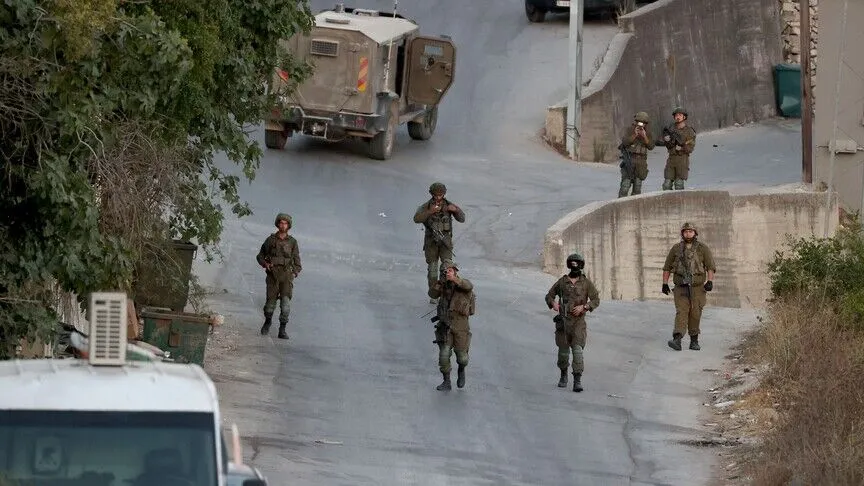
People who approach aid convoys near Israeli military checkpoints continue to be killed and wounded, OCHA said.

It cited the health authorities which reported that between 27 May and 4 August, there have been 1,516 fatalities and more than 10,000 injuries at militarised distribution sites or along humanitarian aid convoy routes according to UN News.

Continue reading
UK Report: Israel Targets Gaza Health

Experts in BMJ Global Health warned of “Healthocide,” deliberate attacks on healthcare in conflict zones, citing Gaza as a prime example. Since the war began, 986 healthcare workers have been killed, and 28 doctors remain detained in Israeli prisons without charges.

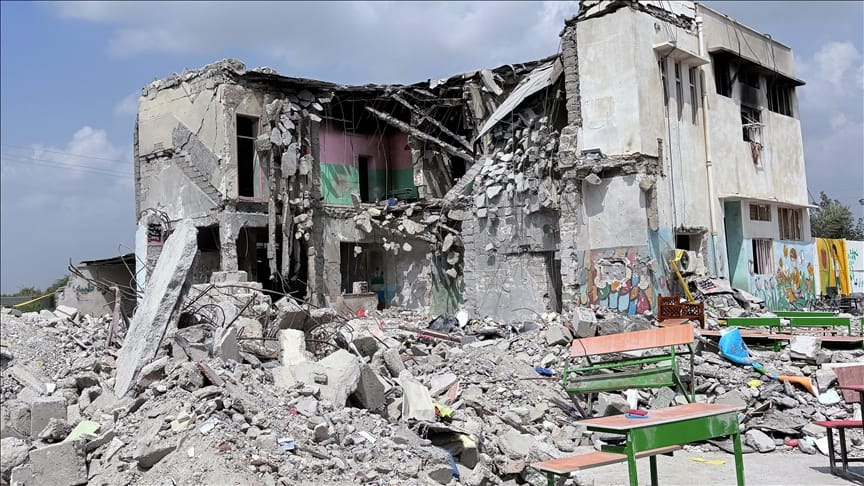
The report said 94% of Gaza’s hospitals are damaged or destroyed, causing near-total system collapse. Globally, 3,623 incidents targeting or obstructing health services were recorded in 2024, the highest on record, including in Lebanon, Ukraine, Sudan, and Syria.

Experts urged upholding medical neutrality, launching independent investigations, and appointing a UN rapporteur to protect health in conflict, warning that such attacks are now a recurring war tactic threatening civilians on a large scale.

Continue reading