 Palestine: Heritage, Folklore
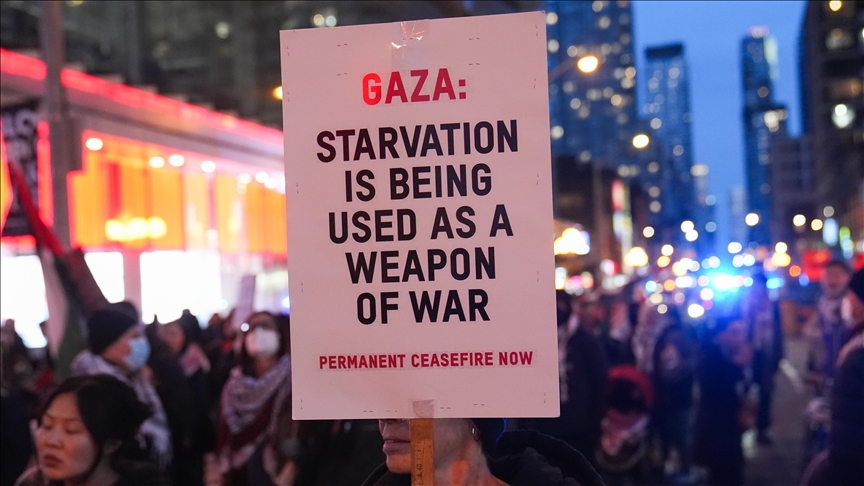
 Gaza: Only 3% of Land Safe to Grow Food
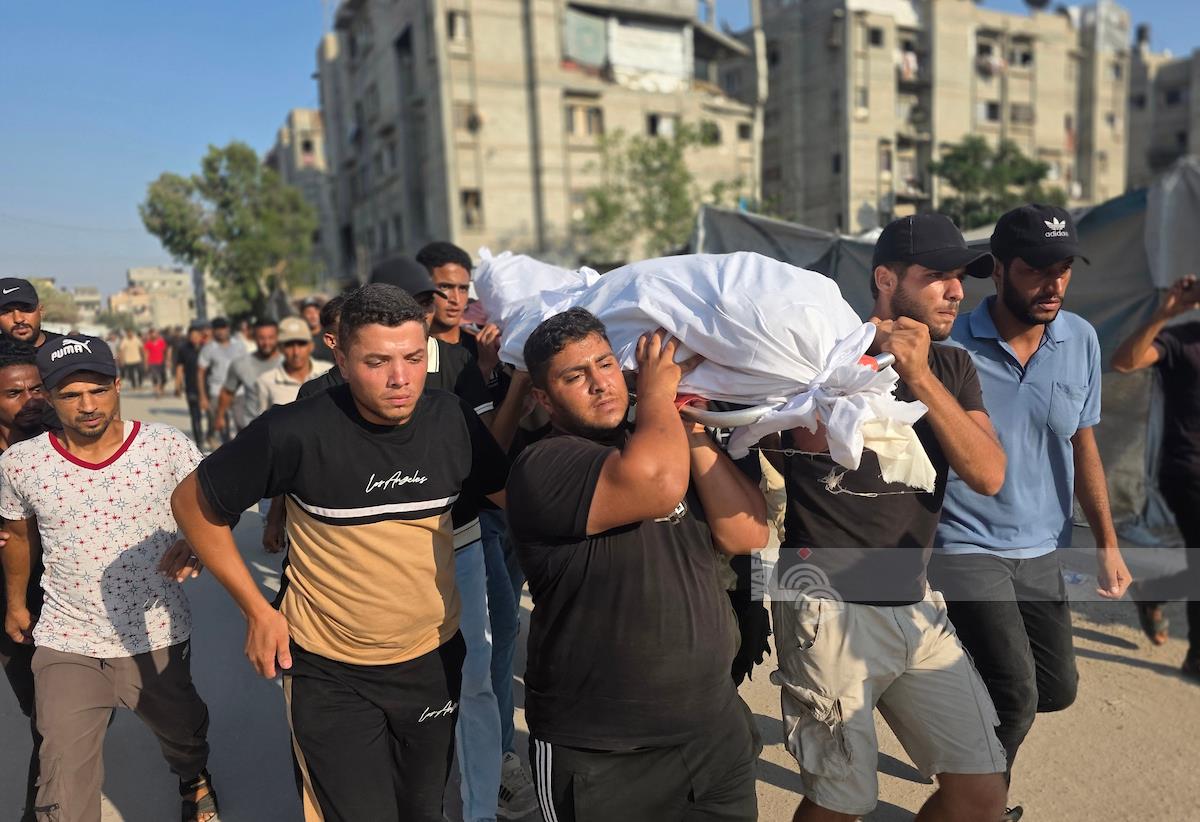
 Gaza: Lolo Heriz Finally Buried After 975 Days
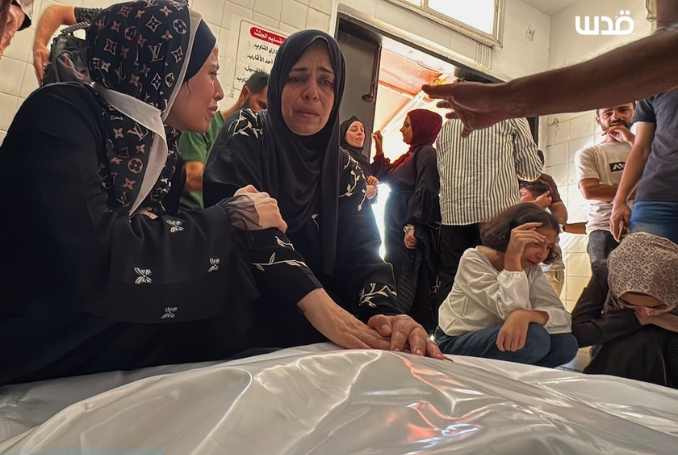
 57th Year of Al Aqsa Burning: ‘The Fire Continues’ Ekrima Sabri Warns
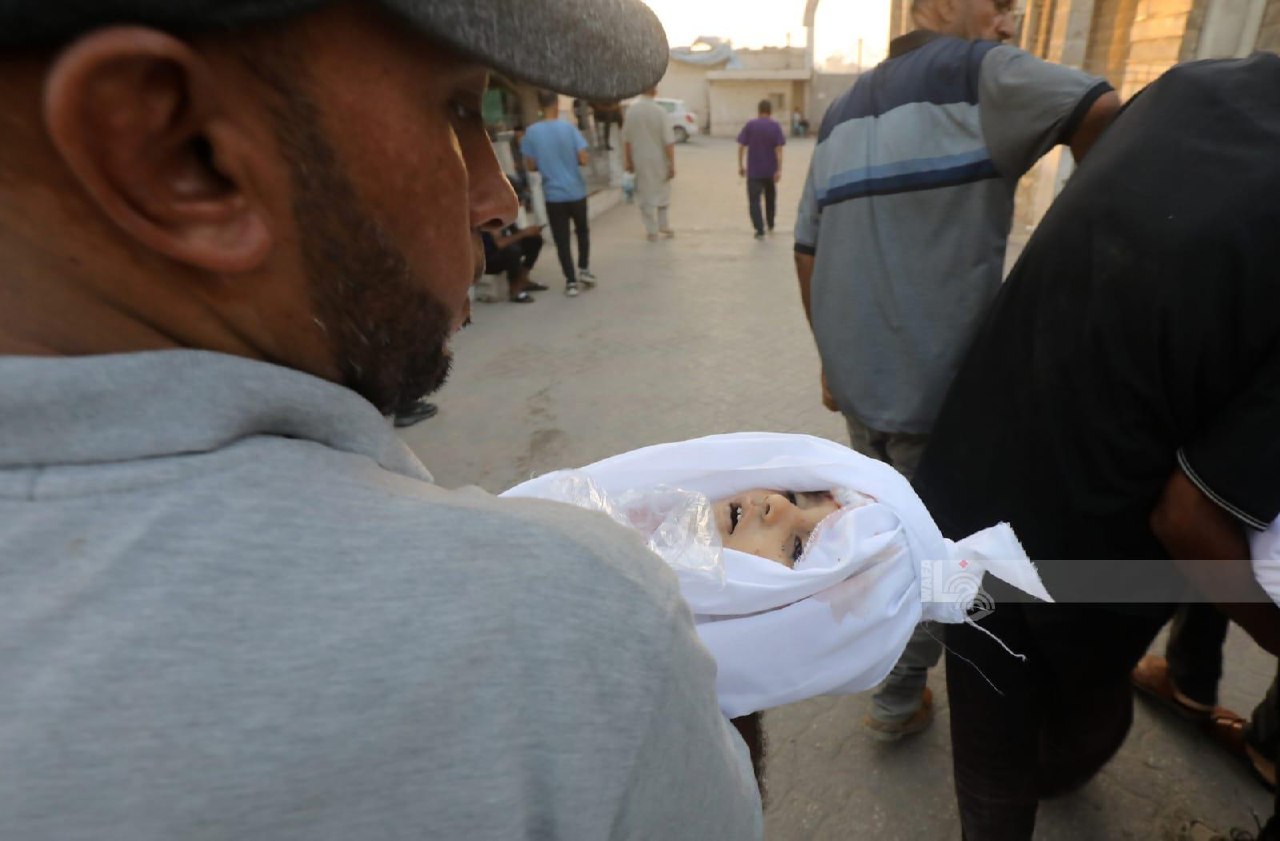
 Remember Hind Rajab




Palestine: Heritage, Folklore
 CrossFireArabia
- August 20, 2026
 CrossFireArabiaCrossFireArabiaCrossFireArabia
 HebaCrossFireArabiaCrossFireArabiaHeba
 marwanmarwanmarwanmarwanmarwanmarwanCrossFireArabiamarwanmarwan
 Saleem Ayoub QunamarwanCrossFireArabiaCrossFireArabiaCrossFireArabiaCrossFireArabiamarwanCrossFireArabiaCrossFireArabiamarwanCrossFireArabiaHebaCrossFireArabiamarwanCrossFireArabiamarwanHebaCrossFireArabiamarwanmarwanHebaCrossFireArabiamarwanmarwanCrossFireArabiamarwanHebaCrossFireArabiaCrossFireArabiaCrossFireArabiaHebamarwanCrossFireArabiamarwanHebaCrossFireArabiaHebamarwanmarwanCrossFireArabiamarwanmarwanmarwanmarwanmarwanmarwanmarwanmarwanmarwanCrossFireArabiaCrossFireArabiamarwanmarwanCrossFireArabiaCrossFireArabiamarwanCrossFireArabiamarwanHebaHebamarwanmarwanCrossFireArabiaCrossFireArabia
One of the most widely circulated press items in the Gaza War was a photo in Al-Dustour daily in its 11 March, 1971 edition under an “Evacuation of the Gaza Strip Begins,” headline. This image traveled around the world, confirming the importance of print journalism and its continued role as a primary source of information for documenting events, and its enduring presence despite digital developments.
Al-Dustour witnessed pivotal moments in the repeated attempts to empty Gaza of its population. The idea of displacing the residents of the Strip began in the early 1950s, when a number of military personnel, bureaucrats, and senior UNRWA officials met and took out old maps to discuss possible displacement destinations. After lengthy discussions, it was decided to push Gaza’s residents toward the vast, sparsely populated Sinai Desert.
The plan targeted the displacement of approximately 60,000 people, equivalent to a quarter of Gaza’s population at the time. Despite the start of preparations, the idea was met with categorical rejection by the residents of the Gaza Strip, who clung to their land and refused to leave.
In 1956, the Zionists occupied the Gaza Strip during the Tripartite Aggression against Egypt. David Ben-Gurion, along with senior military commanders, attempted to forcibly displace the population of the Strip to the West Bank and Sinai. However, pressure from the United States prevented the plan from being implemented and the attempt was foiled. A year later, the occupation was forced to withdraw from Gaza.
In 1967, Moshe Dayan devised a plan aimed at forcing as many residents of the Gaza Strip as possible to emigrate to the West Bank and Egypt. Some residents were eventually deported to the West Bank, but the plan did not achieve the desired results, as relatively few residents left Gaza.
In 1971, while the late Yitzhak Shamir was serving as military governor of the Gaza Strip, he decided to forcibly displace the population. He bulldozed thousands of homes and forced a number of residents onto buses and transported them to the city of Al-Arish. But the plan failed, as the population quickly returned to Gaza, supported by pressure from Arab countries and major powers, which prevented the plan from being fully implemented.
With all attempts at direct displacement having failed, the Zionists found themselves in a predicament; neither killing nor enticement persuaded the people of Gaza to leave their homeland. The occupation then changed its strategy, devising a plan to systematically and slowly destroy Gaza through siege, starvation, and repeated military escalation. Once again, however, the Gazans foiled the plan and held their ground, refusing to leave.
In 1992, the “Greater Gaza” project was proposed during the term of Yitzhak Rabin. Secret plans were drawn up to impoverish the Strip, making life there nearly impossible, and drive its residents to emigrate to Sinai. However, this plan, too, failed.
In 2004, then-Shin Bet chief Avi Dichter devised a plan bearing his name, believing he had found the ideal solution to displace the population of Gaza by encouraging what he called “voluntary migration,” particularly to European and Gulf countries. However, this plan also failed, and the people of Gaza remained steadfast in their land, refusing to leave.
In 2014, the Israeli occupation relaunched its first plan, seeking to remove the border between Egypt and the Gaza Strip and push the population of the Strip toward Egyptian territory. However, Egypt confronted and thwarted this plan, preventing it from achieving its goals.
Then came the Trump administration’s so-called “Deal of the Century,” which included unofficial clauses regarding the transfer of Palestinians from Gaza to Sinai. The US administration exerted pressure on Cairo to implement this plan, but Egypt categorically rejected it, also leading to its failure.
Then came the Al-Aqsa Intifada, which Israel exploited to carry out the largest genocide ever carried out, with the aim of displacing the people of Gaza. It practiced murder and siege, cutting off their basic necessities of life, hoping to force them to leave. However, despite the brutality of the aggression, Gaza stood firm, thwarted the plan, and emerged victorious with its unbreakable will.
Trump returned once again to revive his plan, this time attempting to displace the people of Gaza through what he called “soft displacement.” However, he clashed with a tough king who firmly confronted this plan and rejected it without hesitation.
The Zionist entity, with American support, failed to adhere to the temporary truce with Hamas, and the war of extermination resumed, amid a stifling siege, famine, and a scarcity of water and medical services.
Over the decades, the Zionist entity attempted to exterminate and displace the people of Gaza, sometimes by force and sometimes by enticement. But Gaza stood firm, and the banner of steadfastness was passed down from generation to generation. Just as this banner was passed down from generation to generation, so too was the banner of defending the holy sites, passed from one Hashemite king to the next.
The commandments of our forefathers became ingrained in our conscience: to always stand with Palestine. Over these long years, Al-Dustour newspaper has stood with the Palestinian cause, exposing the enemy’s schemes and mobilizing support and backing for justice. Al-Dustour has been a witness to history, conveying Gaza’s voice and echoing its steadfastness. At every critical moment, it was present, documenting, exposing, and defending the truth without hesitation.
A day will come, decades from now, when future generations will pass on images from Al-Dustour’s editions that documented this phase of the conflict with the enemy, testifying to Gaza’s steadfastness and the resilience of its people in the face of attempts at genocide and displacement. Just as Al-Dustour has always been present in the battles of steadfastness, Gaza will remain engraved in its conscience: An immortal story and an indelible symbol.
Ismael Al Sharif is a columnist in Ad Dustour newspaper in Jordan.
CrossFireArabia
More than half of Canadians support maintaining a ban on weapons sales to Israel, with nearly half backing its expansion to include a full two-way weapons embargo, according to a recent poll.
The Mainstreet Research survey, commissioned by the National Council of Canadian Muslims (NCCM), found that 55% of respondents support Canada’s prohibition of weapons exports to Israel due to the situation in the Gaza Strip.
Additionally, 49% believe Canada should go further by restricting the sale of weapons parts, military services and training to Israel according to Anadolu.
The poll revealed strong public support for the International Criminal Court’s (ICC) arrest warrants for Israeli Prime Minister Benjamin Netanyahu and his former Defense Minister Yoav Gallant.
More than 56% said Canada should uphold the ICC’s decision, which could theoretically lead to Netanyahu’s arrest if he enters the country.
Among Liberal Party voters, support for recognizing the ICC warrant is particularly high, with 70% in favor. Conservative voters are evenly split on the issue, with half either supporting Netanyahu’s arrest or are unsure.
The survey was conducted on a sample of 1,090 Canadians between March 22 and March 23, with a margin of error of +/- 3% at a 95% confidence level.
Canada announced a complete ban on all arms shipments to Israel in March 2024. Foreign Minister Melanie Joly said the decision followed a parliamentary motion that passed with a significant majority.
In September, Canada announced it was suspending 30 permits for arms sales to Israel and canceled a contract with a US company to sell Quebec-made ammunition to the Israeli army.
CrossFireArabia
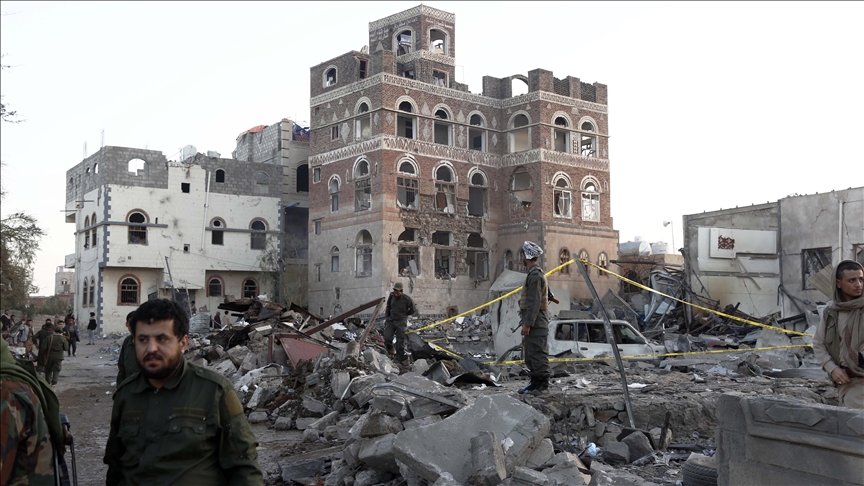
US warplanes launched 15 airstrikes on the southern area of Sanaa late Wednesday, Houthi media reported.
“US aggression targets southern capital with a series of airstrikes,” Al-Masirah TV, affiliated with the Houthi group, reported on Telegram.
It added that “the American aggression targeted the Jarban area in the Sanhan district with 8 airstrikes, the Khadm and Jumaima Rajam areas in Bani Hushaysh district with 5 airstrikes, and Al-Dailami Air Base with 2 airstrikes,” according to Anadolu.
The Houthi-affiliated 26 September news website, citing an unnamed local source, reported earlier that “the US aggression launched five airstrikes on the outskirts of the city of Saada and three strikes on the Al Salem district of the same governorate on Wednesday.”
It said that “two US airstrikes targeted the Harf Sufyan district in Amran governorate on Wednesday” and noted that the “Saada governorate was hit by 17 US airstrikes late Tuesday night into Wednesday morning,” bringing the number of strikes on the two governorates to 27 in the past 24 hours.
Saada is considered the main stronghold of the Houthi group and shares a land border with Saudi Arabia. The Houthis have controlled Amran since 2014.
US President Donald Trump said last week that he had ordered a “major offensive” against the Houthis and later threatened to “whip them out completely.”
The Houthi group has been attacking Israeli-linked ships passing through the Red and Arabian seas, the Bab al-Mandab Strait, and the Gulf of Aden with missiles and drones since late 2023, disrupting global trade for what it said is a show of solidarity with the Gaza Strip.
The group halted its attacks when a ceasefire was declared in January between Israel and the Palestinian resistance group, Hamas, but it threatened to resume the attacks when Israel blocked all humanitarian aid into Gaza on March 2.
CrossFireArabia
Lebanon doesn’t want to normalize with Israel, pure and simple. Despite increasing pressure from the US administration, the government in Beirut is against any normalization moves with Israel.
“No one in Lebanon wants normalization with Israel,” says Lebanese Prime Minister Nawaf Salam. “It is rejected by all Lebanese people,” he added.
The comments of the newly-elected Lebanese Prime Minister, made Wednesday, to a delegation from the Lebanese Press Editors Association, are trending on the social media.
“International and Arab diplomatic pressure on Israel to halt its attacks has not been exhausted,” noting that “no one wants normalization with Israel in Lebanon, which is rejected by all Lebanese,” as carried by the naharnet website.
Salam said Lebanon would not establish ties with Israel even though the latter still controls five border posts in Lebanon and which have “have no military or security value, but Israel holds them to keep pressure on Lebanon.”
Local media reports have emerged about US pressure on Lebanon to reach “an agreement that is less than normalization and more than an armistice” with Israel according to Anadolu.
A ceasefire was reached by the two countries at the end of last November after a fully-fledged war that began in September following months of cross-border fire.
Israel has repeatedly violated the terms of the ceasefire since then with 1,250 violations, 100 deaths and 330 injuries as reported by the Lebanese authorities.
Israel was supposed to withdraw from Lebanon by 26 January, 2025, extended the deadline to 18 February and still refuses to comply maintaining a outposts at five border-points.
CrossFireArabia
Mark these words: South Africa is likely to win the genocide case at the International Court of Justice (ICJ), but by then, it will be too late to save a single civilian life. The time for robust action is now.
The resumption of the exterminatory Israeli bombardments on Gaza has killed 174 Palestinian children and toddlers in less than 48 hours, according to Defense for Children International. UNICEF has also denounced the killing of more than 130 children in a single day, representing the largest single-day child death toll among Palestinians in years. This may be the deadliest episode in the history of Israeli military actions in Palestine.
Family members of slain Israeli captives, whose names and faces have repeatedly been used to justify further attacks on Palestinians, condemned their government’s actions as another betrayal of the hostages, with Yarden Bibas writing “military pressure endangers the hostages while an agreement brings them home”, and networks of Israeli families declaring Israeli Premier Benjamin Netanyahu chose Ben-Gvir’s return to the government over the return of the hostages from Gaza.
In the midst of this carnage, Israeli ministers declare “a society that tolerates Hamas sympathizers within it has no right to exist,” or ask the very population they are destroying to “return the hostages and remove Hamas” unless they want to pay a “far more severe price” of “total devastation.”
Ideology of destruction
The ideology of the Israeli leadership is becoming increasingly explicit: It promotes the notion that Palestinians deserve elimination and are responsible for their own destruction. It is a paradigmatically genocidal ideology, typical of all the genocides in history, construing the victim group’s existence as undeserved, its survival as an intolerable threat, brutalities against it inherently justified, ‘called for’, and the forcing of the group into inexistence as a way of restoring the natural order of things as they should have always been. After all, key Israeli ministers declared “there is no such thing as a Palestinian people.” Declaring the inexistence of a people equates precisely to posing the premises for its elimination.
The honesty of the genocidal narratives of the Israeli executive, coupled with the use of hunger, thirst, diseases as weapons of war, reinforces crucially the validity of South Africa’s arguments at the ICJ, and of those states intervening in support of those arguments. As an international lawyer, my guess is that South Africa, even more likely after these renewed atrocities, will win the genocide case at the ICJ.
Despite the all-time record of crimes against children, Western states keep refraining from legal action, even those intervening in other ICJ cases to affirm that, in their interpretation of the Genocide Convention, the victimization of children, as the most vulnerable and crucial component of victim groups, should bring special weight in ascertaining the existence of genocidal intent. Beyond hypocrisy and racist double standards, Palestinian children are portrayed as less human and less worthy of protection than other children.
The irresponsibility of political leaders of third states indeed continues to kill. Silent when not complicit, incapable of acting for a single sanction, some are even offering safe harbors from ICC arrest warrants to their political and business partners wanted for war crimes and crimes against humanity, violating their own obligations as state parties of the Rome Statute.
In sum, the lawlessness unleashed on Palestinians is indeed infecting the world (dis)order, and it is evident that Netanyahu has all the interest in descending the entire region into a state of permanent war to stay in power. The global instability deriving from the winds of regional and global wars (in which the EU is diving rather than shifting its disastrous strategic approaches) will inevitably increase authoritarian repressions against dissidents, oppositions, and alternative visions in many of the countries revolving around this tragic abyss of history. War and authoritarianism always nurture each other. It is therefore not only in the interests of the survival of Palestinians, but a political necessity against the oligarchic shifts in our own countries to demand robust action now.
Protecting lives
Palestinians need a humanitarian intervention of a multilateral coalition to protect civilian lives. This presence alone can tackle an alliance of savage powers devaluing the lives of Palestinians as less than human and extracting profits from their massacres now, while preparing to extract more profits from exterminatory wars globally tomorrow. This would offer an immediate opportunity for world powers genuinely committed to reforming the international order towards a new multilateralism based on sovereign equality, self-determination, and peaceful coexistence to prove that their words are not empty slogans.
In other words, the paradox we face is that even the selfish pursuit of national interests—let alone legal or moral obligations—should be enough to trigger decisive action like the one proposed in this reflection.
A multilateral military presence, under UN auspices, to protect Palestinian civilians appears necessary as never before, since none of them will ever be safe under occupation by forces making clear they consider their existence as a people an offense to be redressed by annihilation. Should a coalition of states promote such an action, it would enjoy the support of masses of citizens across the globe, and gain moral leadership in these dark times, marked by the unchecked rise of international criminality.
Luigi Daniele is a senior scholar at Nottingham Trent University