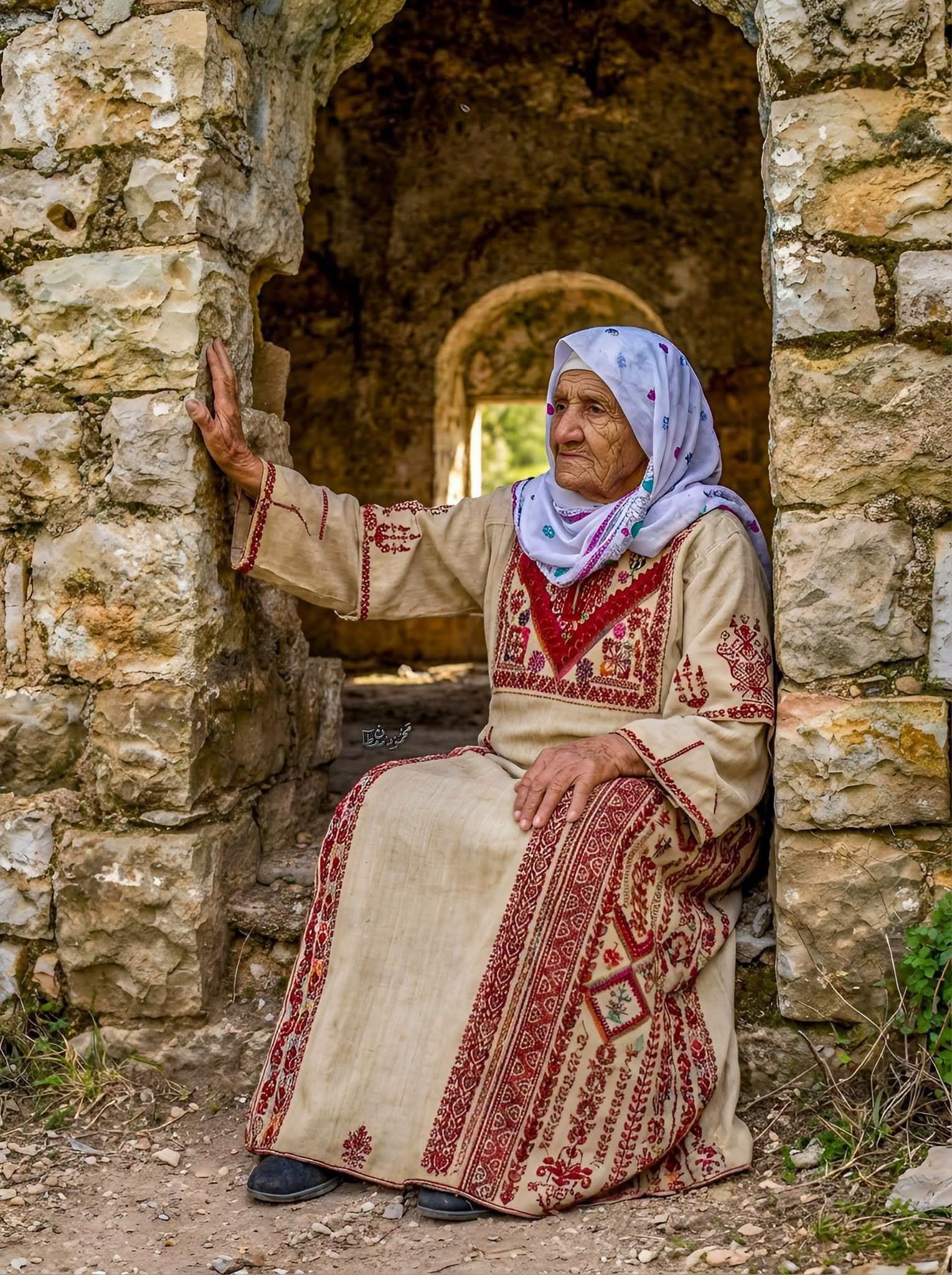
Israel Ruins Xmas Tree Lighting in Nazareth

The Orthodox Council in occupied Nazareth has canceled the public Christmas tree lighting originally scheduled for Sunday. The event, which typically draws thousands of participants, was called off due to Israeli security restrictions limiting attendance. The council said the limitations would prevent most of the community from joining and refused to issue a limited number of tickets, as this would exclude large sections of the public from the annual celebration.

The council held an emergency press conference on Friday evening and lit the tree during the event. The Christmas tree will remain in the main square for five weeks, as is customary, and the council encouraged residents to see it in the coming days.

The council had attempted to negotiate with Isreali police and security authorities to ease restrictions, including limiting the number of attendees and the forced closure of nearby businesses. They stressed that the festival also supports the local economy. Council officials emphasized that the restricted number of attendees would represent less than 8% of the community and that the celebration is meant to include the city’s entire social fabric.

Council head, Lawyer Basim Asfour, said the Israeli restrictions were “beyond reason.” He added, “We refuse to favor one group over another. We want the Nazareth Christmas tree, in all its colors and lights, to represent all residents of the city. Our duty is to protect this message, our dignity, the dignity of the people, and their right to joy and participation.”

Nazareth Municipality’s Director General, Nahida Mansour, expressed the city’s support for the council’s decision. She encouraged the public to visit the city during the holiday season, saying, “The tree is a light that must not be extinguished.”

The council confirmed that preparations for the Christmas market and other celebrations will continue in coordination with the municipality according to the Quds News Network.

Continue reading
Gaza Forces Change in Israeli Military Doctrine

Military and strategic expert Nidal Abu Zeid stated the Israeli army’s combat doctrine is undergoing a radical shift, moving from reliance on large-scale conventional ground operations to less costly, selective operations. This shift comes after recent confrontations, particularly in the Gaza Strip, demonstrated the army’s inability to achieve decisive victories through traditional methods.

Abu Zeid added that increasing the Israeli defense budget to approximately 112 billion shekels next year does not reflect strength as much as it reveals a structural predicament, especially given the requirement to reduce reserve forces from 60,000 to 40,000 soldiers. He noted that the army has announced a shortage of approximately 1,300 officers from the rank of lieutenant to captain, and 300 officers with the rank of major. Furthermore, the percentage of those wishing to continue serving has declined to 63%, compared to 83% in 2018.

He pointed out that these indicators constitute a direct impetus for changing the nature of combat within the military doctrine, a shift already evident in the nature of the military operations carried out by the occupation army in Gaza, southern Lebanon, and southwestern Syria.

Abu Zeid explained to Jo24 the findings of the “Tarjuman Committee”, which studied the failures of the 7th October war, concluded that it was necessary to establish buffer zones and transfer the battle to enemy territory. He clarified that what is happening on the ground reflects the practical implementation of these recommendations, through the occupation’s adherence to five points in southern Lebanon, its insistence on a buffer zone in southwestern Syria, its adoption of the “yellow line” in Gaza, and its tightening of control over Area C in the West Bank.

He added that the appointment of General Roman Gofman, with his background as an armored officer, as head of the Mossad is unprecedented in the history of intelligence agencies worldwide. It reflects a shift from deterrence based on threats to deterrence based on destruction, and from traditional intelligence work to direct integration with military field operations.

Abu Zeid pointed out that the triad of deterrence, early warning, and swift decisive action, upon which Israeli military doctrine has been based for decades, has been shattered. He emphasized that the army will not return to large-scale conventional operations, but will instead shift towards what are known as “selective operations” or “easy hunting,” operations that are less costly in terms of both personnel and resources, but which require a radical change in military plans and structures.

He explained that this shift clarifies Chief of Staff Eyal Zamir’s objection to the new budget and the reduction in reserve numbers. It also explains the deepening crisis of confidence between him and Defense Minister Yoav Katz, after the latter agreed to the Finance Minister’s demands, revealing a clear rift in the decision-making system within the Israeli establishment.

Abu Zeid asserted that, given these circumstances, it can be said that Benjamin Netanyahu’s government has partially succeeded in restoring “strategic balance” related to the state’s image and foreign relations after the ceasefire. However, it has lost the more critical “strategic balance” related to internal governance.

He pointed out that signs of strategic imbalance have begun to surface through crises in managing the conflict between the religious and secular factions, the fracturing of the decision-making chain, and even former Shin Bet chief Ronen Bar’s statement that “the state is trembling.”

Abu Zeid explained that combining the shift in the nature of the war with the loss of internal strategic balance could lead to what is known as “hyperextension”—a mismatch between what politicians want and the actual tools and capabilities available. This, in his estimation, indicates that Israel has begun to devour itself from within.

Continue reading
More Countries Quit Eurovision in Protest…

Ireland’s Charlie McGettigan, who won the Eurovision Song Contest in 1994, said he will return his trophy in protest of Israel’s continued participation in the competition, joining Swiss singer Nemo, last year’s champion, in the symbolic move.

McGettigan said he plans to send the trophy to the European Broadcasting Union, which organizes Eurovision, in a video posted on social media. McGettigan won the contest with fellow Irish singer Paul Harrington.

He said Nemo had contacted him online to explain the decision to return the 2024 trophy.

“They came across as sincere and a very intelligent person and stated their case very well, and therefore in support of Nemo, I would like to return my trophy to the EBU as well,” said Harrington. “Unfortunately, our win was in 1994 and I can’t lay my hands on whatever trophy we received back then, but if I do find it, I will return my trophy as well.”

The move comes amid a broader controversy surrounding Israel’s inclusion in Eurovision.

Following confirmation last week that Israel would remain in the competition, broadcasters in five countries — Iceland, Ireland, the Netherlands, Slovenia and Spain — announced they would withdraw from the 2026 contest according to Anadolu.

Continue reading
Israeli Bulldozer Runs Over Bleeding Child

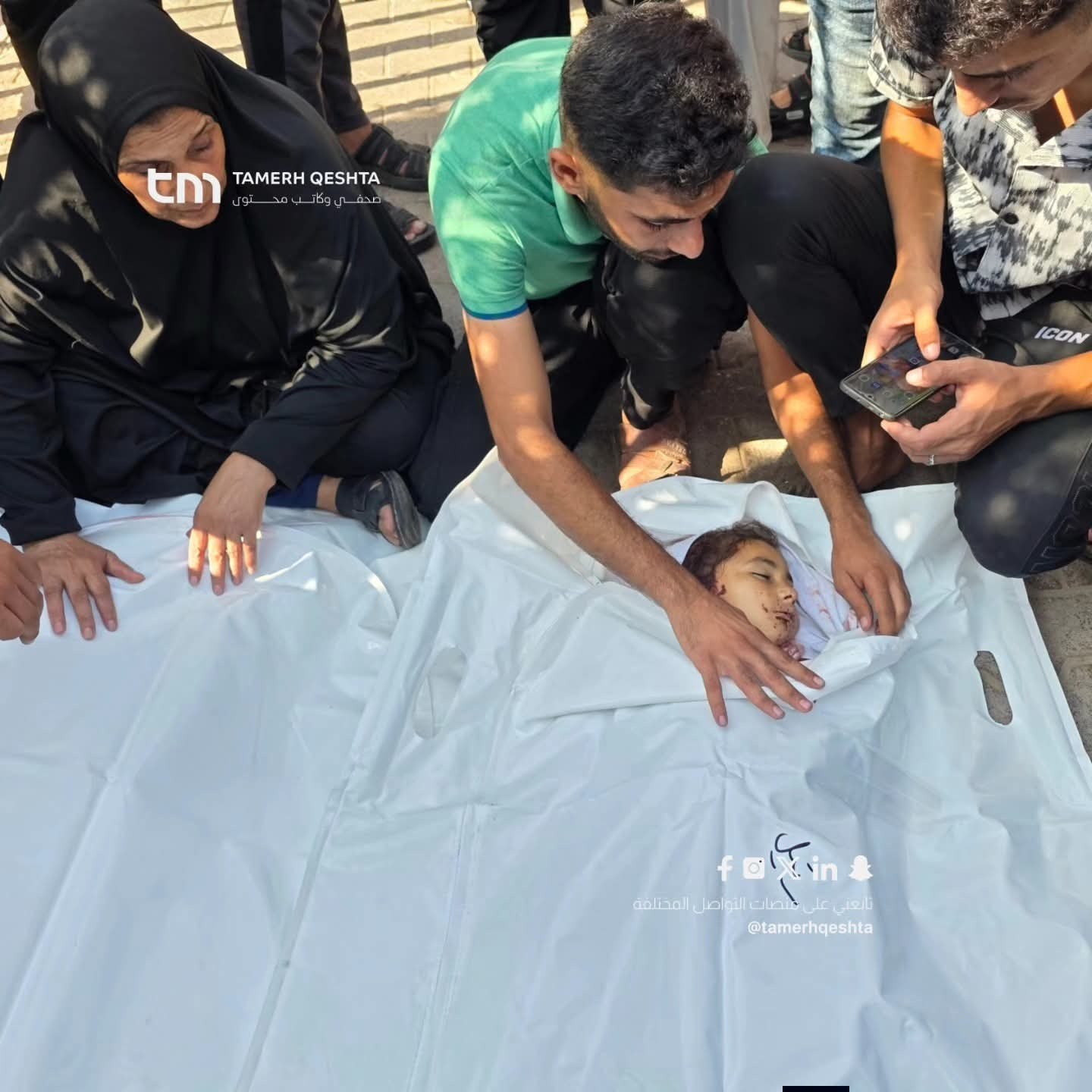
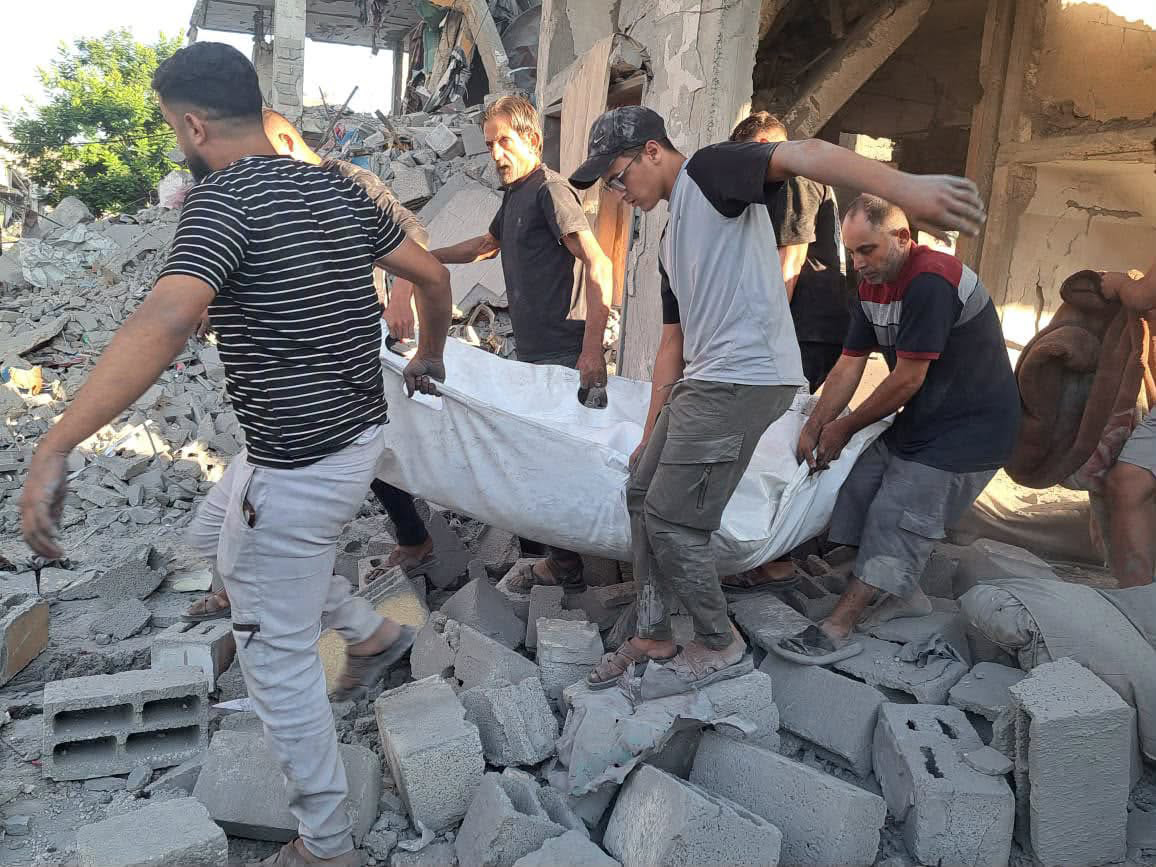
An Israeli military bulldozer deliberately ran over a wounded Palestinian child, cutting his body in half while he was still alive, after shooting him and preventing medical aid from reaching him. This premeditated killing reflects extreme brutality and forms part of Israel’s ongoing pattern of targeting Palestinian civilians as a national group in the Gaza Strip within the broader two-year-long genocide.

Euro-Med Human Rights Monitor’s field team documented the injury of 16-year-old Zaher Nasser Shamia from Jabalia camp in the northern Gaza Strip by Israeli forces on Wednesday afternoon, 10 December 2025. The wounded child lay bleeding, with no one able to reach him due to continuous gunfire. Minutes later, a military bulldozer advanced towards him and deliberately ran him over while he was still alive on the ground, splitting his body in two and tearing it into pieces.

In his testimony to Euro-Med Monitor, the child’s uncle said that Shamia had been near the Jabalia Services Club, about 50 metres from the Yellow Line, when Israeli army vehicles arrived at around 9 a.m. near the yellow concrete cubes amid heavy gunfire. Shamia remained in the camp until a friend told him that the army had withdrawn from the Yellow Line. He then walked with a group of friends towards the concrete cubes. As he reached the middle of al-Hadad Street, Israeli forces fired at him, most likely from a quadcopter drone, striking him in the head, according to eyewitnesses. He was seen still moving his head before his friends fled, leaving him lying on the ground.

    One of the bulldozers deliberately ran over Zaher’s body as he lay on the ground, tearing it into pieces   

Zaher Shamia’s uncle

The child’s uncle added that Israeli forces then fired smoke bombs and advanced towards Zaher’s location. Soldiers dismounted, and military bulldozers arrived to erect a berm in front of the yellow cement blocks. During this time, one of the bulldozers deliberately ran over Zaher’s body as he lay on the ground, tearing it into pieces. His friends were later able to collect the remains and transfer them to Al-Shifa Hospital.

The Israeli army’s repeated practice of running over Palestinians, whether alive or wounded, with tanks and bulldozers, is not a series of isolated incidents but one of the most brutal forms of deliberate killing carried out over the past two years. This reflects an organised policy to dehumanise Palestinians and inflict physical and psychological terror, forming an integral element of the genocide committed against the Palestinian population in the Gaza Strip.

Euro-Med Monitor also documented the Israeli army’s killing of 62-year-old Palestinian Jamal Hamdi Hassan Ashour, who was deliberately run over in the Zeitoun neighbourhood, southeast of Gaza City, on 29 February 2024. Testimonies confirmed that soldiers arrested him, zip-tied his hands, and interrogated him before running him over with an armoured vehicle, crushing first the lower half of his body and then the upper half.

Another compound crime was documented on 27 June 2024, when Israeli forces targeted a family consisting of an elderly mother and her four children, including three daughters and a granddaughter barely a year and a half old, in the Shuja’iyya neighbourhood east of Gaza City. The forces stormed the house, firing live ammunition and grenades inside and forcing the family out. They then detained the injured family members in and around tanks for more than three hours in an active combat zone, using them as human shields. A tank subsequently ran over the mother, 65-year-old Safiya Hassan Musa al Jamal, while she was still alive and in front of her son, killing her in a particularly brutal manner.

On 23 January 2024, Euro-Med Monitor documented an Israeli tank running over a temporary shelter caravan in the Tayba Towers area of Khan Yunis in the southern Gaza Strip, while members of the Ghannam family were sleeping inside. The attack killed the father and his eldest daughter and injured his wife and three other children.

On 16 December 2023, Israeli tanks and bulldozers ran over displaced people sheltering in tents in the courtyard of Kamal Adwan Hospital in Beit Lahia in the northern Gaza Strip, killing several individuals, including wounded patients receiving treatment. The machinery also crushed graves, and the bodies of people buried in one side of the courtyard.

Killing Palestinians by running them over with heavy military machinery is among the most brutal methods used by the Israeli army, showing complete disregard for their lives and dignity. This pattern reflects an attempt to destroy Palestinians as a national group in Gaza, reinforced by repeated public incitement to exterminate them and by the impunity enjoyed by perpetrators in the absence of any genuine avenues for accountability at all levels.

Despite the ceasefire agreement of 10 October 2025, Israel continues to kill Palestinian civilians through aerial and artillery bombardment and direct gunfire, resulting in 389 civilian deaths and about 1,000 injuries since the agreement took effect. This pattern forms one dimension of the ongoing genocide in the Gaza Strip.

This continued killing is accompanied by the deliberate maintenance of deadly living conditions for hundreds of thousands of displaced people, including obstructing the entry of aid and basic lifesaving supplies, blocking reconstruction, and leaving people exposed to cold weather, disease, and collapsing health services. Together, these actions reflect a policy aimed at destroying the Palestinian population in the Gaza Strip, in whole or in part.

The Office of the Prosecutor of the International Criminal Court must give special priority to investigating the widespread killing and targeting of the Palestinian civilian population in the Gaza Strip, including the killing of children, the wounded, and the displaced, as well as the imposition of deadly living conditions, as part of the crime of genocide and other crimes within the Court’s jurisdiction. It must also advance towards determining individual responsibility at the highest military and political levels.

States that recognise universal jurisdiction must open criminal investigations into the documented incidents of vehicular attacks, deliberate killings, and other serious violations against Palestinians in the Gaza Strip and prosecute all those for whom sufficient evidence of responsibility exists, regardless of their nationality or official position.

States Parties to the Genocide Convention, as well as other influential states, must take concrete and immediate steps to prevent the continuation of genocide in Gaza, including halting the supply of weapons and military support to Israel that are used to commit violations, and reviewing existing political and security cooperation in line with their obligation to prevent, and not contribute to, genocide.

Continue reading
UNICEF: 82 Kids Killed in Gaza Since Ceasefire

At least 82 children have reportedly been killed in Gaza since a ceasefire took effect in October, UNICEF said on Friday, warning of what it described as a “staggering pattern” of violence.

Speaking to reporters in Geneva, UNICEF spokesperson Ricardo Pires said: “UNICEF knows that reportedly, now, 82 children have been killed in Gaza since the 10th of October, which, again, is a staggering pattern, and it needs to stop.”

According to Gaza’s media office, at least 386 people have been killed and 980 others injured by Israeli army fire since the truce according to Anadolu.

The UN human rights office also reported more than 350 attacks since the ceasefire took effect, saying: “They were all in the vicinity of the so-called ‘yellow line,’ with at least 121 Palestinians killed, including seven women, 30 children and many other injuries.”

Although a ceasefire took effect on Oct. 10, living conditions in Gaza have not improved, as Israel continues to impose strict restrictions on the entry of aid trucks, violating the humanitarian protocol of the agreement.

Israel has killed more than 70,000 people, mostly women and children, and injured over 171,000 others in attacks in Gaza since October 2023, which have continued despite the truce.

Continue reading