Israel and The Lunatic Fringe

By Dr Khairi Janbek

So long as the fringe remains a fringe, it can be managed, controlled and probably defeated. But the problem arises when the fringe starts to be defined as a wider being and acting as mainstream.

Case in mind, a fringe political and philosophical movement emerged in the West calling itself as the Dark Renaissance, in other words, a movement attacking the concepts of the Renaissance as the cause of the ills of European civilization.

It says that democracy, equality and human rights concepts should be totally erased, and equal opportunities should not be the norm of ruling societies, rather technology governed by a group of technocrats should be ruling the world.

Moreover, all countries and nations are not equal, therefore strong countries and stronger nations should tell the weaker ones what to do and how to behave.

Now as one said from the start, this was a fringe movement, but unfortunately, the fringe has become the mainstream in international power politics.

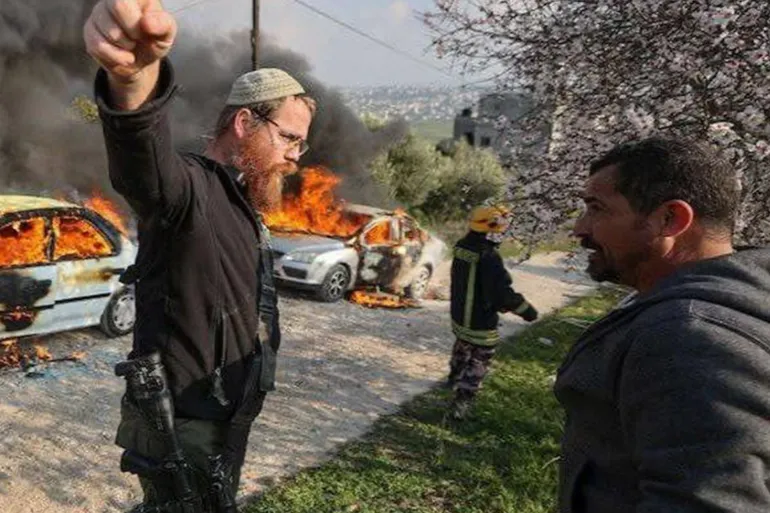
The Israeli government has started talking about the question of “greater Israel” but indeed, one thinks as many others do, that this is nothing but an illusion. At the same time, and from the perspective of the western dark renaissance, one wonders to what extent Israel will have support for this illusion in the worst case scenario, and total indifference in the best case scenario.

The current Israeli government is resorting to the rhetoric of the pre-creation Israel, and acting as if the peace treaties and normalisation with Arab countries are nothing but a stepping stone to its dreams of conquest.

Now, how will the world power brokers react to the Israeli Magaly ideas, as in fact they were the guarantors of Arab-Israeli peace agreements and normalisation processes is to be fowned upon. More interestingly, one wonders how the main world power brokers would have reacted, had the Arab countries facing up to Israeli delusions, using the same rhetoric it was using before the creation of its state of Israel prior to 1948.

From what it seems, Israel can say what it likes, and dream as it wishes, but the Arabs can neither talk nor even dare of dreaming.

One wonders about the objectives of this “greater Israel” talk by the Israeli government. The only thing that one concludes is that the Israeli government is trying to throw around big plans and projects in order to cover up other plans involving the West Bank and Gaza, so that at the end of the day, it can say I am giving concessions regarding my greater Israel plans, but each concession Israel gives, is a slap in Arab faces.

Dr Janbek is a Jordanian writer based in Paris. France

Continue reading
Can Netanyahu Reshape The Middle East?

By Mohammad Abu Rumman

What happened on October 7th was not merely a surprise, bloody attack for Israel—it marked a watershed moment that redefined its security doctrine and the limits of its regional project. It was a moment strikingly similar to what the events of September 11th represented for the United States. Immediately after the launch of the Al Aqsa Flood operation, prime minister Benjamin Netanyahu wasted no time in drawing a direct comparison to 9/11.

This comparison was not just rhetorical or meant to rally emotions. It reflects a much deeper strategic vision. Netanyahu is using the shock of the attack to advance an old-new Israeli project: restructuring the region’s security and political landscape in a way that guarantees Israel near-absolute security in a demilitarised environment, free of any threats.

After the 9/11 attacks, US neoconservatives in the White House seized the moment to implement the “Project for the New American Century”—a vision developed by think tanks and figures like Paul Wolfowitz, William Kristol and Robert Kagan. Founded in 1997, the project aimed to reshape the global order and maintain American dominance, with Iraq, Syria, and Iran at the heart of its ambitions. September 11th became the ideal pretext to accelerate this vision through the invasion of Iraq and redrawing the map of the Middle East.

Today, Netanyahu is doing something strikingly similar. He sees the Al Aqsa Flood as a historic opportunity to accelerate his own regional vision—one that is no longer confined to Gaza but extends to southern Syria, Lebanon, Iran, Gaza again, and even the political dynamics in Turkey and several Arab states.

Those following Netanyahu’s rhetoric—and that of his ministers—can clearly see that Israel is no longer content with merely deterring its enemies. It now seeks to re-engineer the entire geopolitical landscape of the region. In southern Syria, Netanyahu stated clearly: “We will not allow any military forces threatening our borders to remain in southern Syria, and we will not return to the old equation.” Defence minister Yoav Gallant added that Israel will reshape the reality there to ensure its strategic security—which essentially means preventing the Syrian army from returning to its previous positions and enforcing a safe corridor between Sweida and the Golan Heights in line with Israeli interests.

In Lebanon, the objective has shifted from merely weakening Hizbollah to explicitly disarming the group entirely and eliminating its missile capabilities, which pose a direct threat to Israel.

In Gaza, the discussion is no longer about reconstruction or humanitarian relief. The conversation centers on the “day after”—meaning the complete removal of Hamas, disarmament of all resistance forces, and transforming Gaza into a powerless entity under full Israeli security control.

Even the proposed Palestinian state mentioned in the recent New York declaration is envisioned as a demilitarized one—to appease Netanyahu. Yet, he still won’t accept it. Israel has already moved past the idea of any sovereign Palestinian state. What’s “allowed”, according to current Israeli thinking, are fragmented cantons and voluntary or forced displacement of Palestinians.

As for Iran, Israel’s confrontation with Tehran is open-ended, aiming to reduce its missile capabilities and eliminate its strategic threat. It is also plausible that Israel’s strategic vision may extend to shaping the political scene in Turkey—possibly by pushing for a government more aligned with Israeli interests—and exerting pressure on certain Arab states, even those officially labeled as “friendly” to Tel Aviv.

This project is no longer tied to Netanyahu’s personal political survival. It has become close to a national consensus among Israeli institutions and political elites. Leaders like Yair Lapid or Naftali Bennett are unlikely to reverse course or return Israel to the pre-October 8th status quo.

What’s unfolding today isn’t a series of short-term security tactics. It’s a long-term strategic plan aimed at reshaping the regional balance of power and cementing Israel’s status as the undisputed regional superpower.

The author is a columnist for the Jordan Times

Continue reading
Trump, Witkoff Need To Stop The Netanyahu Tune

By Michael Jansen

Israeli Prime Minister Benyamin Netanyahu has said, “There is no policy of starvation in Gaza, and there is no starvation in Gaza.” Israel has enabled “humanitarian aid throughout the duration of the war to enter Gaza – otherwise, there would be no Gazans.”

However, Gaza’s government media office told Al-Jazeera that only 674 aid trucks have entered Gaza since Israel eased restrictions on July 27, averaging just 84 laden trucks per day. This is only 14 per cent of needs as humanitarian organisations say at least 600 trucks of water, food, medicine and fuel are required at a minimum.

Echoing Netanyahu, US regional envoy Steve Wikoff proclaimed there is “no starvation” in Gaza after a brief visit to one of the aid delivery hubs in the Strip. “There is hardship but no starvation,” he said. His assessment appeared to contradict his boss Donald Trump who had said there is “real starvation.”

“Once we refute this Hamas claim, we can continue new actions to end the war and bring back all the hostages” held by Hamas, Witkoff said. He added that Trump believes piecemeal deals do not work and so a new arrangement is needed that would free the hostages all at once.

However, Witkoff argued that only Hamas “total surrender” and disarmament would be accepted. Writing in Haaretz daily on 2 August, Amir Tibon decries Netanyahu’s decision to carry on with the war, despite opposition from most Israelis and Israel’s foreign friends. “Israel’s military leadership admits today that the last five months have been a wasted effort, and that it would have been preferable for Israel to continue the January 2025 ceasefire, get the rest of the hostages out of Gaza in an agreement, and conclude the war.”

He is sharply critical of the Trump administration which “gave Netanyahu total backing for this disastrous policy, including his decision to block all aid from coming into Gaza, which caused the humanitarian crisis there. “Consequently, Witkoff’s latest visit has been met with popular Israeli “disappointment over the Trump administration’s failure to rein in Netanyahu and bring the Gaza war to an end.”

This means that there will be no quick fix under pressure from starvation even though Israelis held captive by Hamas are suffering the same lack of nourishment as their captors. The International Committee of the Red Cross has been asked to provide food for the captives but not the 2.3 million hungry Palestinians in Gaza.

Witkoff has been contradicted by the UN-supported Integrated Food Security Phase Classification” (IPC) which has warned that “the worse-case scenario of famine” is unfolding as 60,000 Palestinians died from bombs and bullets and an untold toll, especially among children, is being gripped by hunger and malnourishment. IPC called for a ceasefire to avert further “catastrophic human suffering.” The total number of people who have died from hunger-related causes since the start of the war in October 2023 has risen to more than 181, including 94 children. This does not include the 1,400 who have been killed by Israeli army fire when trying to secure aid at the highly controversial US-Israel Gaza Humanitarian Foundation which has not alleviated starvation but given a false image of US and Israeli efforts to deliver food.

UN Secretary-General Antonio Guterres said the IPC alert “confirms what we have heard. The facts are in and they are undeniable. Palestinians in Gaza are enduring a humanitarian catastrophe of epic proportions. This is not a warning. It is a reality unfolding before our eyes.”

Australian Prime Minister Anthony Albanese declared it was “beyond comprehension” for Israel to claim starvation was not an issue in Gaza and accused Israel of breaching international law by blocking aid.

Netanyahu is personally responsible for torpedoing January’s ceasefire agreement which would have led to the release of Israeli captives in exchange for Palestinian prisoners, Israel military withdrawal from Gaza, and an end to the war. Instead on 2 March, he imposed the blockade and on 18 March, he resumed the war. Tibon summed up, “Netanyahu, for political reasons, chose to blow up the deal, restart the war, and bring us to where we are today: Our hostages are being starved and tortured, our soldiers are dying, and the entire world is turning against us due to the broader humanitarian catastrophe in Gaza.”

As the 15 August 20th anniversary approaches of the beginning of Israel’s withdrawal of settlers and soldiers from Gaza, 600 retired Israeli security officials have written to Trump to ask him to pressure Netanyahu to end the war. This group included former Mossad chief Tamir Pardo, former Shin Bet chief Ami Ayalon, former Prime Minister Ehud Barak, and former Defence Minister Moshe Yaalon.

Ayalon argued: “At first this war was a just war, a defensive war, but when we achieved all military objectives, this war ceased to be a just war…It is our professional judgement that Hamas no longer poses a strategic threat to Israel,” the officials stated. “Your credibility with the vast majority of Israelis augments your ability to steer [Netanyahu] and his government in the right direction: End the war, return the hostages, stop the suffering.”

On the political front, this policy has contributed to decisions by Britain, France, Canada and half a dozen other countries to recognize the state of Palestine during next month’s opening of the 80th UN General Assembly session. Although recognized by 147 of the 193 UN members, many Western countries have delayed recognition. The addition of Britain and France will mean four of the five permanent members of the UN Security Council (which includes China and Russia) will recognize Palestine while the US will remain the outlier as it is on any effort to criticize or rein in Israel.

Michael Jansen is a columnist for The Jordan Times

Continue reading
The Muslim World – An Obituary

By  Junaid S Ahmad

How does one speak of a “Muslim World” when the supposed collective is either silent, complicit, or supine in the face of genocide? When Muslims from Gaza to Kashmir, from Sudan to Syria, are being brutalized with impunity, and the so-called leaders of Muslim-majority states are either polishing boots in Washington or mumbling their dissent into the sand? Perhaps it’s time to recite the Fatiha over the concept of a unified “Muslim World.” If nothing else, a proper funeral might finally clear the air.

The phrase “Muslim World” once conjured images of a vast, vibrant ummah stretching from Jakarta to Casablanca, a spiritual and civilizational brotherhood united by faith and a shared moral vision. Today, that term feels like a cruel joke, the geopolitical equivalent of a sticker slapped onto a broken mirror. The nations that populate this imagined collective can barely agree on the date of Eid, let alone mount a coherent response to the systematic annihilation of their brethren. If this is the “Muslim World,” then it is one in hospice care, wheezing out platitudes as realpolitik pulls the plug.

Let us be honest: most Muslim-majority governments today are client states, marionettes in a puppet theatre directed by Western powers, primarily the United States. Iran is the notable exception, though even it often walks the tightrope between pragmatism and defiance. The rest? From Riyadh to Rabat, from Islamabad to Amman, their foreign policies are either written in Washington or blessed by it. One could argue that the only difference between the State Department and the foreign ministries of many Muslim states is the choice of drapes.

Take, for instance, the case of Pakistan. Its military—the true center of power—has for decades played the role of loyal valet to American interests, occasionally barking in protest, but always fetching the slippers when the master whistles. General Asim Munir, the current Chief of Army Staff, may feel compelled to issue a tepid statement condemning Israel’s rampage in Gaza, but no one is fooled. The servility runs so deep it has become muscle memory. If a U.S. diplomat sneezes, half the GHQ catches a cold.

But the problem runs deeper than cowardice or corruption. The real crisis is conceptual. The phrase “Muslim World” implies unity—political, moral, spiritual. But what unity can there be when Muslim regimes routinely trade in their principles for arms deals and IMF loans? When the defense of al-Aqsa becomes a photo-op and the plight of Muslim refugees is met with monastic silence? When loyalty to Washington counts for more than loyalty to the ummah? The term “Muslim World” no longer describes a coherent political bloc, let alone a moral one. It is an empty husk, a sentimental relic best abandoned.

And perhaps that abandonment is not a tragedy, but a liberation.

In fact, letting go of the mirage of the “Muslim World” may allow us to reorient our political compass. We can stop pretending that shared religious identity guarantees moral solidarity, and instead adopt a sharper, more principled political framework—one that distinguishes friends from enemies not by slogans, but by their actions. Here, the German political theorist Carl Schmitt might be unexpectedly useful. Schmitt famously argued that the essence of the political lies in the distinction between friend and enemy. In a world where Muslim rulers shake hands with tyrants while quoting the Qur’an at summits, such clarity is sorely needed.

In Schmittian terms, the real question is this: Who stands with Pharaoh, and who stands with Moses and the slaves?

Nearly every ruler today bows to Pharaoh. The gold-plated palaces of the Gulf, the military barracks of Islamabad, the ceremonial thrones of North Africa—all pay homage to power, not principle. They genuflect before the American imperium, whispering prayers for stability while Gaza burns. But the prophetic tradition—the real one, not the one trotted out for PR—stands with the oppressed, even when doing so is costly, unfashionable, or dangerous. It was Moses who stood against Pharaoh, not because it was strategic, but because it was right. The prophetic path doesn’t calculate risks; it obeys moral imperatives.

This is where a new politics must begin. A prophetic politics. One that refuses to be seduced by the theatrics of summitry and diplomatic fictions. One that understands that sometimes the friend is not the one who shares your name, your language, or even your religion, but the one who stands with the oppressed and speaks truth to power. Conversely, the enemy is not always the infidel; sometimes he wears a keffiyeh and speaks flawless Arabic but signs arms deals with Zion.

It is a bitter pill to swallow, but the truth often is. The idea of the “Muslim World” as a political community is dead. What survives is a scattered multitude of Muslims, some noble, many fearful, and a good number complicit. But therein lies the hope. Because when the fiction falls away, reality can begin. The ummah, in its truest sense, has never been about flags or borders, embassies or trade deals. It is a moral and spiritual community. And perhaps, in this age of disillusionment, it can finally reclaim that identity.

Let us stop appealing to kings and generals and start building solidarities from the ground up. Let us forge alliances not with “Muslim nations,” but with the oppressed, the truthful, the just—whoever they may be. The Palestinian teenager throwing a stone, the Sudanese doctor tending to wounds, the Syrian child clutching a torn schoolbook amid rubble—these are the citizens of the real ummah. Their resistance is not just political; it is sacred.

This kind of realignment also invites a rethinking of what leadership looks like. We must resist the temptation to look upward to palaces and parliaments and instead look laterally—at the poets, scholars, youth activists, and organizers who speak with prophetic moral clarity. We must build communities of resistance that transcend national boundaries and language barriers, and that unite under a banner not of nationalism, but of justice. We must build the ummah from the ashes, with no illusions, but with fierce hope. And we must cultivate a political imagination that allows us to see past failed institutions toward radical alternatives rooted in dignity and accountability.

Of course, the path forward is daunting. There are no oil revenues to fund this movement, no standing armies to defend it, no state institutions to give it legitimacy. But that is the point. The prophetic tradition has always begun on the margins—with a man in a cave, a voice in the wilderness, a staff in the hand of a fugitive. It has always been the path of those who would rather be right with God than comfortable with Pharaoh.

So let us bury the illusion of the “Muslim World” with dignity. Let us write its obituary, recite its funeral prayer, and move on. Not in despair, but in defiant hope. Because when the idols fall, even the golden ones shaped in our image, the possibility of true worship begins. We may not have presidents or prime ministers on our side, but we have the legacy of prophets. And that, in the end, may be enough.

We stand today at a political and moral crossroads. We can continue to genuflect before the thrones of compromised leaders, hoping for scraps of righteousness from tables drenched in blood. Or we can rise, like Moses, like Muhammad, like Malcolm, and say no. No to Pharaoh, no to injustice, no to complicity disguised as diplomacy.

The “Muslim World” is dead. Long live the ummah of the oppressed, the just, and the free.

Prof. Junaid S. Ahmad teaches Law, Religion, and Global Politics and is the Director of the Center for the Study of Islam and Decolonization (CSID), Islamabad, Pakistan. He is a member of the International Movement for a Just World (JUST – https://just–international.org/), Movement for Liberation from Nakba (MLN – https://nakbaliberation.com/), and Saving Humanity and Planet Earth (SHAPE – https://www.theshapeproject.com/).

Countercurrents

Continue reading
Gaza, Surrealism and Empty Stomachs

By Michael Jansen

“Let them eat cake” is a careless remark traditionally but falsely attributed to France’s Queen Marie Antoinette at a time peasants had no bread and were starving. She and her husband King Louis the 16th were beheaded in 1793 during the French Revolution which overthrew the monarchy.

This past week Donald Trump spent five days in Scotland playing golf at two courses which he owns while 2.3 million Palestinians faced famine and starvation due to a four-and-a-half-month Israeli blockade of Gaza. During a press conference with British Prime Minister Keir Starmer, Trump finally acknowledged there is “real starvation” in Gaza. Later in the day, he claimed he had “told Israel maybe they have to do it a different way.” This suggested by adopting a new, less punitive policy. He was speaking after Egyptian and Qatari-mediated negotiations on a 60-day ceasefire had broken down, the US and Israel blamed Hamas and left Doha, delaying a full resumption of aid.

Hamas had demanded a return to UN and international agency deliveries of water, food, medicine, and fuel which have been blocked by Israel since March 2nd, Israeli withdrawal from areas of Gaza occupied since Israel broke the ceasefire on March 18th, and an end to Israel’s war on Gaza once the ceasefire expired.

Israeli Prime Minister Binyamin Netanyahu had refused all these demands and was backed up by his good friend Donald Trump. Instead of thinking of starving Gazans, Trump stated, “Hamas didn’t really want to make a deal. I think they want to die, and it’s very bad. It got to the point where you [Israel] have to finish the job.” He did at that time admit that images of starving children in Gaza were “terrible” but added, “They’re stealing the food,” echoing the Israeli accusation that Hamas is guilty of depriving Gazans of food. This has been denied by the World Food Programme and the UN agency looking after Palestinian refugees, UNRWA.

Israel has been fighting Hamas since October 7th, 2023, when it killed 1,200 and abducted 250, but Israel’s armed forces have failed to “finish the job.” Trump has given Israel permission to fight on indefinitely without totatally ending the blockade.

Alarmed by the “humanitarian catastrophe” in Gaza, Germany, France and Britian have called on Israel to end the conflict, “immediately lift restrictions on the flow of aid and urgently allow UN and humanitarian NGOs to resume operations. “Israel must uphold its obligations under international humanitarian law.”

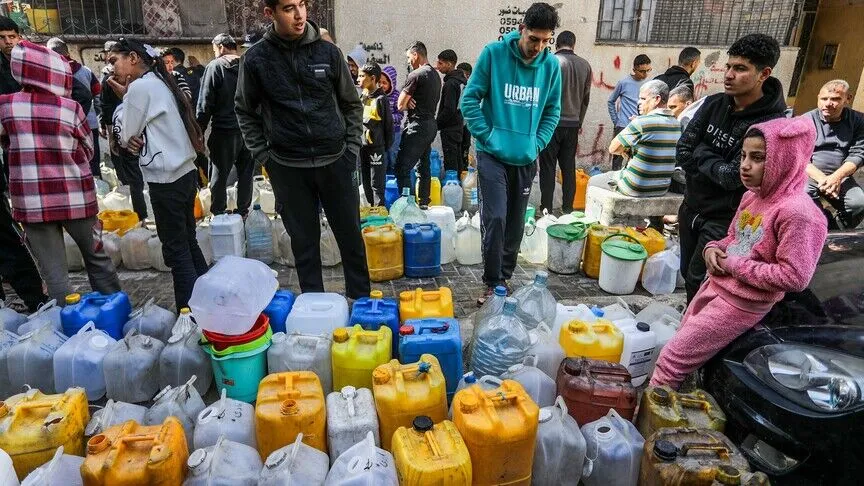
Pressure from these three countries, the UN, and international humanitarian agencies has compelled Israel to declare 10-hour tactical pauses in the fighting in three areas of Gaza. During these pauses which could last a week or so, Israel is to allow air drops of supplies by Jordan, the Emirates and Israel, permit scores of lorries laden with aid to enter the strip, and create “humanitarian corridors” for aid deliveries. These “concessions” are far from a ceasefire and the reopening of all crossings into Gaza for between 500-600 lorries a day. Furthermore, this number must be greatly increased to compensate for Israel’s blockade which has deprived Gazans of sustenance as well as water, electricity and fuel.

Specialised food to treat malnutrition must be included as starving people cannot absorb normal food. Parcels being delivered contain rice, lentils, and beans which cannot be cooked by many of the 90 per cent of Palestinians who have been displaced from their homes and live in tents in crowded camps. There is no wood in Gaza for fires and Palestinians rely on rubbish and plastic which pollute the environment. Palestinians cannot survive on the other items the parcels: sugar, salt, and flour. The latter they can exchange at bakeries for bread.

If ever the previous flow of humanitarian aid is restored, Gazans will need fresh vegetables, fruit, meat and chicken to revert to a nutritious diet. They used to be raised on Gaza’s farms or brought into Gaza by commercial firms from Egypt, Israel, and the West Bank.

In Sunday’s New York Times, World Central Kitchen (WCK) founder Jose Andres proposed a programme which could help resolve Gaza’s hunger crisis. He called for the reopening by Israel of humanitarian corridors to all aid groups working in Gaza and permission to operate multiple communal kitchens. While WCK has been providing hot meals in Gaza since the war began in 2023, he proposed an increase in the production from thousands to one million hot meals a day and to feed families where they dwell. He said five large cooking facilities would have to be built in safe zones “where bulk supplies can be delivered, prepared and distributed without risk of violence.” These kitchens “would supply hundreds of smaller community kitchens “at the neighbourhood level throughout Gaza, empowering communities as essential partners.”

This project depends on obtaining the agreement of Israel and equipment, raw food and fuel supplies which could be provided by aid agencies and concerned governments.

The author is a columnist for the Jordan Times

Continue reading