Under Israeli Guns: People of Khan Younis Told to Move

The Israeli army has killed more than 70 Palestinians and wounded 200 others, mostly children and women, in less than 12 hours in Khan Yunis, in the southern Gaza Strip. Meanwhile, hundreds of thousands of civilians have received new evacuation orders in the area.

These latest crimes come as part of Israel’s genocidal war against the Palestinian people in the Gaza Strip, ongoing since 7 October 2023.

The atrocities committed by the Israeli army against civilians in the Strip over the past nine months are well-documented and carried out consistently. These crimes include killing, mass murder, starvation, blocking the entry of humanitarian aid, forced evacuation, destruction of civilian objects, and the denial of any kind of stability, as has been the case in Khan Yunis since this morning (22 July 2024). Such actions indicate that the occupation army is essentially destroying the Palestinian people in the Gaza Strip in every way that it can.

Every time there is talk of returning to the negotiating table to reach a truce and an exchange agreement, the Israeli army purposefully increases the number of massacres and mass killings of Palestinian civilians. This raises concerns that Israel is engaging in political blackmail by using the killing and displacement of civilians as a tool of pressure, as it has done repeatedly in recent weeks.

After carrying out a premeditated mass murder this morning, the Israeli army launched dozens of raids, fire belts, and artillery shelling on homes, streets, and gatherings of displaced people. Thousands of these people fled into the streets in a panic, looking for a safe place that did not exist.

Residents and displaced people sheltering in the following towns were given evacuation orders from the Israeli army: Bani Suhaila and its surroundings; Abasan al-Kabira and al-Jadidah and its surroundings; al-Qarara and its surroundings; al-Fukhari and its surroundings; Khuza’a and its surroundings; al-Qurain; al-Manara; al-Salam; Jurat al-Lot; Qizan al-Najjar; Sheikh Nasser; al-Mahatta; al-Satar; and al-Katiba. This coincided with the Israeli army’s declaration that the so-called “humanitarian zone” in Al-Mawasi would be reduced. This was all part of Israel’s media disinformation campaign and psychological warfare tactics, since military assaults on forcibly displaced people and their tents have occurred continually in this area for several weeks now, resulting in hundreds of deaths and injuries.

Out of the 10 residences for which preliminary information was available since the 7:30 a.m. start of the Israeli military operation on Khan Yunis, the Euro-Med Monitor field team recorded the Israeli army bombing six homes on the heads of their occupants. Seventy citizens were killed and over 200 others were injured, many of whom were women and children, as a result of the Israeli bombing. Two of the deceased victims were infants, while several families were taken off the civil registry, including the Jabour and Harb families.

In addition to aerial bombardment and shooting from quadcopter aircraft, the Israeli army employs direct and indiscriminate artillery shelling against civilians. This has resulted in a high death toll, with many victims remaining trapped under the rubble and in the streets, where rescue workers have not been able to retrieve their bodies. Israel also deliberately targeted two civil defence paramedics, who were injured while ambulance crews in Bani Suhaila were attempting to evacuate other injured people.

Israeli forces entered the town of Bani Suhaila amid very violent bombardment, even though the Israeli army had said in its orders that the displacement was going to be temporary. This constitutes a kind of deception of the residents—large numbers of whom were not able to evacuate as a result of the bombing, or had not attempted to before it began because they estimated that the attack was a series of air strikes as opposed to a ground incursion. (On the first of this month, the Israeli army issued similar displacement orders but only carried out intense air strikes without a ground incursion).

Two Palestinian Red Crescent clinics were forced to close due to the aerial bombardment, and several health centres experienced disruptions as a result of the forced displacement orders.

Given these facts, all nations must fulfil their international obligations by enacting strong sanctions against Israel and severing all political, financial, and military support and cooperation with it. This should include immediately halting arms transfers to Israel, including export permits and military aid; otherwise, these nations will be held accountable for the crimes that have been committed in the Gaza Strip, including genocide.

Furthermore, accountability must be established at the local, regional, and global levels. Working diligently and cooperatively to pave the way for universal jurisdiction will enable national courts to hold accountable the perpetrators of the egregious crimes being committed against Palestinian civilians.

Additionally, the International Criminal Court must continue to investigate any and all crimes committed by Israel in the Gaza Strip; broaden its investigation into the criminal responsibility of all parties, including Israeli Prime Minister Benjamin Netanyahu and Defense Minister Yoav Galant, in order to hold all perpetrators accountable; issue arrest warrants for those responsible; and acknowledge and address Israel’s crimes in the Strip as international crimes that fall under the purview of the International Criminal Court, and are clearly crimes of genocide.

This article is reprinted from the Euro-Med Human Rights Monitor website.

Continue reading
War on Mosques: ‘We Will Rebuild What Israel Destroys’

“The 79-year-old Ibrahim Abu Al-Atta said he lost his soul when the mosque was destroyed as he was present in ts construction stage 15 years ago.”

When the young men echoed the call to prayer via a small loudspeaker in Gaza after many months of silence due to the Israeli occupation destroying most of the mosques, Palestinians couldn’t not hide their joy.

“This echo prayer will remain raised no matter how much they demolish and destroy, and we will rebuild the mosques just as we will rebuild our destroyed homes, hospitals, and buildings,” said one of the residents.

The Palestinians of Gaza are closely linked to their mosques, many of them perform group prayers in mosques and prayer halls despite the dangers of repeat bombings.

In this ongoing genocidal war against the Gaza Strip, now in its 10th month, Israel has left no taboos and sin, killing, bombing and destroying.

These houses of God have become targets of the Zionist destruction machine, with no regard to religion, morals, and/or law.

Some were bombed by planes on the heads of worshipers, as happened in the prayer hall of the White Mosque in Gaza days ago, and some were bulldozed and blown up with dynamite.

The Israeli occupation forces have completely destroyed 610 mosques and partially destroyed 211 of these houses of God in the Gaza Strip since 7 October, 2023, in a declared war on them.

Al-Rahma Mosque

Al-Rahma Mosque in the Al-Amal neighborhood in Khan Yunis, was one of the mosques completely destroyed; thousands of worshipers prayed there daily. The mosque was a beacon of worship and knowledge, preparing young people for faith and religious duty.

 “I was greatly affected by the destruction of Al-Rahma Mosque, it was part of my life, and second home,” said Nabil Dabour, who used to pray there on a daily basis.

“The destruction of the mosque had a deep psychological impact, exceeding my sadness over the destruction of my home,” he told the Palestinian Information Center.

He pointed out the mosque had a special place in his heart from a young age, performing his five daily prayers there. He added it added elegance to the neighborhood with its continuous calls to prayer, and its contribution in Muslim Eid festivities.

He explained Al-Rahma Mosque was like an Islamic center for teaching the Holy Qur’an, the Sunnah of the Prophet, and good morals, in addition to holding many sports, cultural activities.

The destruction of the mosque removed its  splendor with the people of the neighborhood seeing it as the center for  their meetings, communications and worship.

Al Noor Mosque

In Deir al-Balah Camp in the central Gaza Strip, Israeli warships targeted Al Nour Mosque which was on the seashore and destroyed large parts of it.

With the mosque in such a state, worshipers resorted to performing prayers in their homes and neighborhoods.

The 79-year-old Ibrahim Abu Al-Atta said he lost his soul when the mosque was destroyed as he was present in its construction stage 15 years ago.

“It was like my soul was ripped from my body when the Israelis destroyed the mosque,” he said emotionally. “But mark my word, we will rebuild once again,” he stressed.

Prayers in squares

As mosques were destroyed, people began to perform prayers in their ruined houses, some debris-ridden squares and near destroyed mosques.

“The mosque has great value in the souls of the Palestinians. It is not just a place of prayer, it is their meeting point and solidarity,” Mahmood Hassan said.

He explained these mosques are centers of  social weight, building human beings, society and virtuous morals.

Inshrah Abdel Fattah said the mosque had special importance in her life, she used to go there daily for help and guidance in Islamic law and sharia.

“By targeting and destroying the mosques in Gaza the Israeli occupiers want to alienate Palestinians from their beliefs and religion,” she said.

The Palestinian Ministry of Endowments confirms that desecrating the mosques is part of the occupation’s war on the houses of God and part of their effort to destroy everything in the Gaza Strip.

There is no street or neighborhood in Gaza without a mosque attended by worshipers, and in which adults, young men and boys find a haven for prayer, worship and learning.

War against God

Imam Khaled Mahmood from the Ministry of Endowments, believes the occupation’s targeting of mosques is part of its hateful religious war and war against God, which will bring about destruction.

He points out the occupation is lying about the alleged justifications for targeting mosques, it is destroying them because it does not want places of worship in which boys and young men learn about their religion. From there, they graduate as strong men loyal to everything they do.

Mahmoud added the attachment of families, young men, boys, and even women to mosques prompts them, immediately after the bombing of each mosque, to cooperate to establish a prayer hall, perform prayers inside it, and initiate memorization circles.

The mosques of the Strip produced thousands of memorizers of the Holy Qur’an, and this is what frightens the occupation that there is a Qur’anic generation whose faith cannot be shaken and whose beliefs solid and what was destroyed will be reconstructed, Qur’anic verses will be re-established on these ruins, and the generation will set out again to confront the occupiers until they are swept away.

The above article on the destruction of Gaza mosques reproduced from Arabic from the Palestine Information Center website.  

Continue reading
Tired Gaza Voices Speak of Israeli Atrocities

The Israeli army is escalating its targeting of all aspects and basic elements of life in the Gaza and North Gaza governorates, in an attempt to render them uninhabitable and force their citizens to evacuate to the southern governorates according to Euromed Monitors.

In its 10th month of continuing genocide, the Israeli army is intensifying its attacks with mass killings, starvation, deprivation of medical care, intimidation, arbitrary arrests, torture, and forced evacuations.

Israeli airstrikes against the Gaza Strip have expanded to target every basic aspects of daily life. These include direct targeting of vendors at their stands, Internet distribution centers, and areas where people gather, including where women fill water containers or prepare food, in addition to the ongoing targeting of homes and shelters.

Blocking any attempt to restore even the barest necessities of life in Gaza City and North Gaza governorates, the Israeli army appears to aim to force residents to comply with the orders it continues to issue to evacuate all inhabitants of the two governorates.

Israeli fire on women cooking

On Saturday, 20 July, at around 9 a.m., the Israeli army opened fire on several women who were cooking and filling water containers in their home. Noura Al-Sabbagh, 28, was killed, and several others were injured during the attack, one of whom was in critical condition. The incident occurred in the hallway of a home in the Zarqa neighbourhood of northern Gaza.

Saif Ali Al-Sabbagh told Euro-Med Human Rights Monitor: “We suddenly heard the sound of a missile fired by an Israeli drone, targeting the women who were in the house’s corridor working on preparing food without prior notice. Noura Al-Sabbagh was standing close to the stove when the missile’s fragments instantly killed her. The rest of the women were brought to the Baptist Hospital with injuries described by the medical teams as moderate and serious. One of the women suffered a serious injury. This totally unnecessary bombing caught us off guard. The area quickly filled with blood and shrapnel, with women being specifically targeted.” 

On Tuesday, 2 July, 10 Palestinians were killed by Israeli artillery shells, including a child and a disabled person, as they gathered to fill water containers in the Al-Zaytoun neighbourhood south of Gaza City. 

Thirty-four-year-old Muhammad Khaled Al-Malahi described what happened, saying: “At 11.30 a.m., as I was leaving the house, I saw an artillery shell (fired by Israeli tanks) falling on people, children, and young people, who were lining up to fill and transport water to their homes next to the Al-Shamaa Mosque, which was destroyed by the Israeli army at the onset of the war. After the shell fell, people fell to the ground and left the water gallons empty, and we began transporting the victims on animal-drawn carts to the Baptist Hospital.”

“This is not the first time that people have bottled water in the Shamaa area. Ever since the war started, people of all ages—men, women, and children—have been arriving at the Shamaa area to fill water containers and then carry it back to their homes. Adjacent to the mosque’s debris lies a water filling station with food, candy, and nut stalls. It is a bustling neighbourhood with constant public movement and a high concentration of displaced people, particularly after the ongoing Israeli invasion of the Shujaiya neighbourhood,” he said.

Shooting at vendors

On Tuesday, 26 June, Euro-Med Monitor documented the killing of three Palestinians, Jawad Ali Al-Zabut, 40, his son Ali, 18, and Mahmoud Fouad Zahra in an Israeli attack on a group of vendors in downtown Gaza City. Four other people were injured in the attack.

Speaking to Euro-Med Monitor, Dawoud Al-Zabut provided the following information regarding the targeting of Jawad and his son: “Jawad and his son go out every day to sell in the streets where residents pass by, like the intersection where families congregate west of Gaza City. For the past two months, Jawad has operated a small stand where he sells candies to help support his displaced family. He and his son Ali were on their mat at 8:30 a.m. when a reconnaissance plane fired a missile into the area. The missile fragments killed both of them, while his brother’s sons were injured.”

Days after designating specific routes as safe, to allow people to escape to the south without being subject to inspections, Israeli forces sent voice messages to residents of these two governorates, requesting that they evacuate to the south of the Gaza Valley amid the ongoing airstrikes and artillery shelling.

In testimony provided to Euro-Med Monitor, however, it was revealed that the Israeli army tracks individuals moving through the designated passageways on Salah al-Din Road and Al-Rashid Street in Gaza City using electronic monitoring equipment.

According to an anonymous eyewitness, the Israeli army equipped an escape corridor with monitoring devices. Israeli forces were stationed several metres away, and soldiers controlled who was allowed to pass by illuminating a green light for passage or a red light for no entry and exposure to direct fire.

The witness saw numerous bodies of displaced people who had been shot during their evacuation attempt and had been left to bleed to death. Among them was a man on an animal-drawn cart; a military bulldozer intervened to remove both the man and the cart from the area.

Moving under the bombs

Residents are being directed to relocate to the central Gaza Strip by the Israeli army, which last week intensified aerial bombardment of the area and launched dozens of raids that resulted in the deaths of over 160 people, most of them women and children, including a sizable number of displaced individuals.

Israel plans to exterminate the Gaza Strip’s population by starvation and murder, as well as the destruction of all fundamental elements of existence. This includes attacking the UN headquarters and its shelters and carrying out mass killings there, all of which are unquestionably international crimes.

By targeting UNRWA schools functioning as shelter centers, Israeli bombing tactics demonstrate a deliberate intention to prevent security across the entire Gaza Strip and deny displaced Palestinians stability or shelter, even if that shelter is only temporary.

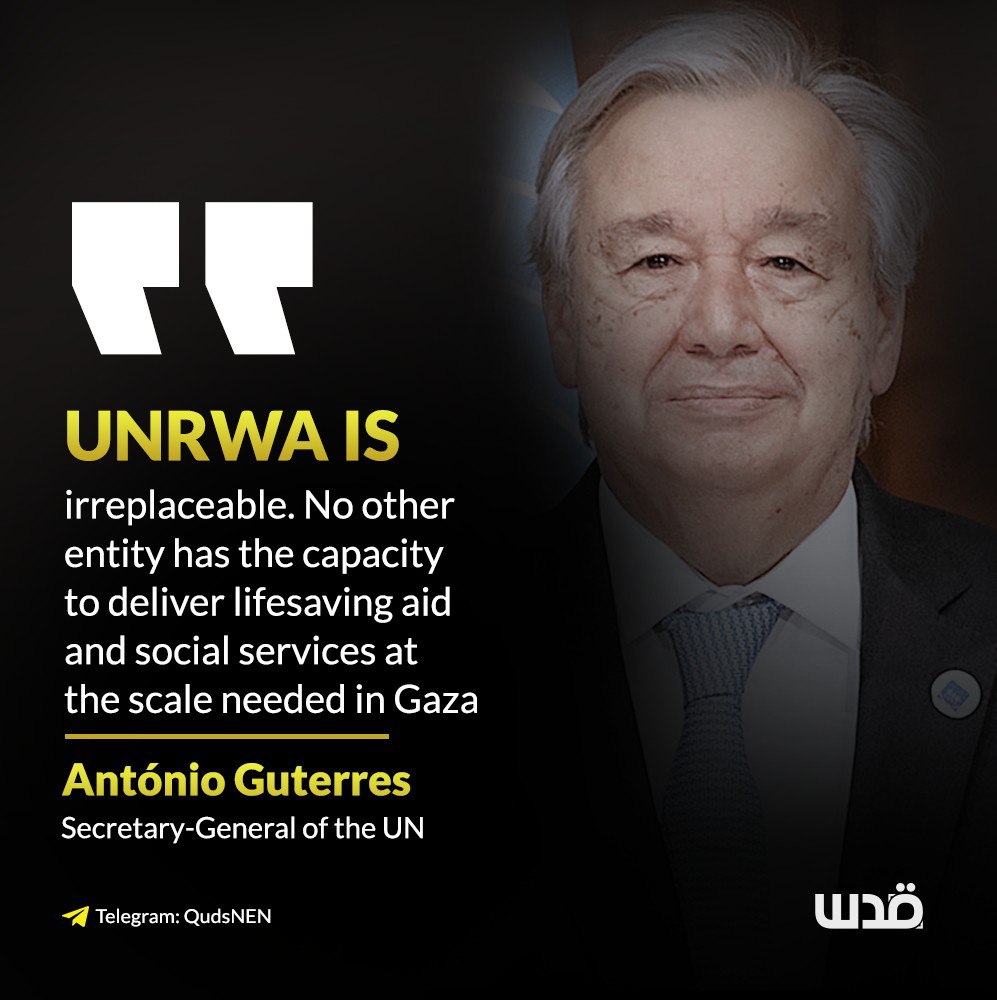
According to UNRWA, Israel has bombed 190—more than half—of the agency’s facilities in the Gaza Strip, some of them more than once since the genocide began. As a result, thousands of Palestinian civilians have been killed and injured while seeking refuge.

War-ravaged enclave

By UN estimates, 1.9 million people in the war-ravaged enclave are internally displaced, including some individuals who have now been displaced up to nine or 10 times. Israel’s evacuation orders, its widespread damage to both public and private infrastructure, restrictions on access to essential services, and the ongoing Israeli violence constitute the main causes of the mass displacement waves.

Given these facts, all nations must fulfill their international obligations by enacting strong sanctions against Israel and severing all political, financial, and military support and cooperation. This should include immediately halting arms transfers to Israel, including export permits and military aid; otherwise, these nations will be held accountable for the crimes that have been committed in the Gaza Strip, including genocide.

Furthermore, accountability must be established at the local, regional, and global levels. Working diligently and cooperatively to pave the way for universal jurisdiction will enable national courts to hold accountable the perpetrators of crimes against Palestinian civilians.

Additionally, the International Criminal Court must continue to investigate any and all crimes committed by Israel in the Gaza Strip; broaden its investigation into criminal responsibility of all parties, including Israeli Prime Minister Benjamin Netanyahu and Defense Minister Yoav Galant, in order to hold all perpetrators accountable; issue arrest warrants for those responsible; and acknowledge and address Israel’s crimes in the Strip as international crimes that fall under the purview of the International Criminal Court and are clearly crimes of genocide.

This article is reproduced from Euromed Monitors.

Continue reading
Living in a Tent: Gazans Pour Out Their Woes

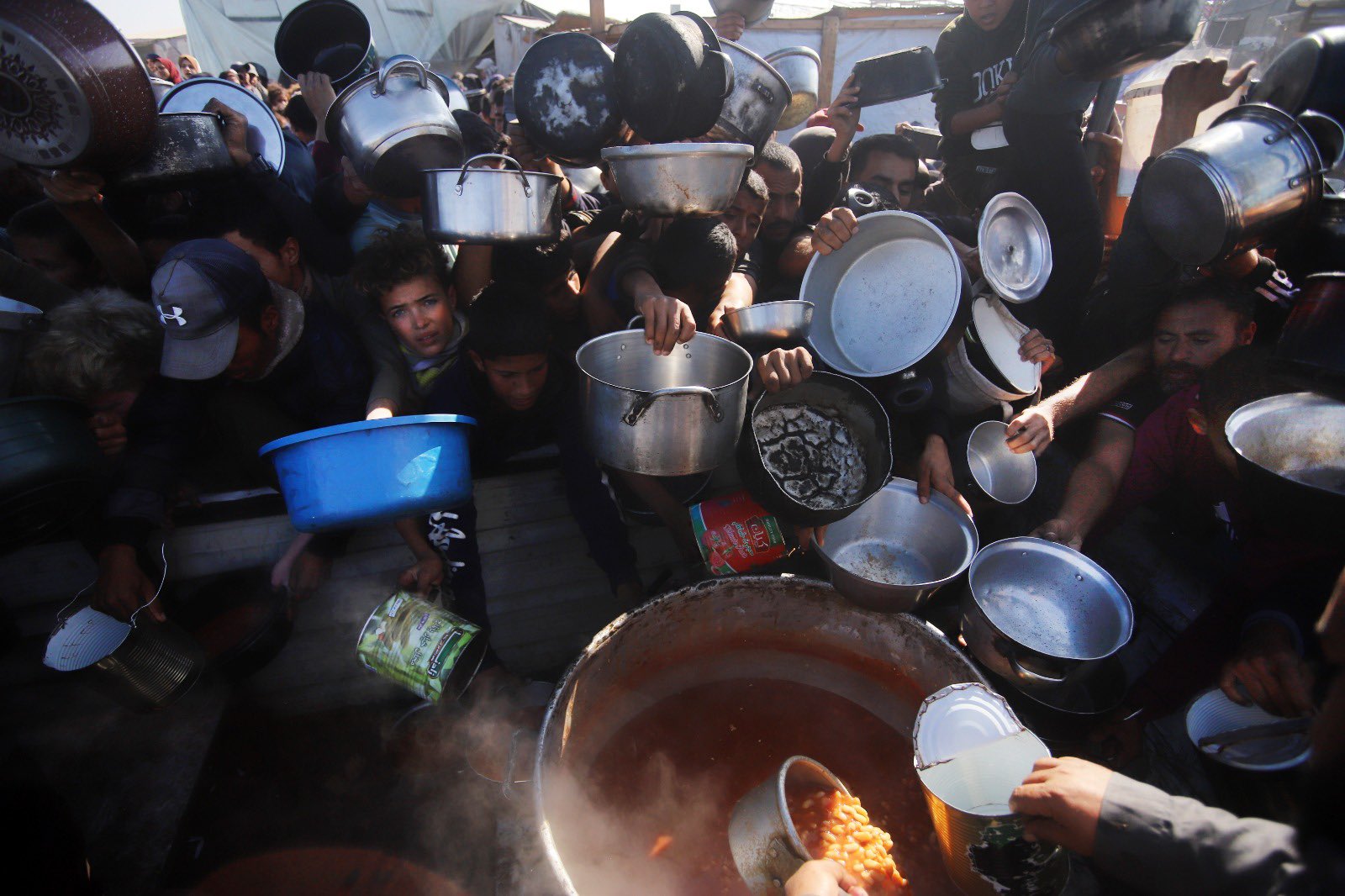
Across vast agricultural lands and along the coast in central and southern Gaza, tens of thousands of tents have become shelters for hundreds of thousands of Palestinians displaced by the ongoing, bloody Israeli war for the 10th consecutive month.

Once a symbol of the Nakba (catastrophe) and displacement for more than seven decades, the tent has now become a dream for thousands of displaced families in Gaza, despite the harsh living conditions it imposes.

What is it like to live in a tent? This question might seem devoid of emotions and disconnected from the harsh realities of Gaza amid the Israeli genocide that has taken many Palestinian lives but failed to break their will and determination to cling to their land. However, the  question is crucial to understand the extent of the Palestinian tragedy and resilience.

The Palestinian Information Center (PIC) interviewed some of those that were displaced and are now living in tents to see the harsh situation they are now under.

Quest for a tent


Whilest all those interviewed speak of the difficulty of living in a tent – suffering the harsh hot summers and cold winters – for many of the displaced, the tent has become a dream come true as it is easily hoisted and dismantled quickly. This is important for those displaced who needed to move more than once because of the Israeli army gunfire, tanks, drones and warplanes.

Mohammed Said said he bought a tent for 1,200 shekels ($330) after he could no longer bear living in a “khas,” a makeshift shelter made of wooden sticks covered with nylon or any other available material.

He explained a khas provides no privacy because of the mostly nylon material its made of and its impossible to move when forced to relocate. Thus, he went for a tent, having relocated at least twice already.

Various NGOs provide tents for free, but with demand shooting up some of the tents have started to be sold, forcing people to buy them due to the lack of alternatives. Today tents vary in shape and size, according to how much you want to pay.

Finding a place to set up the tent
After getting a tent, the second challenge is to find a place to set it up. Such areas are currently limited to around Khan Yunis and Deir al-Balah.

Khaled Al-Masri said he had to move his tent several times to be close to water sources and/or the scarce aid.

“Today, there are camps made up of a group of tents overseen by an association or individuals’ initiatives to provide some aid, ensure water access, and establish shared bathrooms. Other tents are set up randomly on agricultural land and near destroyed homes,” he said.

Life in the tents


Living in tents are tales of pain and suffering, varying according to the family’s resources, number size, tent location and the supervising entity.

A small family with a tent in an area receiving aid can adapt better and suffer less compared to an extended family with a small tent in an area lacking in services.

With the scorching summer heat, living in a tent among hundreds of others in Gaza feels like a living hell said  Amani Hamdan.

Hamdan told PIC she was forced to live in a tent on a land of a friend of her husband.  She is joined by her mother-in-law, disabled sister-in-law and her four children.

 “We relocated at least seven times from Khan Yunis since our house was bombed. Initially, we had no tent and suffered much until we managed to obtain one, and its only advantage is it can be unhooked easily if we need to move again.

Living in a tent is harsh and difficult, a  primitive life. And with no walls, and privacy, our voices reach the people in the tent next door and theirs reach us,” she added.

Suffering in tents


“We can hardly move around inside the tent, some  sleep on mattresses, some without, part of the tent holds food supplies. The temperature is scorching, forcing us out of the canvas. In winter, we were drenched by rain; now, the heat is unbearable, but we thank God for what we have,” Hamdan added.

“We cook on fire outside the tent, bake bread in a shared oven, share a bathroom, and bathe rarely, needing prior coordination with the other tent partners. The children start their morning search for wood, while my husband travels long distances for water that is sometimes brought by volunteers. Life has become primitive with no kitchen, bathroom, or water faucets.”

What is a tent?


After enduring the harsh tent life for months, engineer Mohammed Munir wrote about its meaning, “To burn while sitting inside, to suffocate with no air or cooling. It’s like a greenhouse during the day.”

 “A tent means living on the ground, separated only by fabric, coexisting with all the insects of the earth as you are now their guest,” He wrote on Facebook.

“Normal activities become complicated, like taking a nap or a bath, walking comfortably, sitting peacefully, feeling safe, or sleeping without back pain from the hard ground, all of our dreams are now out of reach.

A tent means no privacy, speaking in whispers inside your tent while your neighbor hears you. With tents set up on sand and agricultural land, it means living with all types of insects and with no hygiene,” Munir concluded.

The meaning of a tent


“A tent means having no wall to lean on, no private life,” Sama Hassan wrote.

 “Displacement means not to live in safety or stability. We first moved from Gaza City to the north in search of ‘fake’ safety until the missiles to land on us. We then fled to southern Gaza in the first Friday of the war and stayed in Khan Yunis for two months, then moved to Rafah when the city was invaded in early December 2023.

 With each relocation, I lost a thread of my privacy, becoming more displaced and homeless like thousands in Gaza. A tent is harsher than a shared room in a stranger’s house as the bathroom is either within the tent, set up primitively, or shared, half a kilometer away, established by a charity. If a woman needs to use it at night, she must wake a man to escort her,” she ended by saying.

Life in a tent is hard for women, who must fully dress as they usually do when they go out of the house. She maintains dressed at all time despite the heat, lack the freedom of movement. In the tent, fires are lit, cooking is made, washing dishes, with large water containers placed in the corner.

Bathing in a tent involves women surrounding the one washing with thick blankets, like forming a small tent within the main tent, with the woman hurrying before the others tire of holding the blankets.

If living in a tent is already insufferable, doing so amid the ongoing Israeli genocide and bombings is even more so, because the strikes continue targeting as what happened to us in Rafah and Khan Yunis. This is beyond words.

In recent months, Israeli bombs have burned tents and killed dozens, leaving survivors to search for the remains of their their loved ones before finding a new place to set up another tent if one is available, continuing their struggle.

Continue reading
Shattered Dreams of Gaza

In Gaza, where daily life has become a battle for survival, the stories of Palestinians who lost their homes in the midst of the genocidal war waged by Israel on the Strip 10 months ago come as a mirror-image reflecting the suffering of an entire people, carrying with it bitter human details of what it means for someone to lose their home.

The Al-Sayyid family was living in peace until that fateful night. “The night had fallen, and suddenly, we heard the sound of a huge explosion. Then the voices of the remaining neighbors shouted ‘I had to evacuate the area because there was a threat to blow up the residential tower opposite my house,’” Ahmed, the father, tells the Palestinian Information Center.

At first Ahmed’s family of a wife and seven children moved to a shelter school in the Sheikh Radwan neighborhood south of Gaza City, and as the Israeli ground invasion expanded, they moved to Al-Aqsa University in Khan Younis but when the Israeli army withdrew from the city, they went back.

“I did not wait a minute after I learned of the occupation army retreat to the northern parts of Gaza Strip. Me and my brother rushed to inspect our three-story house. As soon as we arrived there, we were shocked by what happened to the place,” Ahmed told the PalestineIn formation Center Tuesday.

“I found a large part of the house destroyed by artillery shells and burning furniture. It was harsh moments. This is the first time I have faced such an experience like thousands of others who repeatedly lost their homes in previous Israeli wars.”

The man, who is in his 50s, stresses “losing a house is not an easy matter. You are not lose stones here. You feel as if someone has token you to a distant world, erasing a lifetime from your memory. In every corner of the house there are memories, feelings, emotions and life experiences.”

Israel has systematically and extensively destroyed homes in Gaza, completely destroying hundreds of thousands of housing units and in just 283 days,  it has turned their owners and residents into homeless people living in tents and shelters.

Israel warplanes bomb houses over the heads of their residents resulting in their instant deaths. In many times the people mostly women and children are deeply buried in the rubble of these homes. This is not to forget the aerial bombardment of blowing up residential blocks.

Residents ask why is this happening to us? There is no need for it. International organizations protest and condemn but to no avail.

Ahmed points out the psychological and social pain is more severe than the material loss. “Many a time, my tongue twists and turns when my children ask ‘we are going to get back to our house, how long will it take to repair it, how long do we have to stay here?,” Ahmad waves his hands at a loss.

 “How can children feel safe in a temporary shelter? They have lost everything, even their small toys.”

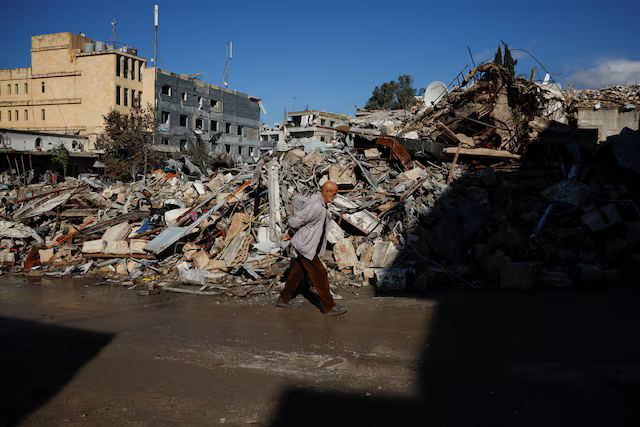
Satellite images by the United Nations Satellite Center show 35% of all buildings in the Gaza Strip are either completely destroyed or extensively damaged due to this Israeli war of annihilation. This means the number of buildings razed to the ground is 88,868.

In its last March assessment, the center used high-resolution images taken by satellites and collected on 29 February, and compared them with images taken before and after the outbreak of the war.

Dreams crushed

Whenever she remembers her home and her memories there, Aya Ahmad, is reduced to tears.  “I had a private room and/or a suite. All my memories, books, and office are gone now.”

“I am a medical student at the beginning of my third year, and at the beginning of my university studies, my father prepared the second floor of our house, bought me a large collection of medical books, and prepared a special room for me with an office, on the walls of which I wrote my hopes and ambitions,” Aya told the Palestinian Center

The 23-year-old girl lives in the city of Khan Yunis, and she has never been forced to move in previous Israeli wars on Gaza, as in this war.

“This is the first time I have been displaced, and when we were forced to do so at the beginning of December 2023, we cried a lot then. We took a few of the house’s belongings in the hope that we will get back.

But this wasn’t so, its been 10 months now since the war started, it hasn’t stopped, we were not able to return to our house which we lost subsequently due to the bombing, and we lost most of our personal belongings there. We moved between tents, and we lost many loved ones, and then the destruction of the house increased our pain. My certificates, my clothes, and my memories were all crushed, and with them many dreams were lost too.”

The garden of the house was Aya’s refuge after the rigors of a long university day. She had pleasant evenings with her parents under the palm and lemon trees on summer nights. But no more, for all of the family now are sheltering in tents of those that were forcefully displaced.

“My wish was to return home, I even wanted to return to it after the occupation forces retreated from our area. At the time, it was still standing and was only partially damaged, but the occupation army returned months later and bombed.”

Aya is still confident about rebuilding her house and whatever

the occupation destroyed, despite the pain she experiences whenever she looks at pictures of her former home and the social memories of each moment there.

A UN assessment found it would need a fleet of more than 100 trucks working for 15 years to remove the 40 million tons of rubble in Gaza. Such an operation could between $500 and $600 million.

According to the assessment by the UN Environment Programme, last month, 137,297 buildings were damaged in Gaza alone not to say anything about the destroyed buildings.

Not stones!

As for Abeer Abu Salem, resident in the Beit Lahia Project in the north Gaza, the smell of gunpowder still haunts her, as if it had just happened. “I will never forget what I experienced that evening, and it cannot be erased from my memory. I cannot describe the scene because of the horror of what I saw.”

Abeer recounts what happened: “I heard the sound of an explosion and saw the walls collapsing and columns flying. I tried to escape but could not, and with the air closing in, I found myself in the second room. I cannot imagine that I am still alive. It all happened in seconds, turning my life upside down.”

Abeer stayed in the Indonesian hospital for about a month, before the occupation army forced them to flee to the south of the Gaza Strip. When asked about what it means to lose a house, she answers:

“It is not easy to lose your house you grew up in. The house is full of precious memories. We worked hard for many years so that my father could build it for us as an apartment above the family home.”

She points out the fear she experiences is not related to their ability to rebuild the house that was leveled, as much as it is to the emotional feelings of seeing what happened to the family home.

 “We are now displaced. We do not know the fate that awaits us after the end of this cursed war. We cannot think about whether we will truly return to Beit Lahia or whether we will live what our ancestors lived when they forcibly left their homes 76 years ago in the Nakba of 1948 and died on “I hope to return,” she laments.

Continue reading