Domination Space For Common Space

By Dr Khairi Janbek

When we think of contemporary Iran, one always believes that the Arab Middle East had always been dominated by the three Non-Arab American allies; Iran under of the Shah, Turkey and Israel.

One thinks that those “neighborhood police stations’ were the guarantors of stability through their convergence, and at times contradictions, in the age of Cold War and oil. However, the Shah of Iran was deposed and the Anti-communist Cold War ended, but that didn’t mean that oil stopped becoming important nor that Russia and China were no longer threats.

One would say, that the rehabilitation of Iran and possibly turning it into a negotiations partner aims at keeping the third angle of the police stations triangle going, because non of the Arab countries, no matter how much they tried, could never replace Iran, because no Arab police station is permitted to emerge as a third angle.
Having said that, it would be beyond naive to think that the expansion of Iran’s power and influence happened by stealth or escaped the notice of the US and NATO.

After after all Iran grew to become a Red Sea country through its influence on the Houthis in Yemen, a Mediterranean country through its influence in Syria as well Lebanon through Hezbullah and the major Gulf country through its supporters in Iraq. 

In fact this Iranian domination of space is what has created a common space between all its long-arm organisations in the region.

Essentially, if we compare Iran to an octopus, all those various groups are its tentacles, and they all serve the purpose of Iran’s strategic interests, albeit not through a push-button approach, but through not taking any action which would not please their Persian master.  

Of course, this puts Iran in a strong position to be a major player in the region and an inescapable negotiations partner for the US, which is also convenient for the Americans, in order to remind their Arab allies who is their protector in a region policed by Turkey, Israel and Iran.

Of course this takes us to the point of saying that, for all intents and purposes, for the Americans a trusted adversary is more important than distrusted friends, and that it would be absurd to think that all those long arms of Iran in the Arab world can be amputated by military means; they certainly can be weakened, but without the consent of Iran and without the right price, so long as it remains behind them, nothing much can change.

At this point, from what one can only see, is that no one in their right mind or otherwise, will permit a war to emerge in which Israel is pitted against Iran and the US as well as NATO putting all their weight behind Israel and forcing the Arabs to choose their camp.  

That would be the scenario of the end of the world as we know it, or with major civil wars in the Arab countries controlled by the tentacles of Iran, and which no one wants.

Dr Khairi Janbek is a Jordanian writer based in ParisFrance

Continue reading
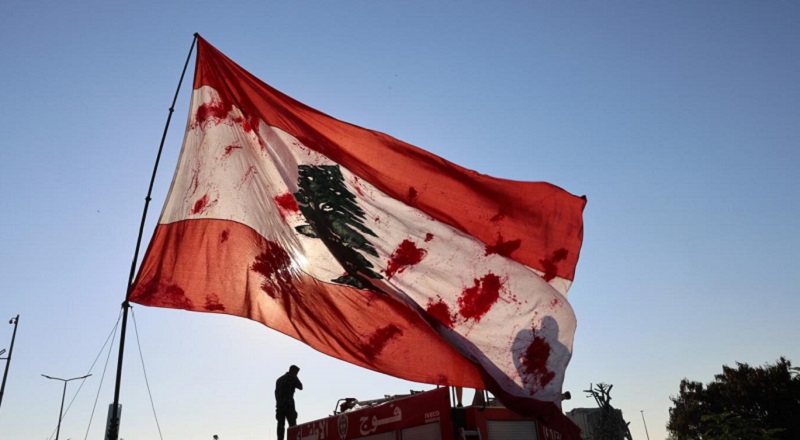
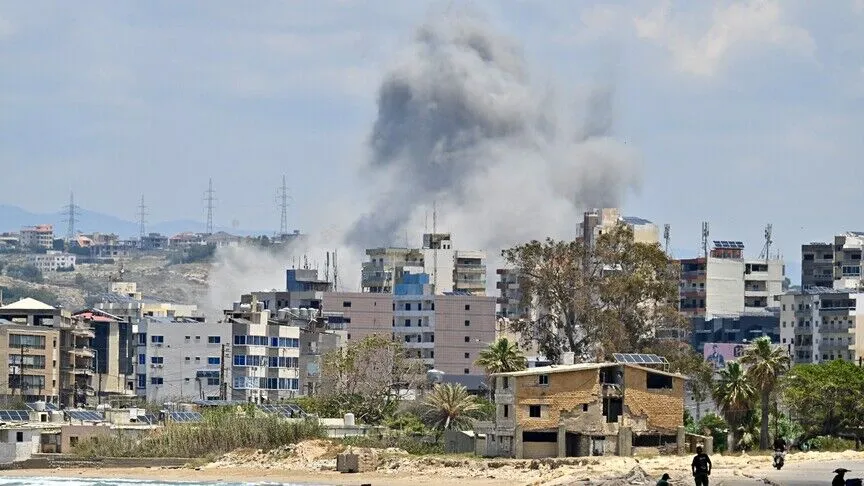
Israel Kills 50 Children in Two Days in Lebanon

The average number of children killed per day in Lebanon this week is more than double the number of children killed per day during the country’s devastating 2006 conflict.

An estimated 400 children, or about 12 children per day, were killed during the 33-day 2006 conflict[1]. Now, 50 children were killed in a span of two days, on Monday and Tuesday of this week according to the Lebanese Ministry of Public Health. The ministry also expects that more children remain buried under the rubble of destroyed buildings across the country.

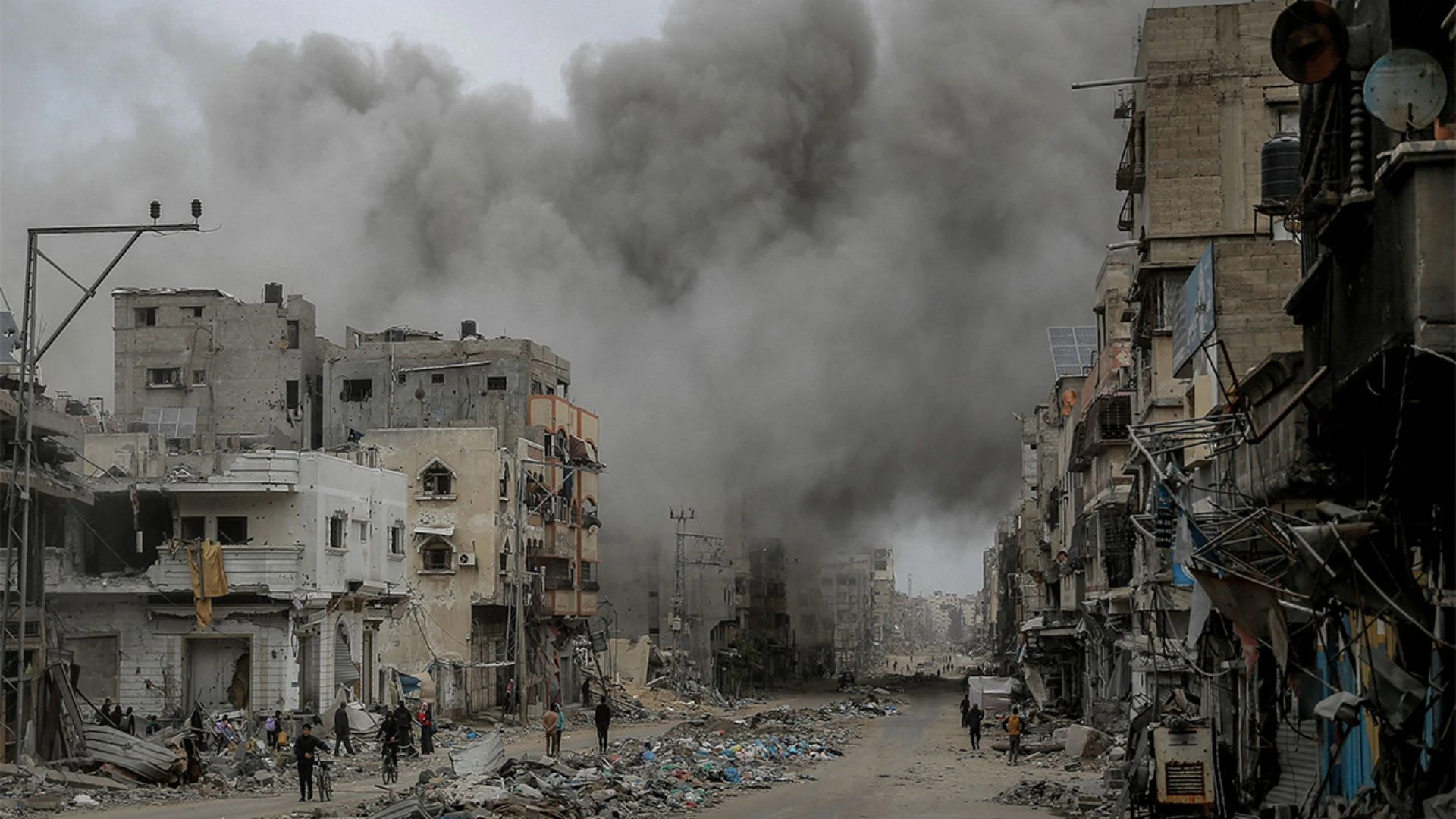
The escalation in recent days has killed and injured thousands, spurred mass displacement, caused extensive damage to infrastructure and instilled an unimaginable fear in the daily lives of people across the country.

“As this week continues the devastation mounts, piling tragedy upon tragedy,” said Edouard Beigbeder, UNICEF Representative in Lebanon. “The attacks on Lebanon are killing and injuring children at a frightening rate and devastating any sense of safety and security for hundreds of thousands of children across the country.”

The conflict comes on top of the already fragile situation for tens of thousands of families in Lebanon. The country has been impacted by a string of unrelenting crises in recent years, including the massive Port of Beirut explosion, the impact of the COVID-19 pandemic, and the fifth year of a crippling economic collapse that has sent poverty rates soaring.

November 2023 survey conducted by UNICEF in Lebanon found more than 8 in 10 households had to borrow money or buy on credit to purchase essential grocery items, a 16 percentage point increase over six months. The same survey found that in the South Governorate, 46 per cent of households said their children were anxious and 29 per cent were depressed.

In the last 72 hours alone hundreds of thousands of people are estimated to have been displaced to host communities and over 70,000 people to shelters, according to the Lebanon Disaster Risk Management Unit. Before the intense military operations of this week, more than 111,000 people, including more than 39,000 children, had already been displaced from villages and towns in the south of Lebanon. It is most likely that they are being displaced for a second time now.

Amid the extensive damage to civilian infrastructure this week, water pumping stations constructed or rehabilitated by UNICEF in the Bekaa and South Governorates have been damaged, leaving 30,000 people with no access to clean drinking water.

In response to the rapidly deteriorating situation, UNICEF in collaboration with the government of Lebanon, has provided essential supplies to shelters, including thousands of bottles of clean drinking water, hygiene kits, education and recreation supplies for children, blankets and sleeping bags, personal hygiene items for women and girls, and nutrition supplies including supplements and baby food. UNICEF is also providing psychosocial support, including child protection services, education, and recreational activities at many shelters.

UNICEF has urgently initiated critical repairs on damaged water and sanitation facilities, dispatched 20 mobile health units to provide life-saving medical care and immunizations, and delivered 100 tons of emergency medical supplies to hospitals facing severe shortages and stock-outs.A further 25 tons of emergency supplies are due to arrive in Lebanon in the coming days and 53 tons are under procurement.

“The situation in Lebanon, already teetering on the brink, has moved from crisis to catastrophe. The suffering of children must stop,” Beigbeder continued. “The only way to do this is through an immediate de-escalation. A full-scale conflict would have a devastating impact on the country’s 1.3 million children.”

UNICEF urgently calls for all parties to uphold their obligations under international humanitarian law to ensure the protection of civilian objects and civilians, including children, humanitarian workers and medical personnel. This includes facilitating the safe movement of civilians seeking safety.

UNICEF remains committed to responding to the increasing needs. UNICEF requires $US39 million to implement its 2024 conflict response plan but has only received $US7.6 million to date. More funds are urgently needed to support the children of Lebanon during this dramatic escalation.

Reliefweb

Continue reading
‘A [Lebanese] Bad Dream’

“I saw the whole mountains leading to Naqoura. There were flames, black dark smoke like clouds. It was really like a mirage. It was like a dream, like a bad dream, weird dream. And that’s how the nightmare started.”

A Lebanese woman has told the Guardian

Continue reading
Guterres: ‘We Failed Gaza’

UN Secretary-General Antonio Guterres has urged world leaders to increase support for UNRWA, which provides vital humanitarian services for the Palestinian refugees, especially for those living in the war-torn Gaza Strip.

Guterres made his plea at a high-level meeting co-organized by Jordan and Sweden in support of UNRWA, which was held on the margins of the UN General Assembly meetings in New York.

Continue reading