UPDATE: 340 Missiles Land on Israel in 24 Hrs

CROSSFIREARABIA – The number of Hezbollah missiles launched from southern Lebanon, Sunday, has increased to 340.

This is the largest single volley of missiles Hezbollah struck north and center Israel in a single day since 7 October, 2023.

These trajectories, including missiles and drones have reached all parts, cities, towns, settlements and military and naval bases across Israel, reaching to the Ashdod Port just before the northern Gaza Strip.

The major city of Tel Aviv took a battering on Sunday, 24 November, 2024, being volley-struck four times in a single day – the biggest ever scare since 7 October.

Today, sirens, according to Israeli sources went off 500 times across Israel with four million Israelis spending their day in underground shelters.

Full details can be found below:

Military expert Brigadier-General Elias Hanna said that Hezbollah is trying – through its intensive rocket barrages towards central Israel, Sunday – “to draw a new equation whose title is the heart of Beirut versus Tel Aviv.” He explained that Hezbollah has proven its ability to launch rockets from the front lines into the Israeli interior, pointing to the large number of rockets it launched today compared to a previous daily average of between 70 and 100 rockets.

Continue reading
Hezbollah: 250 Missiles Land on Israel in One Day

CROSSFIREARABIA – It’s being described as a black day as 250 Hezbollah missiles land on Israel from southern Lebanon in under 24 hours.

For Israel, it’s a first nation-wide alert with 24th November, 2024 likely to be remembered as one of the most difficult days between the Israeli army and Hezbollah fighters.

Over 250 missiles have landed on different parts of Israel including Naharya, Acca, Haifa, Beith Takfah, West Galilee, Krayot, HaSharon, Herzilya, Tel Aviv and the port of Ashdod, bordering Gaza, which is 150 kilometers away from Tel Aviv.

It speaks much about the encroachment of the so-called “Israeli depth” that today lies bare with Hamas in the south and Hezbollah in the north.

This is being described as “unprecedented” in a wide set of attacks covering at least half of Israel and is trending on the social media with its continual updates.

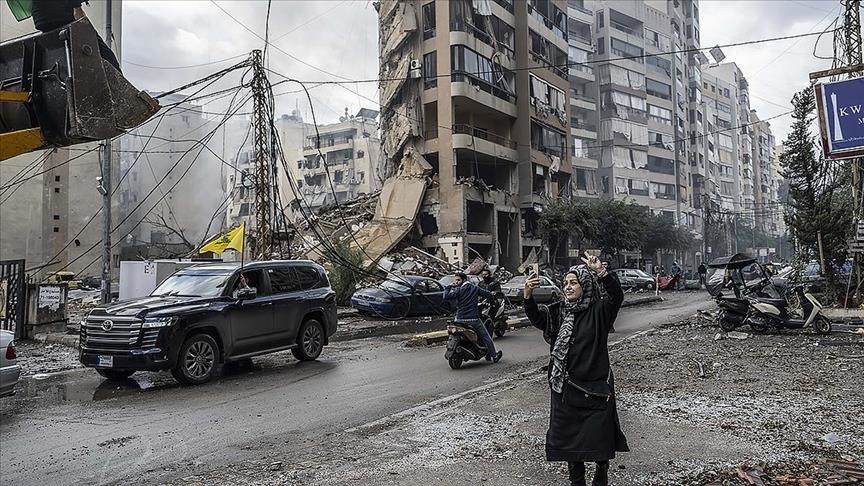
It began on early Sunday morning, after Israeli warplanes bombed the southern district of Beirut leading to many deaths and injuries.

The rockets on northern Israel that included military bases near Tel Aviv had been climbing from 150 missiles, some of who are ballistic to 170 with the latest figure standing at 200 and 250 and set to increase.

Damages and fires is being reported in the Israeli media with at least 10 people being injured but this is being described as the “war of missiles.”

https://twitter.com/search?q=Hezbollah%20missiles%20on%20Israel&src=typed_query&f=top

With these projectiles landing on Israel daily – they increased in intensity when Israeli decided to stage its air and land war on Lebanon last September with the killing of Hezbollah’s Chief Hassan Nasrallah, the escalation on the Jewish state have continued daily.

The only people that seems to be affected by this are civilians. Whilst Israel’s war on Lebanon have displaced 1.4 million people in the south of the country, hundreds of thousands of Israelis have also been displaced from their homes and living in sheltered accommodation.

But apart from that up to two million Israelis in central Israel and the Tel Aviv conurbation have been “running up-and-down” between underground shelters.

Today sirens dominate the Israeli scene, going on and off on all hours of the day, at night, early mornings, when people are asleep and during the day.

The rockets, missiles, sirens have made life so unbearable that life has changed dramatically with hundreds thousands already left the country and many more thousands are thinking of actively getting out.

Today, the atmosphere in Israel – never been experienced before and judged from the siren blasts at 401 sound alerts in 11 regions – is tense and downright frightful, a bit like Gaza or the southern district of Beirut. Its no longer the place its original founders intended it to be.

The new message is “you can’t enjoy yoursleves while living on the lands of another people; all must suffer the consequences.  Israelis are realizing that. Their way out is through the congested Ben Gurion Airport which is topsy-turvy shutdown due to the daily missiles and drones.  

Continue reading
6 Suicides Eke Mental Health Crisis in Israeli Army

At least six Israeli soldiers have taken their own lives in recent months, the Israeli daily Yedioth Ahronoth revealed on Friday, citing severe psychological distress caused by prolonged wars in the Gaza Strip and southern Lebanon as the primary cause.

The investigation suggests the actual number of suicides may be higher, as the Israeli military has yet to release official figures, despite a promise to disclose them by the end of the year.

The report highlights a broader mental health crisis within the Israeli army. Thousands of soldiers have sought help from military mental health clinics or field psychologists, with approximately a third of those affected showing symptoms of post-traumatic stress disorder (PTSD).

According to the investigation, the number of soldiers suffering psychological trauma may exceed those with physical injuries from the war.

The daily cites experts as saying the full extent of this mental health crisis will become clear once military operations are completed and troops return to normal life.

In March, Lucian Tatsa-Laur, head of the Israeli military’s mental health department, told Haaretz that approximately 1,700 soldiers had received psychological treatment.

Multiple reports have since emerged indicating that thousands of troops are suffering from mental health issues owing to extended deployments in Gaza and southern Lebanon.

Regional tension has escalated due to Israel’s brutal offensive on the Gaza Strip, which has killed over 44,000 people, mostly women and children, since a Hamas attack last year.

The second year of the genocide in Gaza has drawn growing international condemnation, with figures and institutions labeling the attacks and blocking of aid deliveries as a deliberate attempt to destroy a population.

Israel also faces a genocide case at the International Court of Justice for its deadly war on Gaza.

In a landmark move, the International Criminal Court on Thursday announced it had issued arrest warrants for Israeli Prime Minister Benjamin Netanyahu and former Defense Minister Yoav Gallant over war crimes in Palestinian territories, including Gaza.

The conflict has spread to Lebanon, with Israel launching deadly strikes across the country in an escalation from a year of cross-border warfare between Israel and Hezbollah since the start of the Gaza war.

Continue reading
Israelis Panic as Missile Lands in Tel Aviv

Panic and anxiety struck Israelis after a rocket fired from Lebanon fell directly on a building in Tel Aviv. Later they spoke about the damage caused by the projectile and the shock they felt after it fell.

The Israeli media reported the “terrible destruction that befell the building in Ramat Gan after the rocket fell; They “wondererd “how can everything be routine after an evening like this!”

Israeli Radio Kol Hai stated in a media statement “the radio studios, opposite the place where the rocket fell, were damaged. It confirmed “damage to the radio building and technical equipment, while the radio employees were in the fortified room, which is used as a synagogue, moment the rocket fell.”

The Israeli media also quoted a settler: “When the sirens started in our area, I never thought about standing at the window and taking pictures, but I immediately ran for cover,” and then “a rocket fell 10 meters from my house and shattered the windows, while my body went into a state of pain due to the shock.”

Meanwhile the Israeli media reported that “settlers began collecting the rocket fragments and exchanging them,” as the rocket fell in Ramat Gan.

It pointed out “dozens of young men, after the rocket fell in Ramat Gan Monday, came and began collecting the many rocket fragments in the area.”

One eyewitness described: “They [Israelis] began exchanging: I give you a large fragment and you give me two small fragments,” asking: “Since when has this been the custom?”

One media source stated: “People think these rockets are a toy, they do not realize how dangerous they are until they falls on their heads.”

Monday, Hezbollah said it bombed the Tel Haim base (of the Military Intelligence Division of the Israeli occupation army), 120 km from the Lebanese-Israeli border, in Tel Aviv, with a salvo of high-quality rockets and a squadron of attack drones, which hit their targets with precision.

As Hezbollah’s missiles hit their targets, the Israeli media speculated what their type was, especially the missile that fell on the “Greater Tel Aviv” area and directly hit a building after Israeli air defense systems failed to intercept it. The Israeli media further suggested that the missile launched from Lebanon was a Fateh 110 type with a range of 300 km.

The Ramat Gan police chief acknowledged the damage caused was by “a direct hit, not by interception shrapnel” and expressing “fear of the collapse of buildings”.

He pointed out that “Hezbollah used a missile carrying a very heavy warhead, which caused great destruction in Ramat Gan,” according to Al Mayadeen.

Continue reading
Israeli Army Fails in Ground Campaign in Lebanon

On 1 October, Israel announced the start of its ground military operation into Lebanon, which included air strikes, artillery shelling, and assassinations, but the Israeli occupation army has not yet been able to position itself in any village or town its soldiers have entered due to the resistance from Hezbollah fighters.

High Death Toll

According to Hezbollah the toll of Israeli army losses since the start of what it called the “ground maneuver in southern Lebanon” reached more than 100 dead and 1,000 wounded officers and soldiers, in addition to the destruction of 43 Merkava tanks, 8 military bulldozers, 2 Hummer vehicles, 2 armored vehicles, and 2 personnel carriers, and the downing of 4 Hermes 450 drones, and 2 Hermes 900 drones.

Despite talk of an imminent truce, Israel is still continuing its military escalation and announced the start of a second phase of the “ground incursion” targeting Lebanese villages outside the scope of its first operation in the south of the country.

Military experts told Al Jazeera Israel was surprised by the intensity of the resistance it faced during the ground incursion, despite its success in assassinating a large number of military leaders at the first and second levels.

This partial success prompted it to modify its strategy and shift to a new tactic based on entering areas, booby-trapping buildings, then detonating them, and quickly withdrawing to avoid further human losses, especially after the resistance succeeded in setting up ambushes.

Why has the Israeli army not been able to occupy any Lebanese village despite the military buildup on the northern border for more than a month?

Unable to occupy a single village

Military expert Brigadier-General Hassan Jouni confirmed to Al Jazeera the Israeli military buildup. Despite its five divisions with between 50,000 and 60,000 soldiers according to the Hebrew media, the Israeli army was unable to occupy a single village. He explained there is a fundamental difference in military science between the concepts of raid and occupation.

According to Jouni, a raid is defined as an advance towards a specific target with the aim of detonating or booby-trapping it or carrying out a security or military mission, such as arresting or liquidating someone, followed by a rapid withdrawal. Occupation means controlling a specific target and positioning oneself there, while establishing defensive centres to protect it.

Regarding the events in the south, he considered that what happened was advanced raids targeting specific villages with the aim of destroying them and withdrawing without the intention of remaining.

Jouni pointed out the Israeli decision not to station themselves in those locations came as a result of the fierce resistance their forces faced there, as they realized that any attempt to remain would make them vulnerable to continuous attacks by the resistance, which intensified its targeting of their movements towards the border villages and towns with artillery and missiles.

Does this situation reflect the strength of the Lebanese resistance and/or is it a military strategy followed by the occupation army?

According to Jouni the concentrated ground operation aimed to penetrate deep into Lebanese territory to reach the Litani River, especially after the harsh strikes against the Hezbollah leadership. However, Israel, after believing the resistance had been exhausted, was surprised by its intensity and steadfastness, which prompted it to modify its strategies. Therefore, the actual penetration was less than expected and was limited to a depth of no more than three kilometers.

What is the military significance of the strategy of the occupation army entering border villages and booby-trapping them without completely occupying them?

Blowing up cities

Military expert Brigadier-General Ali Abi Raad told Al Jazeera Net the Israelis seek to achieve two basic goals by blowing up cities. They are:

First, to facilitate the movement of their forces during military operations. In areas that contain buildings, progress becomes more difficult due to the risk of the presence of resistance fighters inside them, which forces them to destroy these buildings to open the way for their movements.

Second, to make these areas uninhabitable, especially those that are considered an “environment for resistance”, such as southern Lebanon. By destroying them, the Israelis isolate the environment that supports the resistance, and punish the residents who may be part of it. This strategy is known as “punitive deterrence”.

Abi Raad confirms that this strategy is not new, but part of the Israeli occupation’s approach in all areas it controls, whether in Gaza, West Bank and/or Lebanon. This approach has been witnessed in several wars, including the 2006 war on Lebanon.

Burned areas?

Is the Israeli occupation seeking to impose a new reality by turning the border areas into burned areas instead of being demilitarized?

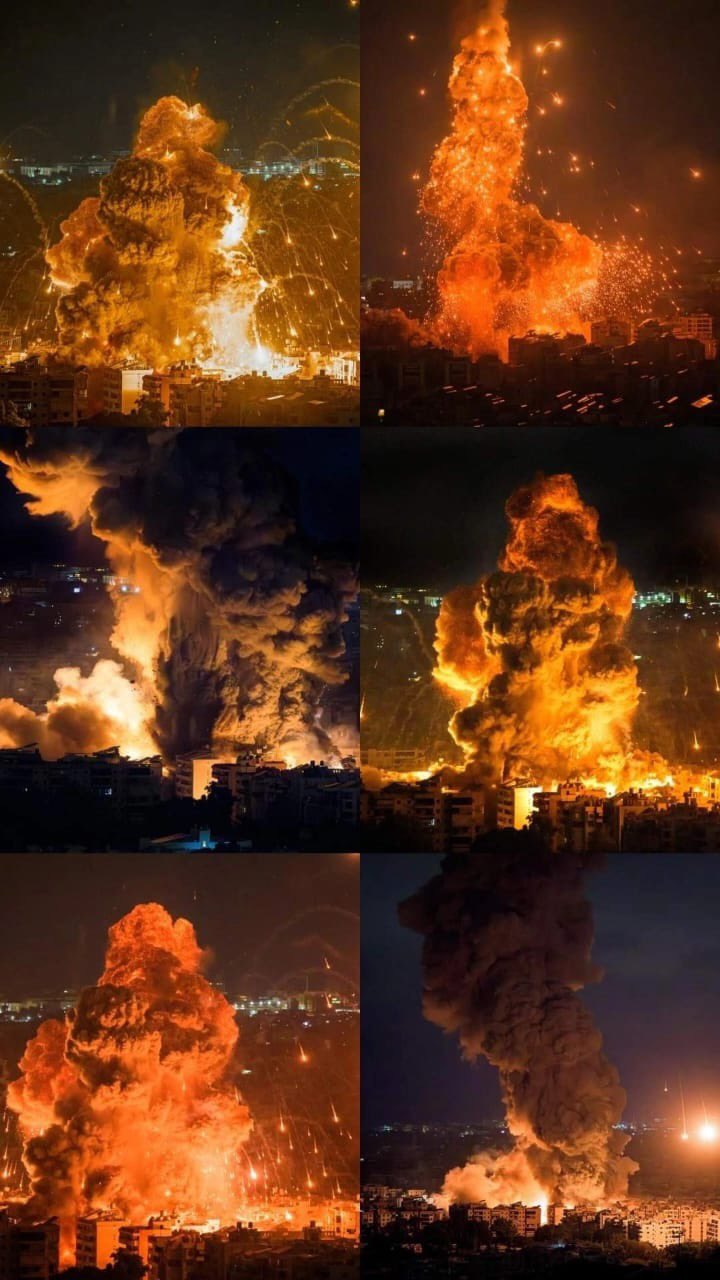
Military expert Abi Raad points out the Israelis are seeking to impose a fait accompli by using internationally banned weapons, such as phosphorous and vacuum bombs, and stated that MK84 bombs were used in the assassination of Hassan Nasrallah, Secretary-General of Hezbollah, and are currently being used in the bombing of the southern suburbs and a number of Lebanese border villages.

He explained that the effects of these shells are clear, as buildings fall completely to the ground and turn into ash, and that the resulting craters reach a width of 3 meters and a length of 7 to 8 meters, or more in some cases, reflecting the extent of the great destruction.

In his opinion, this problem represents a major threat, as the goal of the destruction is to eliminate life in those areas in the long term. He explained that if the war stops now, the reconstruction process is expected to take at least two years, wondering what the situation will be like if the destruction continues and the war worsens?

Do these tactics form part of a strategy aimed at pushing Hezbollah away from the border areas?

Brigadier-General Abi Raad says Hezbollah is part of the population of the south who are closely connected to their land and this war is “defending their lands”, as the border strip is close to homes that were built at huge costs, making it difficult for people to leave them easily, and they will return to them no matter what. Therefore, the idea of ​​​​removing the party from the south or the area south of the Litani is “unrealistic”.

On the political level, he believes an agreement may be reached on stripping  Hezbollah of its weapons in those areas, but the issue is not limited to a range of only 10 or 20 kilometers.

He explained the issue goes beyond the type of weapons the party possesses and the areas in which it is present. When it possesses missiles with a range of up to 100 or even 250 kilometers, then removing it to the north of the Litani will have little effect.

Continue reading