US Warplanes Makes 1200 Strikes on Yemen Since 15 March

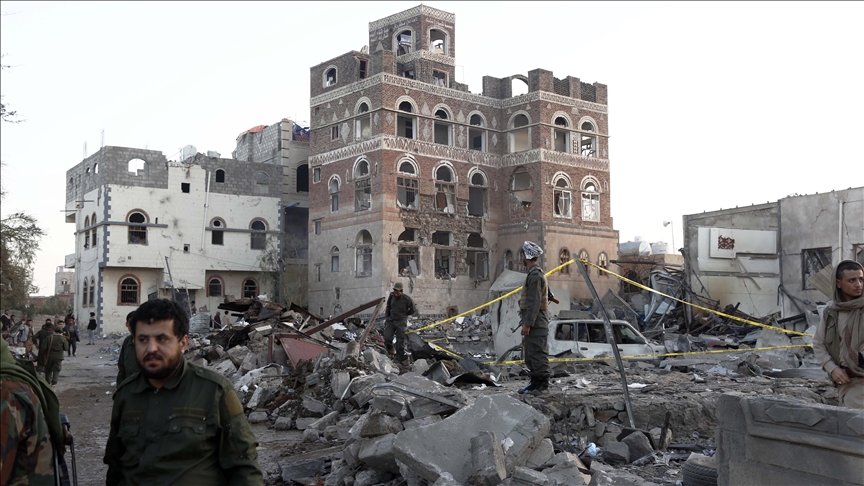
US warplanes launched 1200 airstrikes on Yemen since 15 March the Houthis announced on Friday. The Houthis stated the airstrikes resulted in the killing and wounding hundreds of civilians.

In a statement by the Houthi Foreign Ministry stated the United States ” launched more than 1,200 airstrikes and naval bombardments since mid-March, resulting in the death and injury of hundreds of civilians and the destruction of numerous civilian objects, including residential neighborhoods, ports, health facilities, water tanks, and archaeological sites, in flagrant violation of international law and international humanitarian law.”

It indicated that what the USA is doing in Yemen is “full-fledged aggression and a flagrant violation of the UN Charter and all international norms and conventions.”

The statement considered that Washington is trying, in a “miserable attempt to evade its responsibility for the crimes it is committing in Yemen.”

The group accused Washington of “working to cover up its sinful aggression against Yemen and its crimes against civilians and civilian objects, which are shameful to humanity, as well as its abject failure,” according to Anadolu.

On 15 March, the United States resumed its attacks on Yemen after President Donald Trump ordered his military to launch a “major attack” against the Houthi group, before threatening to “completely eliminate” them.

However, the group ignored Trump’s threat and resumed bombing sites inside Israel and ships in the Red Sea heading to Israel, in response to Tel Aviv’s resumption of its war of extermination against Palestinians in the Gaza Strip, which began on 18 March.

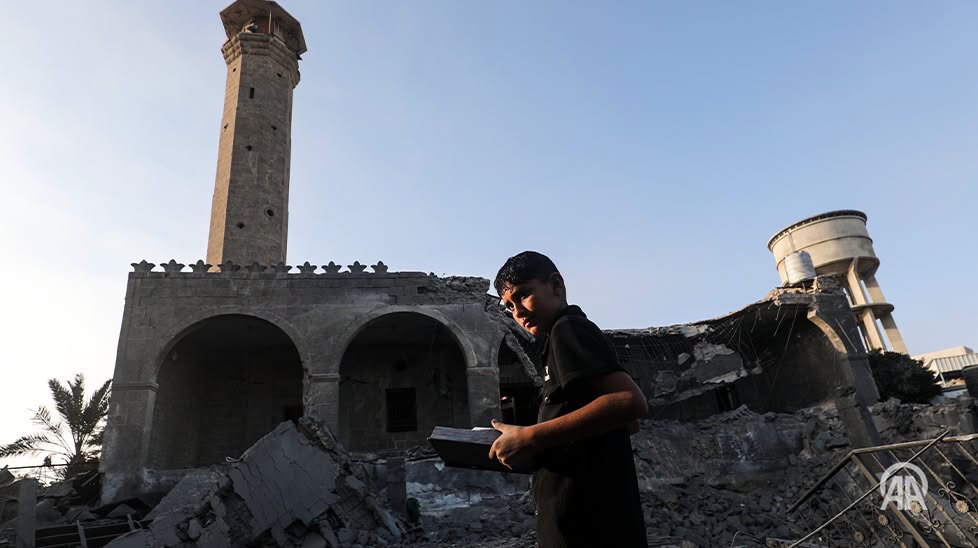
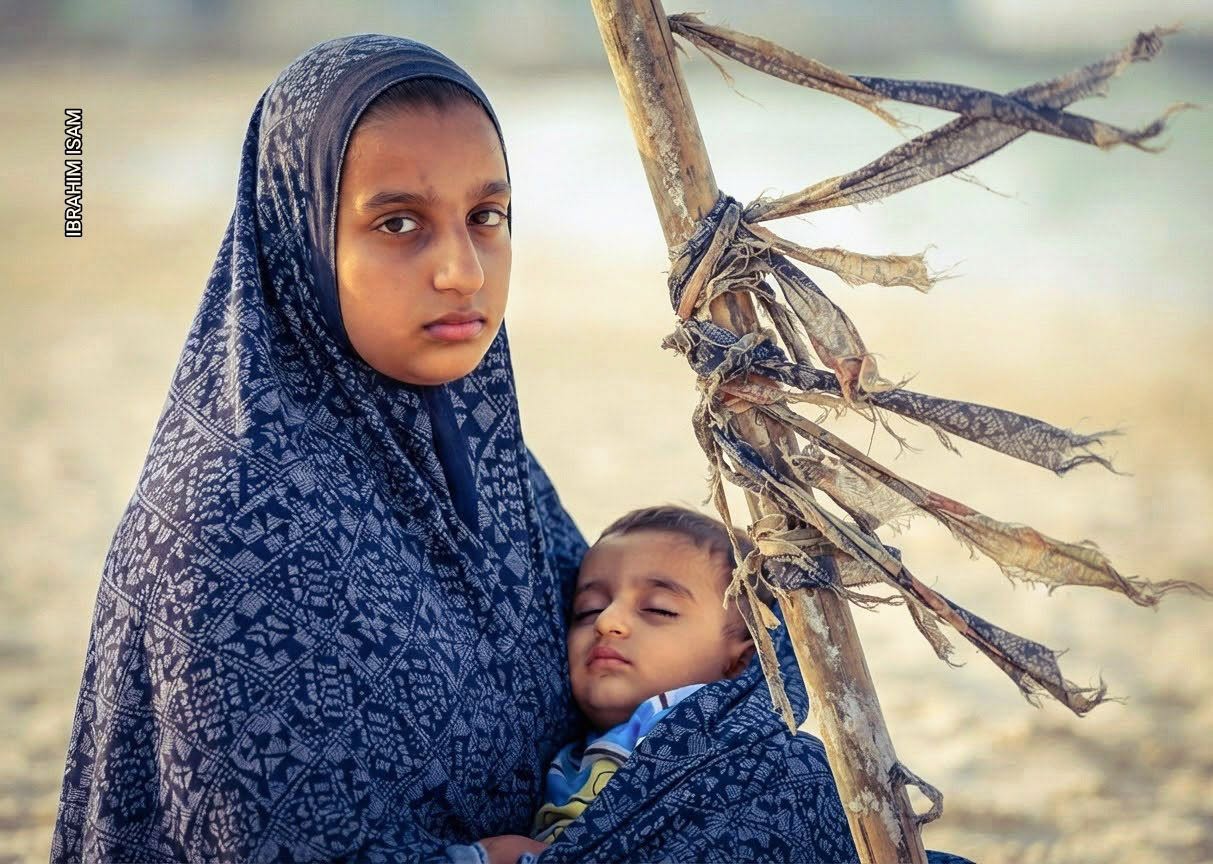
With full American support, Israel has been committing genocide in Gaza since October 7, 2023, leaving more than 168,000 Palestinians dead and wounded, most of them children and women, and more than 11,000 missing.

Continue reading
Rehabilitating Iran?

By Dr Khairi Janbek

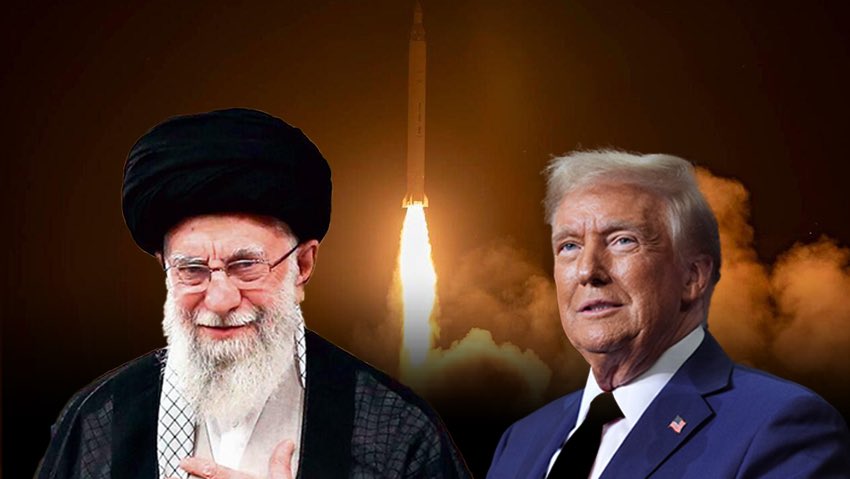
All eyes now are on the new game in the Middle East: The US-Iran negotiations. One would say the aim here is far more advanced than the Iranian nuclear programme when the agreement was torn up by US President Donald Trump himself who was more concerned with details which would eliminate all threats against Israel, and would that in all liklihood, transform the whole region.

It seems that in this early intense stage, the ambiance is for reaching an amicable agreement through the recognition that no matter of the outcome, there will be nothing divisive. Trump will continue creating crisis just for the sake of showing that he can control those crises, and act in the manner of the old Arabic adage, for neither the wolf to die nor the sheep to parish. While for the Iranians, they have everything to gain from a positive outcome to those negotiations.

Of course, the Iranian nuclear programme is an important component of these negotiations, and most often than not, at times Iran and at times its enemies, exaggerate the potential of the country to making nuclear weapons for political purposes.

Yet the fact remains that despite the possibility of Iran being still far from creating weapon-grade enrichment programme, if carried on unchecked, it is inevitable that at one point in the future it will have nuclear weapons. Consequently the fact remains, the onus is on Iran to prove credibly that its nuclear programme is for peaceful purposes, and accept periodically, the checks of the international nuclear inspectors.

The other dimension is the relationship of Iran with its proxies in the region, which falls under the category of threats to Israel. Well, and under the circumstances, Iran has to decide the reasons for its continued alliances with its proxies – whether such alliances served their purpose, or have become a burden than an asset – or if it can maintain these alliances with definte no threat commitment Israel but with political clout in Arab world affairs, which incidentally may not seem such a bad idea for Trump.

After all eliminating the threat against Israel is the primary concern, while at the same time his rich Arab allies buy their protection from him, a protection which Iran cannot dare to test.

But what is in it for Iran to reach an accord with the United States? One would say plenty. For a start it’s reintegration back into the region. After all it kept claiming it’s nuclear programme, is in reality, a peaceful programme and Tehran never had the intention of enriching weapons grade uranium.

Well, and with an accord it can now easily prove, and then can start dealing with the issue of not being a threat to Israel by either dissociating itself from these proxies which have become costly to its image and/or work in their transformation to political, unarmed forces and parts of the political structures wherever they exist in the Arab region.

Essentially if the sanctions against Iran are lifted and its assets are no longer frozen, Iran will be able to assume a very strong position in the Middle East region based on its economic strength and its enormous trade potential. In fact, Trump knows that any military action he takes against the Iranian nuclear installations, and any possible response will not have a decisive result. Therefore, the most likely decisive result will be, a new Iran, big in the region as well as moreover, that will owe him a favour.

In the meantime , we are still at the very early stage to even try to guess, but we can safely assume, that no matter how those negotiations proceed, nothing tangible is likely to happen before the visit of President Trump to the Gulf region in May.

Dr Khairi Janbek is a Jordanian analyst based in Paris, France

Continue reading
S. African Ambassador Gets Huge Welcome After Expulsion by Trump

The South African ambassador, expelled and declared persona non grata by the Trump administration, received a hero’s welcome upon his return to Cape Town on Sunday, with hundreds of supporters waving Palestinian flags and chanting “Free Palestine.”

The crowds at Cape Town International Airport surrounded Ebrahim Rasool and his wife as they emerged in the arrivals terminal in their hometown.

“A declaration of persona non grata is meant to humiliate you,” Rasool told the supporters as he addressed them with a megaphone. “But when you return to crowds like this, and with warmth… like this, then I will wear my persona non grata as a badge of dignity.”

“It was not our choice to come home, but we come home with no regrets.”

Rasool also said it was important for South Africa to fix its relationship with the US after President Donald Trump punished the country and accused it of taking an anti-American stance even before the decision to expel Rasool.

Rasool was previously declared persona non grata. His return comes as US President Donald Trump has cut all funding to South Africa, a move widely seen as retaliation for Pretoria’s case at the International Court of Justice (ICJ), where it has accused Israel of genocide in Gaza.

They were the ex-ambassador’s first public comments since he was declared persona non grata, removed his diplomatic immunities and privileges, and gave him until this Friday to leave the US. It is highly unusual for the US to expel a foreign ambassador.

Rasool was declared persona non grata by US Secretary of State Marco Rubio in a post on X on March 14. Rubio said Rasool was a “race-baiting politician” who hates the US and Trump.

Rubio’s post linked to a story by the conservative Breitbart news site that reported on a talk Rasool gave on a webinar organized by a South African think tank. In his talk, Rasool spoke in academic language of the Trump administration’s crackdowns on diversity and equity programs and immigration and mentioned the possibility of a US where white people soon would no longer be in the majority.

“The supremacist assault on incumbency, we see it in the domestic politics of the USA, the MAGA movement, the Make America Great Again movement, as a response not simply to a supremacist instinct, but to very clear data that shows great demographic shifts in the USA in which the voting electorate in the USA is projected to become 48% white,” Rasool said in the talk.

On his return home Sunday, he said he stood by those comments, and characterized them as merely alerting intellectuals and political leaders in South Africa that the US and its politics had changed.

“It is not the US of Obama, it is not the US of Clinton, it is a different US and therefore our language must change,” Rasool said. “I would stand by my analysis because we were analyzing a political phenomenon, not a personality, not a nation, and not even a government.”

He also said that South Africa would resist pressure from the US — and anyone else — to drop its case at the ICJ accusing Israel of genocide. The Trump administration has cited that case against US ally Israel as one of the reasons it alleges South Africa is anti-American.

South Africa filed a case at the ICJ in December 2023, which accuses Israel of violating its obligations under the Genocide Convention in its war on the Gaza Strip. More than 10 countries have since joined South Africa in the genocide case.

Some of the supporters welcoming Rasool, who is Muslim, waved Palestinian flags and chanted “free Palestine.”

“As we stand here, the bombing (in Gaza) has continued and the shooting has continued, and if South Africa was not in the (International Court of Justice), Israel would not be exposed, and the Palestinians would have no hope,” Rasool said.

“We cannot sacrifice the Palestinians… but we will also not give up with our relationship with the United States. We must fight for it, but we must keep our dignity,” according to the Quds News Network.

Continue reading