Iran Emerges Strongest From This War

Dr. Salam al-Obeidi

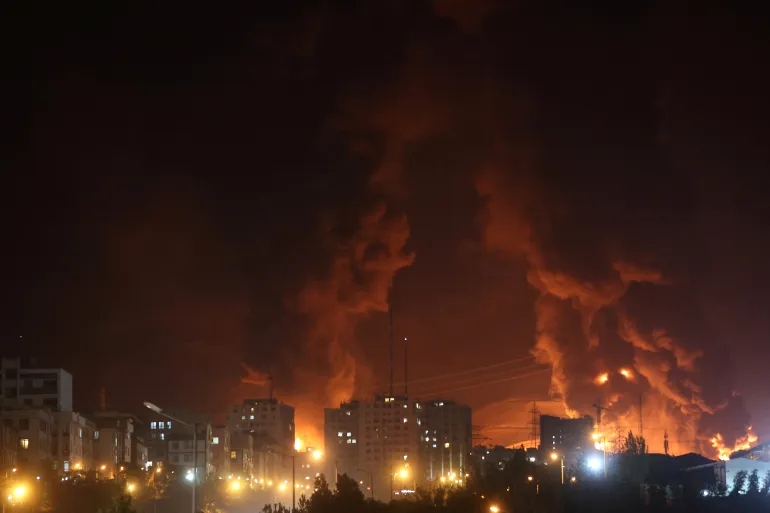
In the finally analysis Iran still has about 600 kilograms – that is 60% enriched uranium – that it has hidden. Iran has nuclear physicists and it has technical capabilities. From a theoretical point of view, the amount of uranium ot still has could be enriched to 90%, fissile material that is needed for a nuclear bomb, within a few months. All that separates Iran from that is a fatwa made by its Supreme Leader Ali Khamenei.

We must remember that the conflict was imposed on Iran and therefore it was very important for Tehran to withdraw from it. And hence upon withdrawal, it symbolically bombed Israel again as a final show of force.

The world saw that the Iranians know how to fight and are ready for a major war (even though they don’t seek it). But Iran’s enemies are not ready for a major war. Realizing that the Iranian street would not revolt, they preferred to hold off. Netanyahu has so far been unable to drag the United States into a full-scale conflict with Iran. Without that, Israel can do nothing.

Israel has suffered heavy losses without achieving its primary goals. Netanyahu’s window of opportunity is about to close (unless he embarks on another adventure). Trump has emerged from the deadlock, as expected, similar to 2020. Now he’ll await the Nobel Prize.

At this point, it can be said that Israel has lost. It failed to drag the United States into a war aimed at destroying Iran, it did not eliminate the Iranian nuclear program, and did not change the regime in Iran.

Iran suffered damage, but it did not lose. In fact, it gained a lot.

The Iranians gained invaluable experience and learned many lessons. They saw all of Israel’s weaknesses, understood what to expect from whom in the region and the world. They tested their missiles in real combat against technologically-advanced powers.

Finally, the Iranians eliminated a huge number of internal enemies. Overall, they realized the magnitude of the disaster not before it was too late, but while they still had the time and strength to eliminate the threat. The purges in Iran will continue for a long time to come. This will strengthen the Supreme Leader’s authority.

As well, the positions of those in Iran who advocate for nuclear weapons have also been strengthened.

Dr al-Obeidi is an Iraqi writer and contributed this piece to Al Rai Al Youm.

Continue reading
US-Israeli Conspiracy on Iran?

By Jamal Kanj

Israel’s latest strike on Iran had nothing to do with dismantling the Iranian (civilian) nuclear program. Despite Prime Minister Benjamin Netanyahu’s assertion that “the timing was fixed back in November 2024,” the real zero hour was designated only to undercut possible diplomatic framework that could have legitimized Iran’s nuclear development under international, verifiable, supervision.

This war is not a preemptive blow against Iran —it is a preemptive strike against diplomacy itself. The Trump administration made a grave error by keeping Israeli officials closely informed of the sensitive progress in the secret negotiations. This privileged access allowed Israel to strategically time its military strike to sabotage diplomatic efforts at a critical juncture—undermining further progress just as it was beginning to take shape, and before any agreement could fully mature.

Multiple independent leaks had pointed to progress in the Oman brokered negotiation between the U.S. and Iran, inclusive of intrusive International Atomic Energy Agency (IAEA) inspections, capped enrichment, and restart of oil exports under strict monitoring. An agreement of that sort would have undercut Israel’s decades-long doctrine that only isolation and coercion can keep Iran “in its box.”

Rather than accepting a rules-based diplomatic framework that Netanyahu could not control or veto, he chose to hinder the potential agreement—with F-35s and cruise missiles.

This war is also part of Israel’s long-standing obsession with maintaining its monopoly on nuclear technology in the Middle East. Far from a purely defensive measure, Israel’s broader strategy has consistently aimed at preventing any regional power from acquiring—not only the infrastructure required to develop nuclear capabilities—but even the scientific expertise and human capital necessary to pursue such knowledge.

Hours after the first explosions, U.S. officials solemnly declared, “America did not take part.” But the denial was tactical, not principled. By remaining officially aloof, the Trump White House hoped to keep a seat at any revived negotiating table while still wielding the Israeli strike as leverage. Donald Trump’s own split-screen rhetoric—calling the raid “excellent,” threatening Iran with “more to come,” yet urging Tehran to “make a deal”—spelled out the gambit: let Israel be the cudgel while the United States courts concessions.

On the other hand, and in response to American Secretary of State, Marco Rubio, claim that the U.S. is “not involved in strikes against Iran,” Israel declared that every phase of the attack had been “closely coordinated” with the Pentagon and that that US provided “exquisite intelligence” to attack Iran.

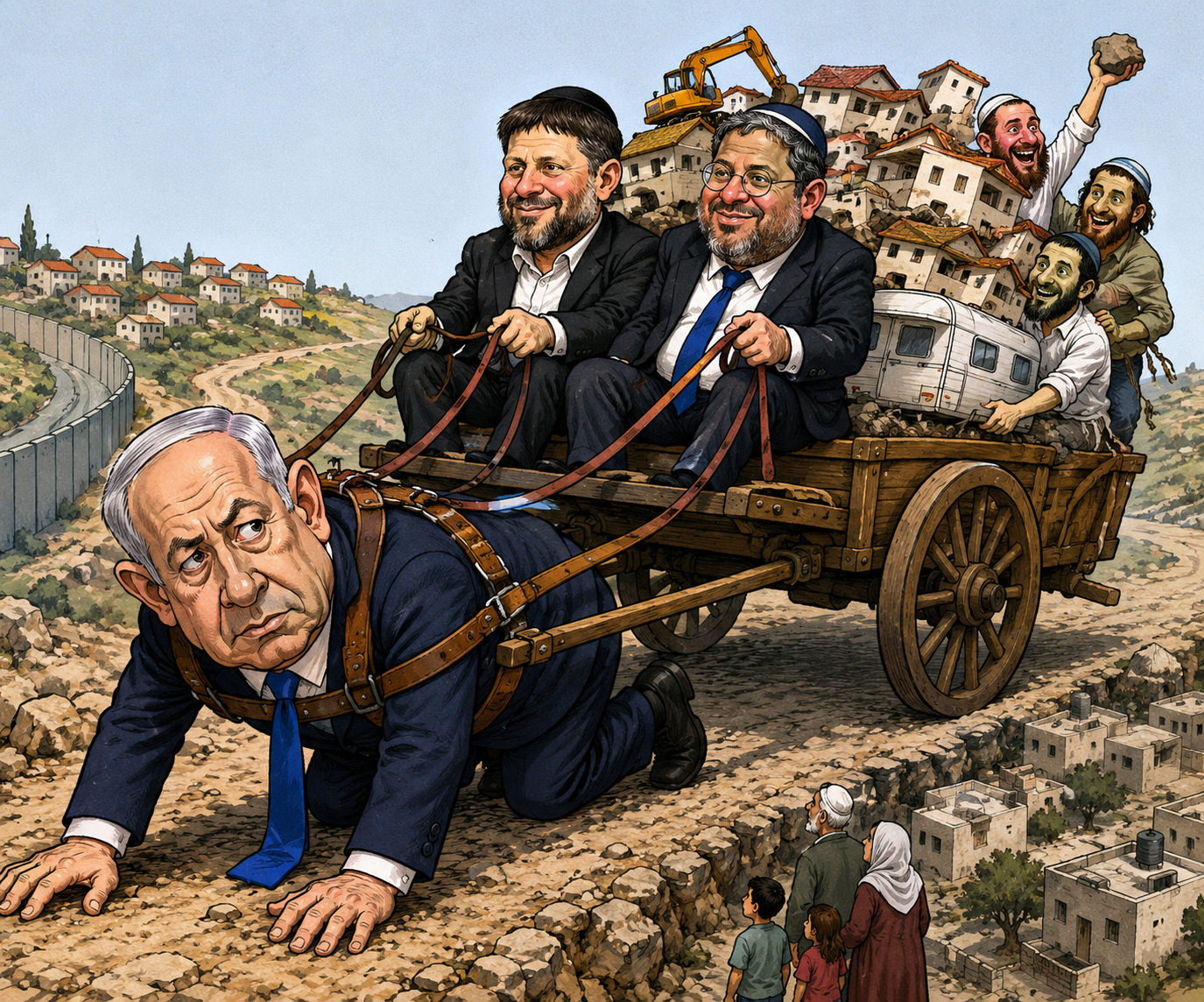
The yawning gap between the two narratives served both capitals. In Washington, it allowed officials to reassure anxious allies that the U.S. was not actively escalating another Middle East war. In Tel Aviv, Netanyahu exploited the ambiguity to provoke Iran into retaliating against U.S. forces—potentially drawing Washington deeper into Israel’s war. At the same time, he sent a calculated message to domestic hawks and regional adversaries: that Israel still enjoys unwavering American backing.

Netanyahu’s sinister calculus was familiar and transparent from Israel’s book to drag the US into its endless wars: derail the diplomatic channel, then dare Washington to pick up the pieces while Israel enjoys another round of strategic impunity.

Even in a region where Israel uses starvation as a weapon of war and genocide in Gaza, Israel’s choice to strike residential neighborhoods—ostensibly targeting senior officers, civilian leaders, and nuclear scientists—crosses a perilous line. The laws of armed conflict draw a bright red distinction between combatants and civilians; by erasing it, Israel has handed Iran moral and legal grounds to retaliate in kind. If Tehran targets the private homes of Israeli leaders and commanders, Tel Aviv cannot plausibly cry victim after setting that precedent.

The first wave of Iranian retaliation—targeting the Israeli Ministry of Defense headquarters in Tel Aviv, among other sites—marks the beginning of a new kind of war, one unlike anything Israelis have faced in previous conflicts. For the first time, a state with advanced missile capabilities has shown both the resilience to absorb the initial strike and the capacity to hit back ] deep inside Israel—an experience unprecedented in Israel’s 77 years of existence.

Unlike the sporadic and largely asymmetrical conflicts with non-state actors like the Resistance in Lebanon and occupied Gaza, this confrontation introduces a level of state-to-state warfare that challenges Israel’s long-held military superiority and assumptions of deterrence. What has unfolded so far with the Iranian retaliation is a harbinger of a more symmetrical and likely prolonged confrontation—one in which Israel’s own centers of power may be within range, and where the frontlines are no longer confined to Gaza, the West Bank, or southern Lebanon, but centered into the very core of Tel Aviv.

In the coming days, Washington’s true measure will be taken after the smoke clears. If U.S. Aegis destroyers in the Gulf or antimissile batteries in the region are activated to shoot down Iranian missiles and drones, America will cease to be an observer and become a co-belligerent.

Such presumably “defensive” steps quickly metastasize: one intercept invites another, and each exchange digs the United States deeper into a conflict created by a foreign country. History offers bleak guidance. Once American troops engage, momentum overrides strategy and the dynamics of war supplant planning. Political leaders feel compelled to “finish the job,” costs spiral, U.S. interests go unsecured, and the chief beneficiary is almost always the Israeli security establishment that triggered the crisis.

At the end of the day, Netanyahu’s success will not be measured by how many centrifuges he cripples or how many Iranian scientists he murders. It will be measured by whether he can lock the United States into yet another made-for-Israel Middle East war, paid for—strategically, financially, life, and morally—by Americans.

If Washington truly opposes escalation, it must say no—publicly and unequivocally—to any role in shielding Israel from the blowback it just invited. Anything less is complicity disguised as caution, and it will once again confirm that Israeli impunity is underwritten in Washington, even when it torpedoes America’s own diplomacy and ignites yet another Israeli-engineered war.

– Jamal Kanj is the author of “Children of Catastrophe,” Journey from a Palestinian Refugee Camp to America, and other books. He writes frequently on Arab world issues for various national and international commentaries. He contributed this article to The Palestine Chronicle

Continue reading
Trump’s Middle East Hour

By Mohammad Abu Rumman

President Donald Trump’s current visit to the Gulf holds substantial strategic significance, especially when compared to visits by previous American leaders or other political figures. This is due to two key reasons: the first relates to the current situation in the Arab region, which is undergoing an intense period of regional and domestic turmoil in several countries—making the future extremely difficult to predict. The second reason is Trump’s own personality, marked by unpredictability, surprise moves, and a disregard for the traditional constraints that bind other U.S. presidents.

While it may be premature to judge or fully grasp the surprises or major outcomes that Trump’s visit may bring for the next phase, the man has already, on the eve of his arrival, stirred the waters—overturning many expectations and analyses, particularly in relation to two major files: the Syrian issue and the war on Gaza, including U.S. relations with Israel and Arab states.

On the Syrian file, Trump announced that he is seriously considering lifting or easing sanctions on Syria and offering support to the new political regime there—reportedly at the request of Turkish President Recep Tayyip Erdoğan. This development is especially significant as it runs counter to the Israeli agenda, particularly in the south of Syria, where Israel has sought to incite minority groups, sow chaos, and even occupy parts of the country. It is clear that Trump has not embraced Netanyahu’s highly provocative approach toward the new Syrian regime. Instead, he seems more aligned with the Turkish and Saudi perspectives, despite Netanyahu’s earlier efforts during a visit to the White House to secure a green light for Israeli aggression in Syria and against Turkey—bait that Trump did not take at the time. Now, on the eve of his Gulf visit, Trump has drawn a clearer line by discussing the potential easing of sanctions on Syria.

The second file concerns Trump’s ongoing tension with Netanyahu. While this may appear to be a personal dispute with the Israeli Prime Minister and his political agenda, Trump seems to be distancing himself from Netanyahu’s grip—unlike in previous phases where Netanyahu appeared to dominate Trump’s outlook. How this rift will influence the next phase, particularly regarding the war on Gaza, relations with Iran, and the broader American vision for the region, remains one of the most critical questions—especially when assessing the growing divergence from the Israeli right-wing narrative.

Much has been said about the reasons behind this divergence—some even call it a crisis—between Trump and Netanyahu. Israeli and American media have widely covered the issue. However, what this writer leans toward is the idea that the Saudis have thoroughly studied how to deal with the new president. They found a way to draw him away from the Israeli perspective by offering him the deal of his dreams: the prospect of a peaceful resolution that would lead to the establishment of a Palestinian state—potentially bringing him a Nobel Prize—ending the war in Gaza with terms favorable to both Americans and Arabs, lucrative commercial deals, normalized relations with America and Israel, strong regional ties, and many other major gains. Why, then, would Trump reject all of that and blindly follow Netanyahu and his far-right team?

The Saudi leadership’s role in the current phase is crucial. They are driving a major shift in the Arab approach to regional policy. Their cooperation on several issues with Turkey, Egypt, Jordan, and the UAE is helping to correct the significant imbalances that have emerged since the Israeli war on Gaza.

That said, it would be inaccurate to claim that Trump has made a full pivot. He remains unpredictable—full of surprises and a master of reversals. Moreover, despite the wide latitude he often enjoys, there are boundaries he will not cross. He may be entering a phase of tension with Netanyahu, but he is unlikely to go so far as to harm Israeli or joint U.S.-Israeli interests. He is well aware of the entrenched domestic base, the powerful lobbies, and the political minefields involved. His room for maneuver is limited. Still, this moment may represent an opportunity to widen the gap between him and Netanyahu—even if the regional reality is complex and the current Palestinian reality even more so. We must also be careful not to raise expectations too high!

The writer is a columnist in Jordan Times

Continue reading
Hamas Releases US-Israeli Hostage

The International Committee of the Red Cross received Israeli-American soldier Idan Alexander from Hamas on Monday evening. His family confirmed he would travel to Doha later in May to meet President Trump and Qatar’s Emir, Sheikh Tamim bin Hamad Al Thani.

Hamas had captured Alexander in Gaza during the war as he served in the Israeli military. The release followed direct talks between Hamas and the U.S., and came as part of broader efforts to secure a ceasefire, open border crossings, and allow humanitarian aid into Gaza.

The handover took place in Khan Younis in southern Gaza. The Israeli military confirmed it received Alexander and said he is in good health.

Hamas said it released Alexander after “important talks” with the U.S. and praised the American administration’s efforts. The resistance movement emphasized that serious and responsible negotiations produce results in freeing prisoners. Continued military aggression, they warned, only prolongs prisoners’ suffering and risks killing them.

Hamas declared its readiness to begin immediate negotiations for a permanent ceasefire, the withdrawal of Israeli forces, lifting the blockade on Gaza, a prisoner exchange deal, and reconstruction of the war-torn enclave. It also called on U.S. President Donald Trump to intensify efforts to end “Netanyahu’s brutal war against children, women, and unarmed civilians in Gaza.”

Earlier Monday, Israeli media reported full preparations were in place to receive Alexander. His family confirmed he would travel to Doha later in May to meet President Trump and Qatar’s Emir, Sheikh Tamim bin Hamad Al Thani.

Channel 12 said the Israeli army received orders to halt fire in Gaza from midday to ensure a smooth handover. A military helicopter brought Alexander’s family to the Re’im base near the Gaza border to await his release.

Meanwhile, hundreds of Israelis demonstrated outside the U.S. Embassy in Tel Aviv, demanding the release of all Israeli prisoners.

Earlier in the day, Abu Obeida, spokesperson for Hamas’s military wing, said on Telegram that the group had decided to free Alexander. The 21-year-old soldier, originally from New Jersey, had served in the Israeli army and became the 39th prisoner released by Hamas since January 19, when a temporary ceasefire was reached. That deal later collapsed in March when Israel resumed its offensive.

U.S. Middle East envoy Steven Witkoff arrived in Israel for the release. Adam Boehler, the U.S. envoy for hostage affairs, posted a photo from the plane flying him and Alexander’s mother to Israel to receive the soldier.

Boehler praised Hamas’s decision and called for the return of the remains of four other U.S. citizens reportedly killed and still in Gaza.

Israeli Prime Minister Benjamin Netanyahu’s office issued a statement saying Israel remains committed only to securing a safe corridor for Alexander’s release—not to a broader ceasefire or exchange. Talks for other Israeli prisoners, they added, will continue while Israel prepares to intensify attacks.

Netanyahu claimed Alexander’s release came without concessions, crediting U.S. support and Israeli military pressure. “We are in critical days,” he said, “and Hamas now has a deal on the table that could lead to the return of our captives.”

Haaretz quoted a senior Israeli source saying Israel demands that Hamas release at least half of the Israeli prisoners—dead or alive—before it enters full negotiations to end the genocide.

The Times of Israel reported that Hamas had received assurances from a mediator that releasing Alexander would improve their standing with Trump. The resistance movement reportedly hopes the move will encourage the U.S. president to pressure Netanyahu into accepting a broader deal according to the Quds News Network.

Continue reading
Reshuffling Cards: Trump and Netanyahu’s Nightmare

(Crossfirearabia.com) – Benjamin Netanyahu hadn’t finished patting himself on the back for destroying the Sanaa International Airport – after all Israeli warplanes hit the country twice in less than 24 hours – before US President Donald Trump dramatically announced he had just reached a deal with the Houthis to stop striking Yemen. Shock, surprise, horror!

Trump added the Houthis promised in turn they would halt targeting all ships, including US vassals and tankers entering the world-trade-crucial Bab El Mandeb Straits, the Red Sea and presumably the Arabian Sea, just off the tip of the country in the south.

Thus, in one full swoop and at a strike of a pen, the war between the US and the Houthis, started in earnest since 15 March had come to an end in a mesmerizing fashion. During this time, the Americans had made at least a total of 1300 air-raids on Yemen in a bid to end the Houthis who had been striking Israel with ballistic missiles on a regular basis since 7 October, 2023 when Israel started bombarding Gaza.

The country that was behind the deal was Oman who had indeed announced, Tuesday, that an agreement between the United States and the Houthis, the effective but not internationally recognized government in Yemen, was reached to stop the war.

Omani Foreign Minister Badr Albusaidi said in a statement on X that: “Following recent discussions and contacts conducted by the Sultanate of Oman with the United States and the relevant authorities in Sana’a, in the Republic of Yemen, with the aim of de-escalation, efforts have resulted in a ceasefire agreement between the two sides,” as carried by Anadolu.

Analysts since suggested that the deal was reached because the two sides had wanted to end the open-ended escalation that was proving very costly not least of all to the United States which hiked the US treasury bill to about $1 billion dollars since its campaign, mostly to support Israel, in less than one month of military action.

The Houthis on the other hand didn’t want to fight on two fronts, the Americans and the Israelis. For them ending one front was perfectly logical to focus on strikes against Israel in a bid to end the latter’s war on Gaza, and which Israel has promised to step up soon and added to the misery and genocide of Palestinians in Gaza.

In agreeing to stop attacking shipping in the area they were of the firm belief that Trump had not meant that no firing against Israel as part of the deal which meant they would continue to strike Jewish cities, airports areas and military installations, more than 2000 kilometers away, until Israel ends its war on Gaza.

It is still too early to read into how things will unfold, especially since Trump is coming to Saudi Arabia and the Gulf in mid-May, but everyone is seeing the deal as creating a wedge between the US-Israeli alliance on matters relating to US security in the region and especially on the Iran nuclear file, where incessant negotiations – now in their third and fourth rounds -are taking place for the first time between Washington and Tehran in Muscat and through an Omani team lead by their formidable Omani Foreign Minister Albusaidi as mediator.

These are developments that are clearly upsetting Netanyahu who is dead against any nuclear deal that may be reached between the White House and Tehran and wants to strike Iran’s nuclear facilities regardless of the dangerous consequences. But this is seen as a critical line between Trump and Netanyahu while the former is determined to initial a new nuclear deal which he would see as a great US success and for his diplomacy in checking Iran’s nuclear weapon.

International issues as they stand are still fluid for Trump is looking for certain objectives most of all includes his slogan of “Make America Great Again”, focusing on his domestic scene, and not getting involved in unnecessary war around the globe, hence his wish to end the Ukraine War, the war on Gaza and achieve a new nuclear deal with Iran; these are objectives, especially they last two, are not at all in line with the Netanyahu who is attacking Syria, Lebanon, Iraq and occasionally Yemen.

Thus the last deal between Trump and the Houthis, regardless of whether it would stick in the end, is surely likely to be a “splitting headache” for Netanyahu, from a man who was once seen as great friend to Israel.

But the Israeli Prime Minister must not forget that Trump is no pushover, he is a broker who likes to do things his own way.

This analysis is written by Dr Marwan Asmar, chief editor of the crossfirearabia.com website. 

Continue reading