Trump, Witkoff Need To Stop The Netanyahu Tune

By Michael Jansen

Israeli Prime Minister Benyamin Netanyahu has said, “There is no policy of starvation in Gaza, and there is no starvation in Gaza.” Israel has enabled “humanitarian aid throughout the duration of the war to enter Gaza – otherwise, there would be no Gazans.”

However, Gaza’s government media office told Al-Jazeera that only 674 aid trucks have entered Gaza since Israel eased restrictions on July 27, averaging just 84 laden trucks per day. This is only 14 per cent of needs as humanitarian organisations say at least 600 trucks of water, food, medicine and fuel are required at a minimum.

Echoing Netanyahu, US regional envoy Steve Wikoff proclaimed there is “no starvation” in Gaza after a brief visit to one of the aid delivery hubs in the Strip. “There is hardship but no starvation,” he said. His assessment appeared to contradict his boss Donald Trump who had said there is “real starvation.”

“Once we refute this Hamas claim, we can continue new actions to end the war and bring back all the hostages” held by Hamas, Witkoff said. He added that Trump believes piecemeal deals do not work and so a new arrangement is needed that would free the hostages all at once.

However, Witkoff argued that only Hamas “total surrender” and disarmament would be accepted. Writing in Haaretz daily on 2 August, Amir Tibon decries Netanyahu’s decision to carry on with the war, despite opposition from most Israelis and Israel’s foreign friends. “Israel’s military leadership admits today that the last five months have been a wasted effort, and that it would have been preferable for Israel to continue the January 2025 ceasefire, get the rest of the hostages out of Gaza in an agreement, and conclude the war.”

He is sharply critical of the Trump administration which “gave Netanyahu total backing for this disastrous policy, including his decision to block all aid from coming into Gaza, which caused the humanitarian crisis there. “Consequently, Witkoff’s latest visit has been met with popular Israeli “disappointment over the Trump administration’s failure to rein in Netanyahu and bring the Gaza war to an end.”

This means that there will be no quick fix under pressure from starvation even though Israelis held captive by Hamas are suffering the same lack of nourishment as their captors. The International Committee of the Red Cross has been asked to provide food for the captives but not the 2.3 million hungry Palestinians in Gaza.

Witkoff has been contradicted by the UN-supported Integrated Food Security Phase Classification” (IPC) which has warned that “the worse-case scenario of famine” is unfolding as 60,000 Palestinians died from bombs and bullets and an untold toll, especially among children, is being gripped by hunger and malnourishment. IPC called for a ceasefire to avert further “catastrophic human suffering.” The total number of people who have died from hunger-related causes since the start of the war in October 2023 has risen to more than 181, including 94 children. This does not include the 1,400 who have been killed by Israeli army fire when trying to secure aid at the highly controversial US-Israel Gaza Humanitarian Foundation which has not alleviated starvation but given a false image of US and Israeli efforts to deliver food.

UN Secretary-General Antonio Guterres said the IPC alert “confirms what we have heard. The facts are in and they are undeniable. Palestinians in Gaza are enduring a humanitarian catastrophe of epic proportions. This is not a warning. It is a reality unfolding before our eyes.”

Australian Prime Minister Anthony Albanese declared it was “beyond comprehension” for Israel to claim starvation was not an issue in Gaza and accused Israel of breaching international law by blocking aid.

Netanyahu is personally responsible for torpedoing January’s ceasefire agreement which would have led to the release of Israeli captives in exchange for Palestinian prisoners, Israel military withdrawal from Gaza, and an end to the war. Instead on 2 March, he imposed the blockade and on 18 March, he resumed the war. Tibon summed up, “Netanyahu, for political reasons, chose to blow up the deal, restart the war, and bring us to where we are today: Our hostages are being starved and tortured, our soldiers are dying, and the entire world is turning against us due to the broader humanitarian catastrophe in Gaza.”

As the 15 August 20th anniversary approaches of the beginning of Israel’s withdrawal of settlers and soldiers from Gaza, 600 retired Israeli security officials have written to Trump to ask him to pressure Netanyahu to end the war. This group included former Mossad chief Tamir Pardo, former Shin Bet chief Ami Ayalon, former Prime Minister Ehud Barak, and former Defence Minister Moshe Yaalon.

Ayalon argued: “At first this war was a just war, a defensive war, but when we achieved all military objectives, this war ceased to be a just war…It is our professional judgement that Hamas no longer poses a strategic threat to Israel,” the officials stated. “Your credibility with the vast majority of Israelis augments your ability to steer [Netanyahu] and his government in the right direction: End the war, return the hostages, stop the suffering.”

On the political front, this policy has contributed to decisions by Britain, France, Canada and half a dozen other countries to recognize the state of Palestine during next month’s opening of the 80th UN General Assembly session. Although recognized by 147 of the 193 UN members, many Western countries have delayed recognition. The addition of Britain and France will mean four of the five permanent members of the UN Security Council (which includes China and Russia) will recognize Palestine while the US will remain the outlier as it is on any effort to criticize or rein in Israel.

Michael Jansen is a columnist for The Jordan Times

Continue reading
‘Land of The Walking Dead’

By Fawaz Turki

No doubt you’ve noticed. There are rational men and women engaged in the mainstream media of the Western world who still allow eroded figures of speech to inhabit their common parlance when they write about the deranged horrors in Gaza, as if what is happening there is a “war,” typically an open and often prolonged, garden variety military conflict between the armed forces of two nations or groups.

What we are in reality witnessing in that tormented, 142-square-mile strip of land — once described as an open-air prison camp but now as an open-air death camp — is clearly not a war but the most anguishing humanitarian catastrophe of the 21st century, one that challenges the shared sense of morality inherent in our global dialogue of cultures.

We need not describe these horrors inflicted on the 2.3 million souls who “live” – yes, this word needs to be enclosed in quotation marks – in Gaza, a people now hunted beyond all human endurance. 

We know these horrors already.  We’ve read about them. We’ve watched them on our screens. And they have shocked us to the core of our humanity. 

Two worlds


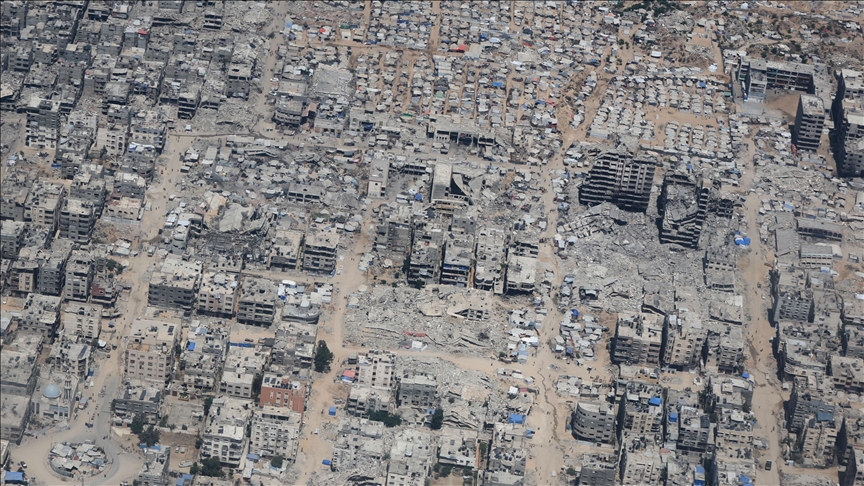
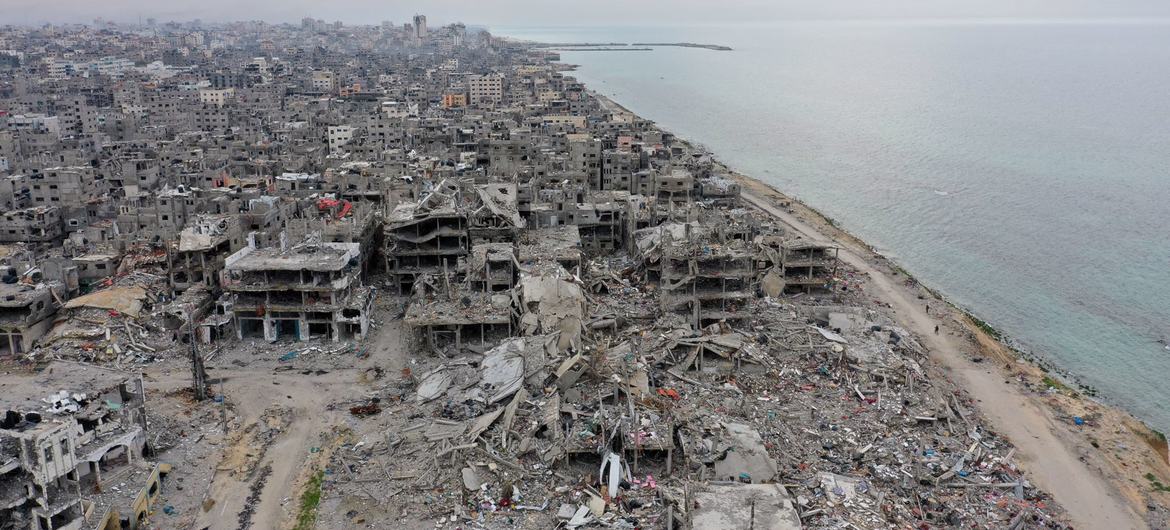
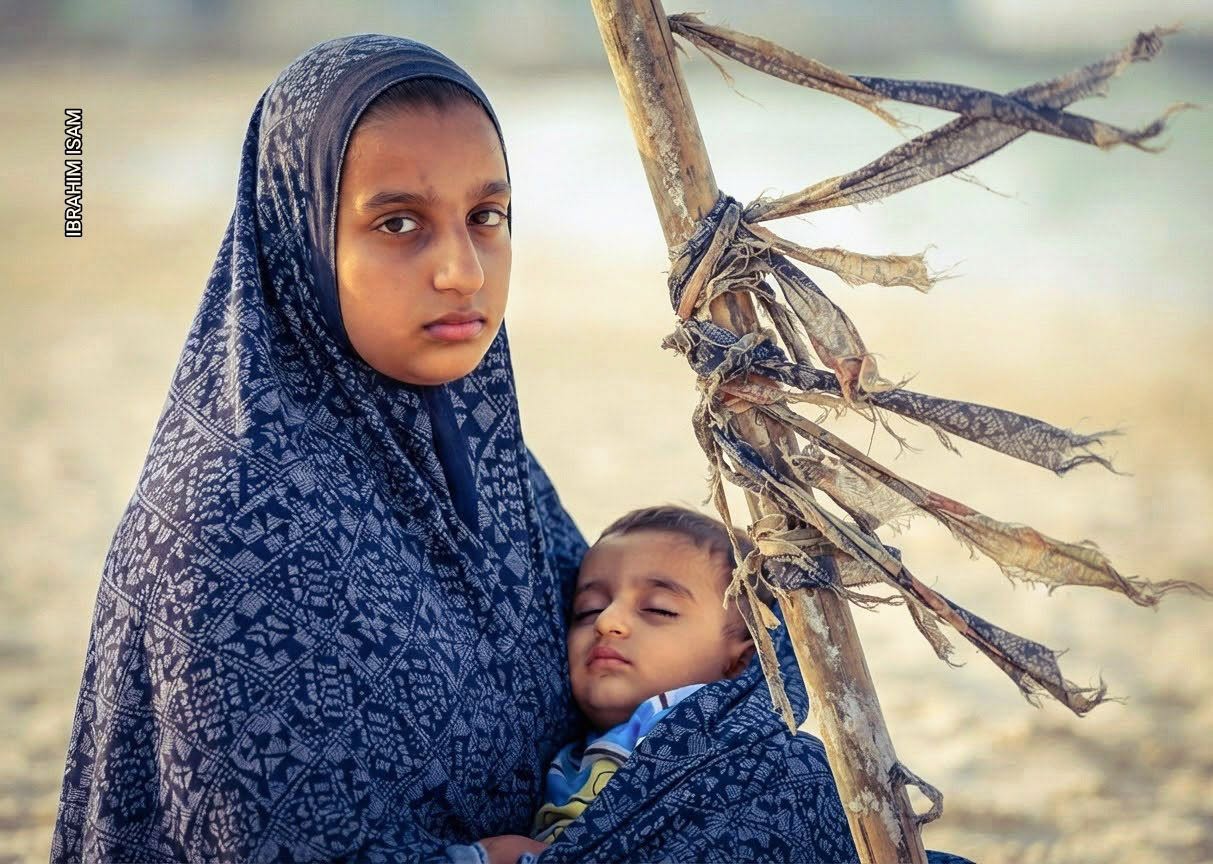
The enclave we call Gaza is today a wasteland whose destruction has been Carthaginian in scale, where starved Palestinians are neither dead nor alive. They and their skeletal children have been ghoulishly described as “walking corpses.” 

You see them at dangerous food distribution centres where trigger-happy Israeli soldiers gratuitously kill dozens of them daily, and where their humanity is so reduced to a fragment that they are willing to die for a bag of rice, a quart of milk, a jerrycan of water.

Yet, a few kilometres away, across the border, supermarkets are loaded with food and people go about their quotidian lives. Walking their streets. Drinking their coffee. Watching their films. Reading their Torahs. Visiting their dentists. Hugging their children. Listening to music. And making love.


Surely, these are two orders of reality whose spatial and temporal coexistence the mind baulks at reconciling and the imagination recoils at envisioning.

Questions crowd upon us.  

What justification do those who deny children access to food have for preventing them from meeting their basic needs? What propels the need in one people to calculatedly inflict such repeated, unspeakable savagery on another? 

And what drives the seemingly normal Israelis to give such a massive echo of approval to the racist bellowing of their political and military leaders, instead of turning away from it in nauseated disbelief, thus reducing whatever there is in them of the human and restoring what there is of the beast? (It is a sad fact that progressive Israelis have always failed to insinuate into, let alone impose on society, the humane rigour inherent in their beliefs.)

Writers, like other laymen, would do well to abstain from taking part in a debate such as this that the therapeutic community considers its own. But reasons there must be, albeit dark and disquieting ones.

Blinkered world


One thing is plain. Gaza is burning. Its analogue is hell. So, why has the global conscience not compelled the powers that be to intervene and put an end to the genocide in Gaza, an end to the immeasurable agonies of its people? And if not now, when?

Very simply this: The US, the self-styled “leader of the free world” and putative “maker and shaker” of international affairs, insists on maintaining its long-held, notoriously right-or-wrong support of Israel. 

So much so, it has repeatedly used its veto power to sabotage any efforts by other members of the UN Security Council to end the mayhem in the besieged enclave. 

And governments elsewhere in the Western world have opted to become mere onlookers of that mayhem, that is, where they are not closet backers of it.

Yet, that is not the end of that. That global conscience has already become something to reckon with, having progressively morphed into – to paraphrase Japanese Admiral Isoroku Yamamato’s famous observation about Japan’s assault on Pearl Harbour — a sleeping giant, now awakened and filled with potent resolve.


True, the silence with which the Western world has met the horrors in Gaza may have raised serious doubts about the gravitas attributed to the foundational values of Western liberalism, showing them as a sham. 

But the majority in that same world have now bravely taken a stand against their governments, seeing it not just as a moral imperative but also as a means to speak truth to power.

And by adopting that posture, they in effect tell themselves, each other and the world at large that human beings are complicit in that which leaves them indifferent, for by not speaking up, they are indirectly giving their approval to the prevailing order. 

Let no one be in doubt that these folks’ voices have been heard.

Their voices have resonated, loudly, clearly, and impactfully, even in the US, traditionally the heartland where support of Israel was once robotic. Indeed, signs of that shift are already evident in public surveys, including the most recent Pew poll. 

Yes, more than 18,500 children have so far been killed by Israel in Gaza, a little strip of land now reduced to being a place where the dead reach out to drag the living into the abyss of their mass graves, as a final act of mercy in a place where living has lost all meaning. 

As for us Palestinians who, by a trick of fate, are “here,” fed beyond our need, safe in our beds and in our streets and protected against disorder in our daily lives, what is happening “there”, in that parcel of hell, remains indivisible to our identity and will remain tattooed, in indelible ink. It is etched in our collective memory and will remain with us for generations.

And our history books will tell that no child slaughtered in Gaza was ever forgotten, no brutality committed there was ever forgiven.

Fawaz Turki was born in Haifa in 1940. He fled with his family to Lebanon following the 1948 Nakba. He is a Palestinian-American journalist, lecturer and author based in Washington, DC. His publications include the autobiography The Disinherited: Journey of Palestinian Exile (1972), Soul in Exile (New York, 1988) and Exile’s Return: The Making of a Palestinian-American (New York, 1995). TRT World.

Continue reading
Why is Israel Losing Support in The World?

By Robert Inlakesh

Those who have been exposed fully to the live-streamed genocide in Gaza are overwhelmingly the young people of the United States.

It is no secret that Israel’s stock amongst the global public has been plummeting since October 7, 2023. A top Israeli think-tank has now identified the trend as a “brewing crisis in bilateral relations”. However, reversing the damage done to Israel’s reputation is now impossible.

The Institute for National Security Studies (INSS), an influential Israeli think tank, has expressed great concern over the growing partisan gap in the United States on the issue of Israel. It took note of polling data and the growing gap between Democratic versus Republican Party support for Israel.

Support for Israel has long been a bipartisan stance in the United States. Back in 2018, according to a Gallup Poll conducted that year, some 64% of Americans supported Israel and only 21% said they leant towards Palestine. 

The next year, while support for Palestine remained the same, only 59% of respondents said they supported Israel, which sparked major concerns for the Israel Lobby.

https://www.palestinechronicle.com/israel-faces-diplomatic-collapse-as-pressure-mounts-over-gaza-crisis-report/embed/#?secret=0z53Vhj5QB#?secret=Mi5ynobIy4

Fast forward to 2025 and the latest Gallup poll shows that only 32% of the US public back Israel’s military campaign in Gaza, most of whom are Republicans, with only 8% of Democrats supporting the Israeli assault.

Perhaps the most notable takeaway from the Gallup Poll however, were the opinions of young Americans, which appear to cut across Party lines in opposition to Israel. Overall, only 9% of respondents aged 18 to 34, said they supported Israel’s military actions in Gaza, while only 6% said they had a favorable view of Israeli Prime Minister Benjamin Netanyahu.

Recently, the right-wing Zionist Anti-Defamation League (ADL) conducted a survey and claimed to have found that 46% of the global adult population had entrenched anti-Semitic beliefs, up from 26% of adults harboring those same attitudes in 2014. 

It should be noted that the ADL has been shown to include pro-Palestinian and anti-Israel views as “anti-Semitism”, which is what led to recent reports in which it concluded exponential spikes in “anti-semitic incidents”. The ADL’s reports indicate that the Zionist movement is certainly in a state of crisis.

The key takeaways here are that Americans who are women, young people, Democrats or people of color are overwhelmingly opposed to Israel. This was, just years ago, unimaginable to be speaking about the majority of the US population now standing in opposition to Israel.

A recent Pew Poll from a few months back also indicated that despite the continued Republican Party voter support for Israel, when you look specifically at Republicans aged between 18 to 49, half of them viewed Israel unfavorably. 

https://www.palestinechronicle.com/worst-ratings-israel-netanyahu-face-record-low-us-support-amid-gaza-genocide/embed/#?secret=leWEcUVoYI#?secret=OY378cJqbT

Although the Pew data didn’t reveal the Gallup age range of 18 to 34, the evidence supports the notion that this demographic holds the most unfavorable views of Israel.

In response however, the Israeli government appears to be only bothering to focus its efforts on winning over young Republicans, not caring so much for Democrats that appear as a lost cause. This indicates an admission that in the future, Palestine-Israel is going to be a partisan issue in the United States.

When we also put into consideration that younger Americans get their news from social media, new media and independent commentators/journalists, more so than they do the major news outlets, it indicates that what they have already seen will have made up their mind as to where they stand on the issue. 

Those who have been exposed fully to the live-streamed genocide in Gaza are overwhelmingly the young people of the United States. For them, Palestine has become the issue of a generation. 

The big fear now for the Israel Lobby is that they are fully exposed and the younger generations will eventually grow up, making the population overwhelmingly pro-Palestine if no seismic shift occurs.

(The Palestine Chronicle)

– Robert Inlakesh is a journalist, writer, and documentary filmmaker. He focuses on the Middle East, specializing in Palestine. He contributed this article to The Palestine Chronicle.

Continue reading
‘Mauritanians See Israeli Normalization Sinful’

By AlDaho Sohaib

Mauritania is not a marginal country or a geographical anomaly. It is a country of silent history, long patience, and sovereignty that cannot be bought. It is the land of jurists who taught the deserts the meaning of light, and poets who made pulpits of wisdom from the sands.

Our president visited the United States, as Arab and African presidents do, not to beg or sign anything that violates conscience, but to knock on the doors of partnership and convey the voice of a small country with great pride. Has every visit to the West become an accusation? Is anyone who meets with an American official considered suspect in the eyes of those writing from behind the media veil?


Mauritania stands independently, making its own decisions, and choosing its partnerships, far removed from dependency or empty alignment.


We know that there are those who are unhappy to see Nouakchott sitting with Washington without tutelage and negotiating its interests without permission.


We say it without hesitation, and in a high-pitched voice: Mauritania is not about to normalize relations with the Zionist entity, not now or tomorrow.


Not only because it would be a betrayal of a principle, but because normalization, for Mauritanians, is an unforgivable sin, as long as Israel occupies Arab land, desecrates our holy sites, and persecutes our people in Gaza, the West Bank, and Jerusalem.


Anyone who knows this people knows that Palestine, in their conscience, does not represent a card in political discussions, but rather a constant, unwavering call.


The President of the Republic, Mr. Mohamed Ould Cheikh El Ghazouani, known for his political moderation and adherence to national principles, has never wavered from his position in support of Palestine, and neither he nor his government has issued any indication of a deviation from this line.


We write not to offend, but to preserve the weight of this position. We respond not because we are weak, but because we refuse to have the image of an entire nation reduced to a single, insinuating line, or to have a fleeting accusation pinned on his sovereign visit. Mauritania is built on principles, not on momentary positions.


It is read through its history, not through tweets written from behind a political veil.


If you want the truth, Mauritania has never sought testimony from anyone, and it will not accept anyone dictating whom to visit or whom to talk to.


It follows its own path, does not sway where the wind blows, nor does it follow an extended shadow.
It sits with the great, engages in dialogue with partners, and raises the Palestinian flag in its heart as well as in its streets. It does not need anyone to remind it of those who have always been with it, in good times and bad.


The writer is a member of the Mauritanian Parliament

Continue reading
Trump, Netanyahu’s Shared Secret!

By Dr Hasan Al Dajah

Since his arrival on the American political scene, Donald Trump has been an exceptional case in the United States’ relationship with Israel. Historically described as a strategic alliance, this relationship has transformed under Trump into a personal partnership between him and Israeli Prime Minister Benjamin Netanyahu. This relationship has deepened to an unprecedented degree, with Trump becoming one of the most biased and supportive American presidents toward Netanyahu, not only in foreign policy decisions but also on issues of a purely Israeli domestic nature, such as the ongoing trials against Netanyahu or calls for early elections.

What drives Trump to this level of involvement in Israeli domestic affairs? And why does he insist on defending Netanyahu despite the criticism and accusations against him? In the current Israeli landscape, Netanyahu faces significant domestic challenges related to multiple corruption trials, in addition to escalating tensions within the ruling coalition, particularly with the religious parties, which have expressed on more than one occasion their desire to dissolve the Knesset and call for early elections. These parties, despite being partners in the government, view continuing under Netanyahu’s leadership as a political burden due to the corruption cases and poor performance in some cases. This recently prompted them to propose a vote within the Knesset to call for new elections.

In this context, Trump’s position was clearly supportive of Netanyahu, expressing his rejection of any attempt to remove Netanyahu from power and considering his continued rule essential to Israel’s stability and its security and political future. Even stranger are the reported interventions by Trump or his circle in the matter of Netanyahu’s trial. It has been reported—through both official and unofficial channels—that he called for a pardon or an end to the legal proceedings against him, arguing that these trials are politically motivated and that Netanyahu is being subjected to an unfair campaign by the Israeli judiciary. This intervention raises many questions, most importantly: What is Trump’s interest in Netanyahu’s survival? Why would he risk his political reputation for the sake of being a foreign leader facing criminal charges?

The answer to these questions requires examining the nature of the relationship between the two men. Since Trump assumed the presidency in 2017, he has pursued an unprecedented agenda in support of Israel, including moving the US embassy to Jerusalem, recognizing Israel’s sovereignty over the occupied Syrian Golan Heights, and supporting the “Deal of the Century,” considered the most biased in the history of US mediation.

All these measures were met with widespread acclaim and celebration by Netanyahu, who used them in his election campaign to bolster his domestic popularity, portraying himself as capable of bringing absolute US support to Israel.

In turn, Trump found in Netanyahu a reliable ally who reflects his vision for the Middle East and helps him win the support of a pivotal electoral base within the United States: evangelical Christians. People must realize that the true backbone of support for Israel in America is not the Jewish community, but evangelicals, who constitute approximately 25% of the population, compared to less than 2% of American Jews.

Therefore, Trump—as he has stated on more than one occasion—considers engaging with evangelicals more effective than appeasing the Jews, because they constitute a formidable lobbying force pushing for American policies aligned with the Israeli right-wing agenda, and view support for Israel as part of the Christian Zionist religious doctrine. These people see Netanyahu as the leader most qualified to preserve the “Jewishness of the state” and advance policies of expansion and hegemony.

Accordingly, Netanyahu’s downfall, or even his trial, represents a threat not only to Trump, but also to the political and ideological system he has meticulously crafted during his presidency. It is impossible to trust that potential Israeli alternatives will maintain the same level of loyalty or pursue the same confrontational approach toward Iran and the Palestinians.

Hence, for Trump, defending Netanyahu becomes a defense of a broader regional project that keeps Israel at the forefront of the confrontation with Tehran and strengthens right-wing populist alliances globally.

Moreover, Trump himself faces investigations and legal prosecutions in the United States, whether related to his attempt to overturn the election results, his retention of classified documents after leaving the White House, or various financial issues. Therefore, his defense of Netanyahu may be implicitly understood as self-defense. He seeks to establish the principle that the trial of political leaders is primarily a selective political process, not a fair judicial process. If Netanyahu is able to escape accountability or obtain a pardon, Trump will see this as a precedent that will strengthen his argument before the American judiciary and domestic public opinion.

Strategically, Trump does not view Israel merely as a traditional ally, but rather as an extension of his global political vision based on isolation from international institutions, undermining the liberal multilateral order, and strengthening bilateral alliances with strong leaders who share his political style and confrontational personality. For him, Netanyahu is the Israeli version of this model: a leader who clings to power despite internal and external pressures, fiercely confronts the media and the judiciary, and relies on a solid right-wing popular base fueled by a sense of existential danger and threat.

From this perspective, Trump’s support for Netanyahu is not limited to domestic issues but extends to regional security issues, most notably the open confrontation with Iran. Trump believes that an alliance with Netanyahu is necessary to sustain the escalation against Tehran and contain its influence in the region. Therefore, any weakening of Netanyahu, whether through elections or trials, is viewed as a direct blow to the axis of pressure on Iran and a threat to the deterrence strategy adopted by Trump during his presidency.

All of this explains why Trump supports Netanyahu and even intervenes in domestic issues, such as seeking a judicial pardon or rejecting early elections that could lead to Netanyahu’s removal from the political scene. It is a deeply mercenary relationship that transcends diplomatic protocol and extends to an ideological alliance between two leaders who each see the other as a mirror to their own selves and a first line of defense for their political and personal futures. Despite the criticism Trump faces for this involvement, he continues this approach without wavering, driven by an overwhelming desire to return to the White House and see a world shaped according to his own vision. In this world, there is no place for trials of political leaders, no room for elections that bring down allies, and only mutual loyalty, no matter the cost.

Dr Dajah is a professor of Strategic Studies at Al-Hussein Bin Talal University. He contributed this article to the Jordan Times.

Continue reading