Jabalia Steadfast in Face of Israeli Bombs

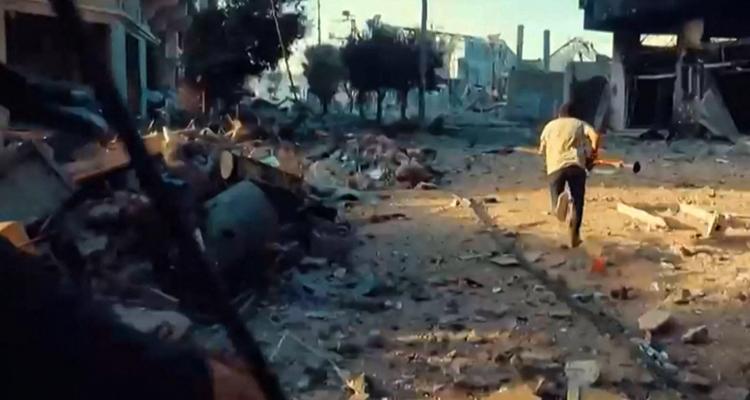
With the intensification of the Israeli bombing of northern Gaza and with a siege of more than 80 days now, especially of Jabalia, its camp and Beit Lahia, the resistance is using all available tools to counter the Israeli aggression despite  turning north Gaza into an eyesore of destruction and not a place for survival.

The resistance continues to show unparalleled bravery standing up Israeli soldiers who can be seen carrying their dead and wounded on a daily basis.

The Jabalia camp, one of the largest refugee camps in the Gaza Strip, reflects, with its history and reality, a miniature image of the Palestinian-Israeli conflict.

Analysts point out the operations launched from Jabalia reflect the roots of the Palestinian struggle rooted in the camps since the Nakba in 1948.

“We are the ones who used to chase the Israeli patrol in our camp here (Jabalia) with the sticks”… This was one of the expressions used by martyr leader Nizar Rayyan inside the Jabalia camp. He was martyred in the first wars that the resistance fought with the Israeli occupation forces in 2008-2009, showing the bravery of the people of Jabalia and their legendary steadfastness in confronting the occupier.

 “Just as we rubbed your noses in Ashdod, we will rub your noses in Jabalia,” Rayyan used to say.

While the 444 days of this rabid war on Gaza Strip should have been enough to end the resistance – according to Israeli and American thinking – the Al-Qassam and Al-Quds Brigades fighters in Jabalia say this is wishful thinking even if thousands of Mujahideens are killed, and the weapons run out as the recent stabbing operations show. These operations shouldn’t be interperated to mean as some suggest that weapons are running out for the enemy’s daily losses are not decreasing while the capabilities of the resistance are rising.

The Al-Qassam Brigades, Hamas military wing, announced Sunday, it targeted nine soldiers inside a house with a “TBG” shell west of Jabalia camp, confirming they have either been killed and/or wounded whilst stating it destroyed an Israeli troop carrier with a “commando” explosive device in the Al-Alami area in the center of Jabalia camp.

The brigades added that “a Zionist officer was sniped in Abu Al-Aish Street in the center of Jabalia camp, north of the Strip,” and said it targeted a second Israeli troop carrier with a “commando” explosive device west of Beit Lahia, north of the Strip.

As well last Friday, the Al-Qassam Brigades announced it carried out a complex operation in Jabalia camp; where one of its fighters advanced towards an Israeli sniper and his assistant, and stabbed them to death, adding the fighter wore the uniform of one of the dead, and an hour after the operation, he advanced towards an Israeli force of six individuals, and blew himself up with an explosive belt, killing and wounding its members.

Last Saturday, Al-Qassam Brigades announced on its Telegram channel its fighters carried out a complex operation, stabbing three Israeli soldiers to death, seizing their personal weapons, then storming a house where a foot force had taken cover, killing two of its soldiers at the house gate.

On Sunday, the Al Jihad Al-Quds Brigades stated that one of its heroic martyrs stormed a Zionist troop carrier and carried out a special operation by detonating a suicide bomb among the soldiers who were at the entrance to the Al-Awda Towers in Ezbet Beit Hanoun.

Military analyst Major-General Fayez Al-Duwairi says “zero distance” is a golden opportunity for resistance fighters in their confrontation with the occupation forces, given the big difference between the equipment of the Israeli army with its high capabilities, and the weapons made by al- mujahideen locally.

He added the more the intensity of the ground aggression and Israeli incursions into the Gaza Strip areas increases, the greater the resistance’s opportunity to engage directly with enemy forces.

Since the start of the Battle of Al-Aqsa Flood, the resistance fighters have shown the most prominent of their weapons to target the Israeli enemy, including Al-Yassin 105 shells, tandem shells, sniper weapons, Shawaaz bombs and machine guns according to the Palestine Information Center.

However, the use of the stabbing weapon and explosive belts  which emerged in recent days to carry out martyrdom operations, indicates that the weapons used by the resistance are no longer as accessible as they were in the past, due to the tight siege imposed by the occupation, and the intensity of the operations carried out by the resistance fighters, which has led to the depletion of the battalions’ weapons stockpile.

The heroic operations carried out by the resistance fighters in northern Gaza over the past 80 days have resulted in the killing of more than 70 soldiers and officers in the occupation forces, in the Jabalia camp and camp alone, including the bombing of more than 100 military vehicles, 17 sniper operations, and 26 clashes with a foot force.

In a Yedioth Ahronoth interview with an Israeli officer he said the confrontation in northern Gaza these days is through the alleys, face to face with Palestinian fighters who do not fear death and refuse to be arrested.

Major-General Mohammed Al-Samadi believes that the significance of the stabbing operations and martyrdom operations in Jabalia confirms that the resistance is cohesive and strong, and adapts according to combat developments, and carries out hit-and-run operations, and carries out operations through small groups, including the lone wolf operations carried out by one of the mujahideen against the occupation forces, causing casualties and injuries in their ranks.

Al-Samadi added in an interview with Al Jazeera the resistance in northern Gaza has killed 17 soldiers through sniper operations, and that one fighter in the resistance factions can kill a group of individuals in the occupation forces, indicating that the occupation suffers from weak morale among its fighters, and also suffers from an intelligence failure in knowing the resistance’s tactics.
Continue reading
How Israel is Destroying a Hospital

The hospital bears the name of one of the leaders of the Palestinian revolution and the most prominent symbols of the Fatah movement

– Since the start of the military operation in northern Gaza on 5 October, the hospital was subjected to dozens of attacks

– The hospital director said the Israeli army treats this health facility as a “military target”

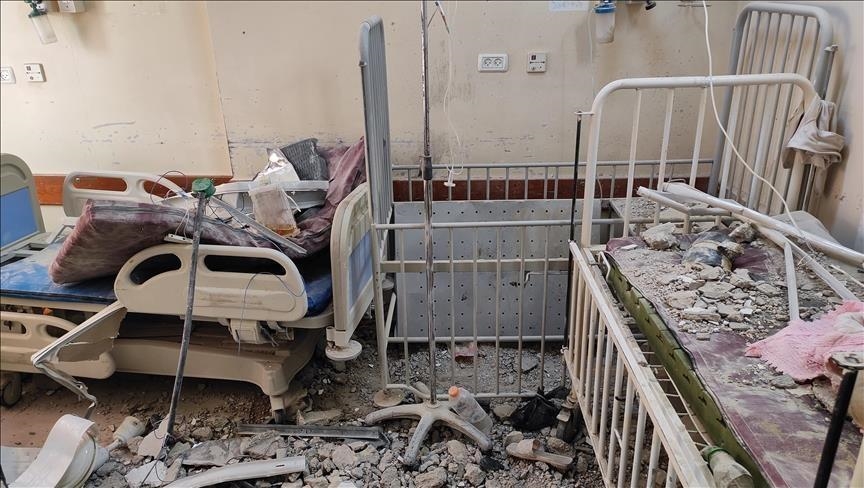
In the heart of the town of Beit Lahia in the northern Gaza Strip, where the Israeli army is committing crimes of genocide and ethnic cleansing, the Kamal Adwan Hospital continues to operate with minimal of capabilities as the last stronghold of steadfastness in the face of the Israeli war machine.

The hospital bears the name of one of the leaders of the Palestinian revolution and the most prominent symbols of the Fatah movement, and constitutes a last resort for patients and the wounded in the north who have not found an alternative that provides them with the minimum of medical and humanitarian services.

Since the Israeli army’s attack on the northern governorate on 5 October, which coincided with a comprehensive military siege, the hospital has been subjected to dozens of targeting operations with missiles and gunfire, as a health official said the Israeli army treats it as a “military target”.

Despite this, the hospital’s medical staff, consisting of two doctors at most and a small number of nurses, continued to perform their humanitarian duty, and refused to obey the army’s multiple orders to evacuate its buildings and leave the governorate despite the ongoing crimes against them.

Beit Lahia, like many other parts of the Gaza Strip, was subjected to a policy of “urban annihilation” of its architectural and cultural fabric through the implementation of comprehensive erasure operations and the complete destruction of homes, residential neighborhoods and infrastructure, and the elimination of the means of survival for Palestinians, according to a statement by the Euro-Mediterranean Human Rights Monitor.

  • Timeline

The Kamal Adwan Hospital, the largest hospital in the Northern Governorate, which used to provide services to more than 400,000 people, is currently operating under conditions and lacking capabilities due to the Israeli targeting of it since October 2023, which Anadolu Agency monitored as follows:

Since the beginning of the war, the Israeli army continued to launch intensive raids on the hospital’s surroundings, in addition to blowing up buildings and residential areas next to it, which resulted in much damage in addition to deaths and injuries inside and outside the hospital.

  • 2023:

– 14 October: An Israeli warning to evacuate the hospital of displaced persons, medical staff and patients.

– 4 December: An Israeli bombardment of the northern gate of the hospital results in the killing of 4 Palestinians

– 6 December: The Gaza Ministry of Health announces the forcible removal of Kamal Adwan Hospital from service and “with tank muzzles”.

– 8 December: Israeli tanks besiege the hospital, and army snipers climb onto surrounding buildings and fire towards the courtyards and patients’ rooms.

– 12 December: The Israeli army stormed the hospital after a tight siege and forced about 2,500 displaced people to evacuate the hospital after two days and arrested a number of medical staff

– 16 December: The army withdrew from the hospital after destroying the southern part of it, displacing the displaced people inside it, abusing its patients and suppressing the medical staff

  • 2024

– Mid-January: Kamal Adwan Hospital partially resumed operations according to human rights reports

– March: Dozens of children died, some of them in Kamal Adwan Hospital due to famine in the north and a shortage of medical supplies and medicines.

– 19 May: The hospital went out of service again after heavy Israeli shelling targeted its surroundings and army vehicles advanced towards it and besieged it for days

– 28 May: Israeli shelling of a building in the hospital and the destruction of the electricity generators inside it.

– June: The hospital partially resumed operations with limited medical facilities and supplies

– 8 October: The Israeli army orders hospitals in the Gaza Strip, including Kamal Adwan, to evacuate within 24 hours, amidst a siege by military vehicles

– 19 October: The Israeli army shells the entrance to the Kamal Adwan Hospital laboratory, killing a Palestinian and wounding others

– 20 October: The Israeli shelling of the hospital resumes, and heavy gunfire is directed at its buildings, targeting its water tanks and electricity network

– 22 October: Israeli warnings to evacuate the hospital are renewed

– 25 October: The Israeli army storms the hospital and detains hundreds of patients, medical staff and displaced persons who have taken refuge inside its buildings

– 26 October: The army withdraws from the hospital, leaving behind Palestinian deaths and widespread destruction inside and outside, a day after storming it

– 31 October: The Israeli army shells the hospital, burning medicines and medical supplies it received from the World Health Organization days earlier

– 3 November: Israeli artillery shelling injures a number of children in the hospital’s nursery and shooting at its generators and water tanks

– 4 November: Israeli shelling of the hospital’s facilities and the injury of a number of Palestinian medical staff and patients

– 6 November: The death of wounded due to the lack of surgical specialties in the hospital, which began operating without electricity due to a lack of fuel

– 11 November: An Israeli drone shelled the hospital’s reception and emergency department, injuring 3 medical staff

– 22 November: Renewed Israeli shelling of Kamal Adwan Hospital, injuring a doctor and patients, and disrupting the electricity generators and the oxygen station

– 3 December: Israeli shelling of the hospital with bombs launched by “Quadcopter” drones, injuring 3 medical staff

– 4 December: The army shelled the hospital four times and the oxygen station stopped, threatening the lives of patients inside it

– 5 December: The Israeli army targeted the hospital several times, killing two Palestinians, one of whom was a child, and injuring two others

– 6 December: The Israeli army stormed the hospital for hours and forced Patients and medical staff evacuated and a number of them were arrested

– 7 December: The Israeli army targeted the hospital with a number of shells, resulting in the injury of medical staff and patients, the destruction of water, oxygen and fuel tanks, a power outage and the outbreak of fires in its facilities

– 14 December: Explosive robots were detonated in the vicinity of the hospital, damaging its buildings and causing panic among patients and displaced persons

– 16 December 16: Israeli Quadcopter drones targeted the hospital

Continue reading
Mosque Massacre But No Military Targets

A new investigation conducted by Euro-Med Human Rights Monitor has revealed a massacre committed by the Israeli military, killing over 15 Palestinians and injuring others, including women, children, and the elderly, in an air strike targeting a mosque in Gaza City during dawn prayers.

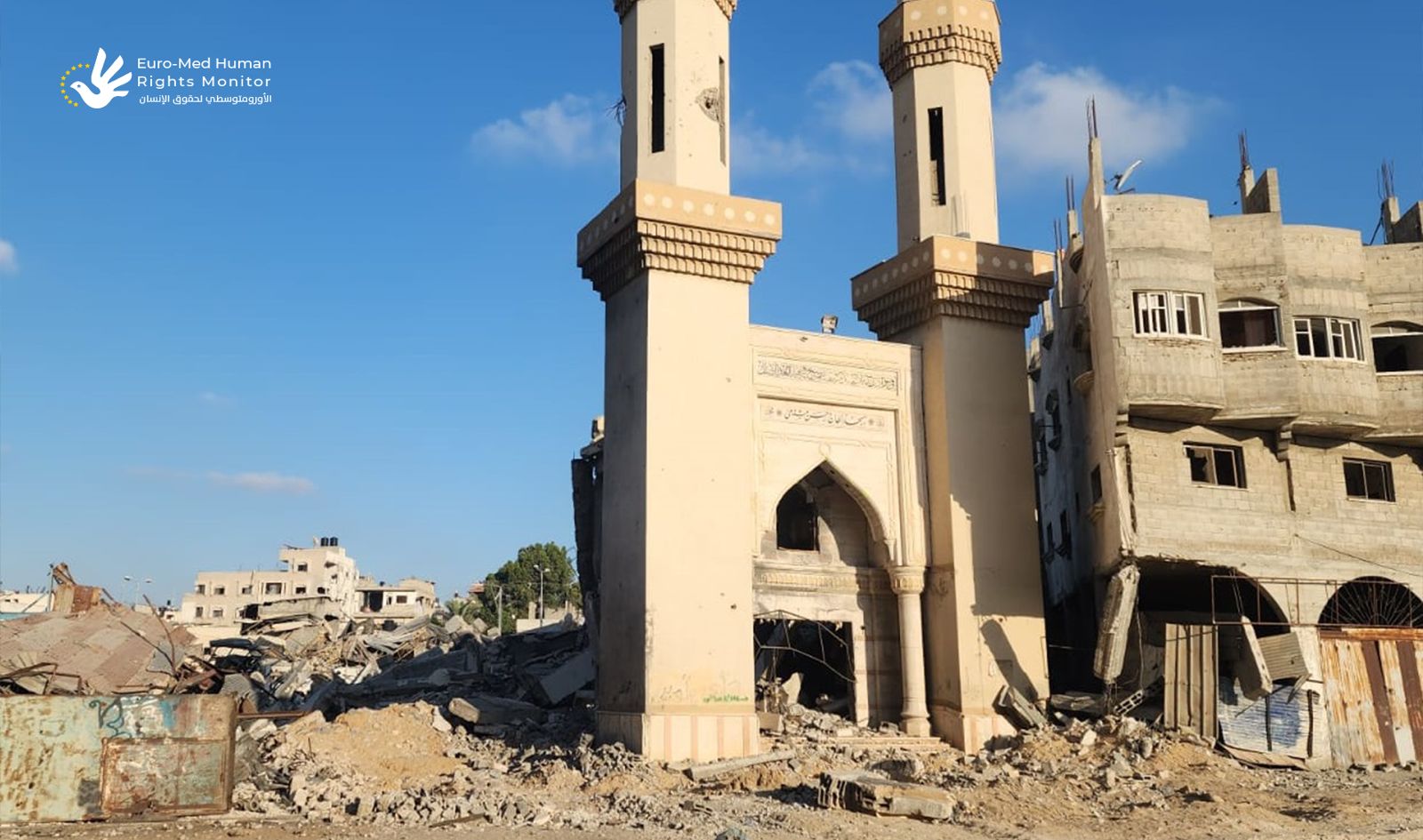
Euro-Med Monitor investigated the Israeli attack on Al-Hassan Mosque in Al-Tuffah neighbourhood, Gaza City, during dawn prayers on 16 November 2023, concluding that no evidence was found of any military targets, such as objects or armed individuals, inside the mosque or in its surrounding area at the time of the attack.

According to the investigation’s findings, at approximately 4:45 am on Wednesday, 16 November 2023, Israeli aircraft struck Al-Hassan Mosque in the Al-Sanafur area of Al-Tuffah neighbourhood, east of Gaza City, without any prior warning. The attack involved one or two heavy, high-explosive bombs and occurred just as worshippers began their dawn prayers. 

    When we entered the mosque after the Israeli bombing, we found no trace of anyone who was inside at the time. All of them were torn into pieces, there was no sign of anyone   

Ezz Al-Din Maher Kraim, 18, esident of the area and the son of one of the massacre’s victims

 The Israeli air strike destroyed the mosque, one of the largest in the area, within seconds, collapsing it onto the worshippers inside. Only remnants of its entrance and the two surrounding minarets remained. The attack resulted in the deaths of all worshippers present, with most of the bodies reduced to fragments.

The attack also resulted in casualties and injuries of varying degrees in a house adjacent to the mosque. Additionally, several nearby structures, including garages used for car repairs, carpentry, and washing, were destroyed. The air strike also caused damage to residential buildings and facilities surrounding the mosque in the area.

As part of its investigation into the military attack, Euro-Med Monitor employed its standard investigative methodology, beginning by collecting preliminary data related to the incident. Field teams were dispatched to the attack site to document the human and material damage and verify the absence of any military presence or armed activities in the area at the time of the attack.

The field team conducted personal interviews with survivors and eyewitnesses, including testimonies from six residents of the area and relatives of the victims who remained in the neighbourhood despite the forced displacement of most of its population following the mosque’s targeting. The team also documented the names of the deceased and injured.

In addition to on-site visits and gathering testimonies from survivors and witnesses, Euro-Med Monitor’s team analysed video footage and photographs capturing the aftermath of the attack and the crime scene. Satellite imagery was also reviewed, revealing the extent of the massive destruction to the site before and after the air strike.

Ezz Al-Din Maher Kraim, an 18-year-old resident of the area and the son of one of the massacre’s victims, recounted to Euro-Med Monitor’s team: “When we entered the mosque after the Israeli bombing, we found no trace of anyone who was inside at the time. All of them were torn into pieces, there was no sign of anyone.”

Euro-Med Monitor was able to identify 10 of the victims, including a young girl, a woman, and eight men, two of whom were elderly. Some victims remain unidentified as their bodies were torn apart or remain buried under the rubble.

The Israeli attack on the mosque lacked any justification based on military necessity. Moreover, the Israeli army has offered no explanation or justification for this crime. The attack constitutes a flagrant violation of international humanitarian law principles, including distinction, proportionality, and the obligation to take precautions—fundamental rules that Israel is required to uphold at all times without exception.

As such, this attack constitutes a cluster of fully-fledged war crimes committed by the Israeli army against civilians protected under international humanitarian law, as well as against a place of worship classified as a civilian object safeguarded by the same law.

This crime, which directly targeted civilians with death and injury, also amounts to a crime against humanity due to its occurrence within the context of a widespread and systematic military campaign carried out by Israel against Gaza’s civilian population for over a year. Furthermore, this massacre qualifies as an act of genocide, part of Israel’s ongoing campaign since 7 October 2023 to destroy the Palestinian population in Gaza.

Therefore, Euro-Med Human Rights Monitor reiterates its call to the international community to fulfil its legal international obligations by working to halt the ongoing genocide in Gaza using all available means. The prevention and punishment of this crime are international legal obligations incumbent upon all states without exception. This is an absolute obligation towards all, ensuring the withdrawal of the Israeli occupation forces from all Palestinian territory, including Gaza, and the dismantling of all Israeli military bases, barriers, and checkpoints.

Furthermore, Euro-Med Monitor urges the International Criminal Court to examine and investigate all crimes committed by Israel in Gaza, including the Hassan Mosque massacre, as well as the thousands of other massacres carried out by the Israeli army in the strip. It also calls for the expansion of investigations into individual criminal responsibility for these crimes to include all those accountable, and for the swift issuance of arrest warrants against all perpetrators.

EuroMed Human Rights Monitor

Continue reading
Israeli Soldiers Shoot-to-Kill Civilians – Haaretz Probe

Israeli soldiers and officers have exposed shocking practices by the Israeli army in Gaza, where Israeli soldiers have created a line of corpses in northern Gaza. According to a Haaretz investigation, soldiers shoot to kill anyone crossing invisible “red lines,” even unarmed civilians or children. These actions are part of what some soldiers call a “kill zone,” where every death is counted as eliminating a “terrorist.”

A “Line of Corpses” and Dog Packs

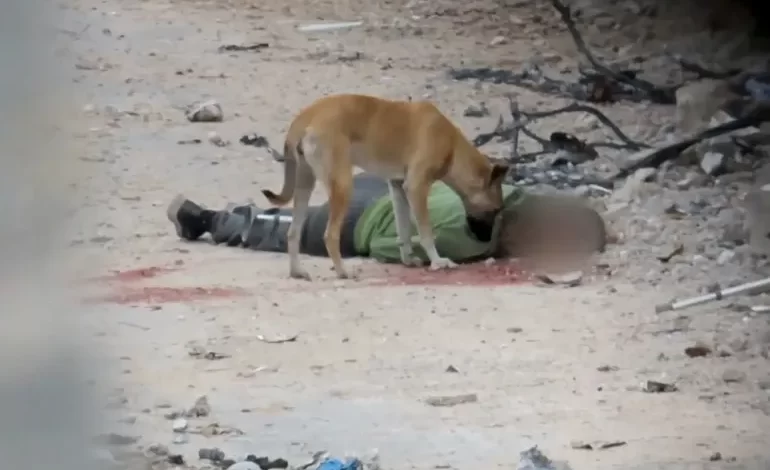
Commanders from Division 252 described an unmarked “line of corpses” in northern Gaza near Netzarim Road. Bodies are often left uncollected, attracting packs of stray dogs. “In Gaza, people know to avoid areas where they see packs of dogs,” one officer explained. The Israeli army officially denies the existence of such zones, yet commanders in the field enforce this deadly boundary.

A soldier recalled, “Anyone crossing this line is shot. The bodies stay where they fall. It’s become a grim reality.” Civilians, including children, have reportedly been killed in this manner.

Civilians Counted as “Terrorists”

Another soldier shared disturbing accounts of how unarmed civilians are often labeled as terrorists after being killed. “We kill civilians, but the reports always count them as terrorists,” the soldier admitted. This misrepresentation feeds a culture of competition among Israeli military units, where killing the most “terrorists” is rewarded. “If one division killed 150, another tries to hit 200,” he said.

One soldier recounted a chilling incident involving a 16-year-old boy who was identified as a ‘threat’. “We riddled him with bullets, took pictures, and later learned he wasn’t a terrorist—just a kid,” the soldier said. The unit commander, however, congratulated the soldiers, dismissing objections. “To them, anyone who crosses the line is a terrorist,” the soldier added.

In another case, four unarmed Palestinians were spotted near a tank. Soldiers opened fire, killing three. The fourth man, who surrendered, was stripped, humiliated, and briefly interrogated before being released. “He was just trying to visit relatives in northern Gaza,” a soldier explained.

Orders to Shoot Despite White Flags

Several testimonies mentioned incidents where Palestinians waved white flags, signaling surrender or non-combatant status. “We saw two figures waving a white flag near Nahal Gaza,” one soldier recalled. Despite protests from a commander who argued they might be Israeli prisoners, a superior ordered “fire to kill.” Ultimately, the individuals retreated, avoiding death.

“No Laws in Gaza”

Soldiers describe Gaza as a place where normal rules do not apply. “We’ve spent over a year in a lawless environment where human life means nothing,” said a senior commander. Soldiers admitted to acting like an “armed militia” without oversight or accountability. One officer commented on the power given to field commanders, who now authorize strikes that previously required top-level approval.

Many soldiers expressed internal conflicts over their actions. “This war isn’t just killing Palestinians—it’s destroying us too,” said one reservist. Soldiers who voiced objections were often silenced or ridiculed. “If I’m called back to Gaza, I don’t think I’ll go,” he admitted according to Quds News Network.

Continue reading
Gaza: Nuts and Bolts of Israeli Annihilation

The Israeli military’s destruction of entire Palestinian cities and neighbourhoods in the Gaza Strip is a clear manifestation of the genocide Israel has been committing in Gaza for the past 14 months, and a primary tool for its implementation.

This crime has not been confined to the killing of tens of thousands of Palestinians or the gradual decimation of two million people’s basic survival elements. It has extended to the complete annihilation of Palestinian cities, obliterating their architectural and civilisational fabric. This systematic destruction aims to erase the Palestinian national and cultural identity, impose permanent forced displacement, prevent return, dismantle communities, and eradicate their collective memory. It is a deliberate attempt to eliminate their physical and human existence while destroying their past, present, and future.

Information documented by Euro-Med Monitor’s field team, alongside testimonies from families forcibly displaced from northern Gaza, reveals that the Israeli occupation army has pursued, since its third ground assault on the northern Gaza Strip starting 5 October 2024, a policy of comprehensive erasure and destruction.

Methods employed include demolition using robots and booby-trapped barrels, aerial bombardment with destructive ordnance, planting explosives for remote demolition, and bulldozing using Israeli military and civilian machinery.

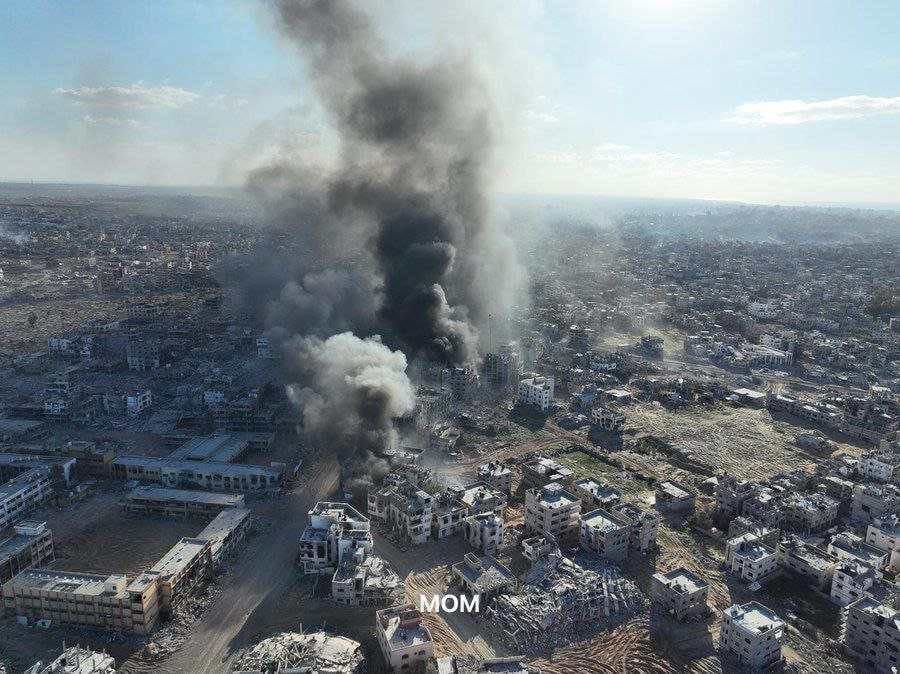
Euro-Med Monitor has meticulously reviewed videos and photographs published by Israeli soldiers and media platforms. Extensive aerial footage confirms the scale of destruction inflicted upon the northern Gaza Strip, with Jabalia camp left entirely in ruins, reduced to piles of rubble and impassable streets.

Entire areas, including Blocks 2, 3, 4, and 5, as well as Al-Alami, Al-Houja, Al-Falluja, Al-Tuwam, and the northern outskirts of Al-Saftawi, have been completely annihilated. Similar devastation has occurred in Beit Lahia and Beit Hanoun, leaving these once-thriving communities uninhabitable.

The systematic and comprehensive destruction of Palestinian towns and neighbourhoods—targeting homes, infrastructure, and civil and economic facilities—has persisted for over 73 days (since 5 October 2024). The pattern of devastation demonstrates that it is not militarily necessary but serves the deliberate purpose of erasing the Palestinian material and cultural presence. This constitutes a grave breach of international law.

Israel’s actions align with a broader policy of urbicide where the destruction targets not just Palestinian individuals and property, but the erasure of their cultural and civilisational existence. The goal is to obliterate any material or historical trace connecting Palestinians to their land, thereby weakening their ability to remain and survive in their ancestral areas.

Israeli government ministers, officials, Knesset members, and settler organisations openly promote these actions as part of efforts to impose a new demographic and geographic reality—replacing the indigenous Palestinian population with Israeli settlers. This constitutes a flagrant violation of international law and demands immediate intervention, accountability, and justice for the victims.

This policy of urbicide is not limited to northern Gaza. Initial reports from Rafah, in the southern Gaza Strip, alongside satellite imagery and testimonies, indicate that large areas have been nearly erased. Similar destruction has devastated Khan Yunis, Shuja’iyya, Zeitoun, and neighbourhoods along the Netzarim axis. The destruction extends to homes, streets, infrastructure, and essential civil, economic, and cultural facilities, rendering these areas uninhabitable and systematically preventing Palestinian return.

This urbicide is also tied to the ongoing crime of culturcide, initiated on 7 October 2023. Since then, Israel has deliberately targeted Palestinian archaeological and cultural landmarks in a clear effort to erase the Palestinian cultural heritage. Euro-Med Monitor has documented dozens of cases where the Israeli army targeted mosques, churches, historical buildings, museums, cultural centres, and universities, all integral to Gaza’s cultural identity.

While previous Israeli military operations destroyed key aspects of Gaza’s rich architectural heritage, the current assault represents its near-total obliteration.

Gaza’s heritage belongs not only to Palestinians but to all of humanity. These sites hold cultural and historical significance that transcends national borders, representing a shared global memory. The international community must act urgently to protect these sites, conduct impartial investigations into Israel’s violations, and pressure Israel to cease its systematic destruction.

All states must fulfil their international responsibilities to halt the genocide and other grave crimes being committed by Israel in Gaza. This includes imposing effective sanctions, ensuring compliance with international law and ICJ rulings, and halting all forms of political, financial, and military support to Israel. Immediate cessation of arms sales, transfers, and military aid to Israel is essential, alongside enforcing accountability for crimes against Palestinians. The International Criminal Court’s arrest warrants for Israel’s Prime Minister and Defence Minister must also be executed without delay.

Moreover, countries complicit in Israel’s crimes—most notably the United States and others providing military, financial, and political support—must also be held accountable. This includes states engaging in intelligence sharing, contractual agreements, and other forms of collaboration that enable Israel’s crimes.

Immediate action is imperative to end this unprecedented destruction, bring justice to the victims, and safeguard humanity’s shared heritage and dignity.

EuroMed Human Rights Monitor

Continue reading