
 Kareem Khan – Chronology of a Scandal: A View From Amman
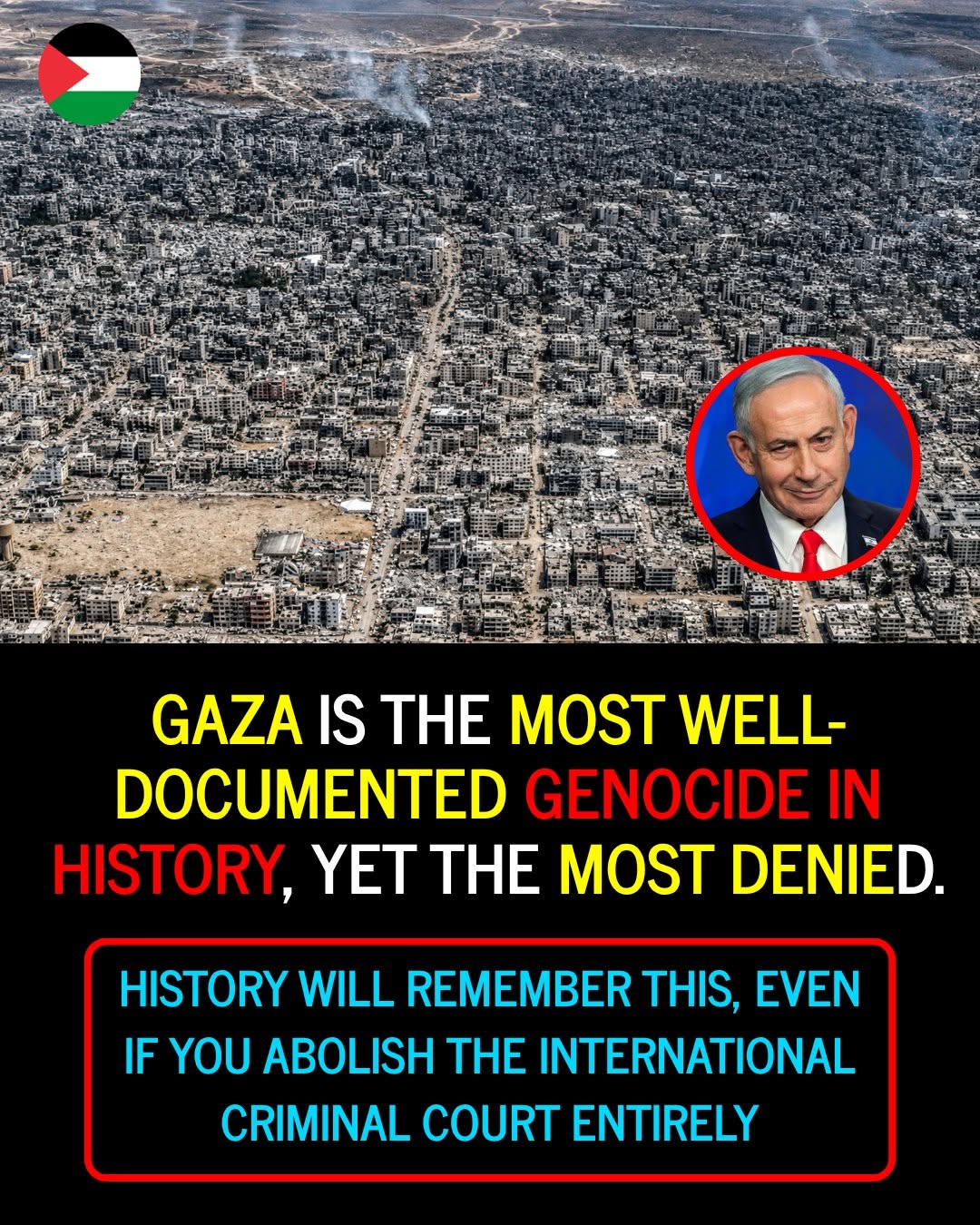 Documenting Genocide, Denying Genocide
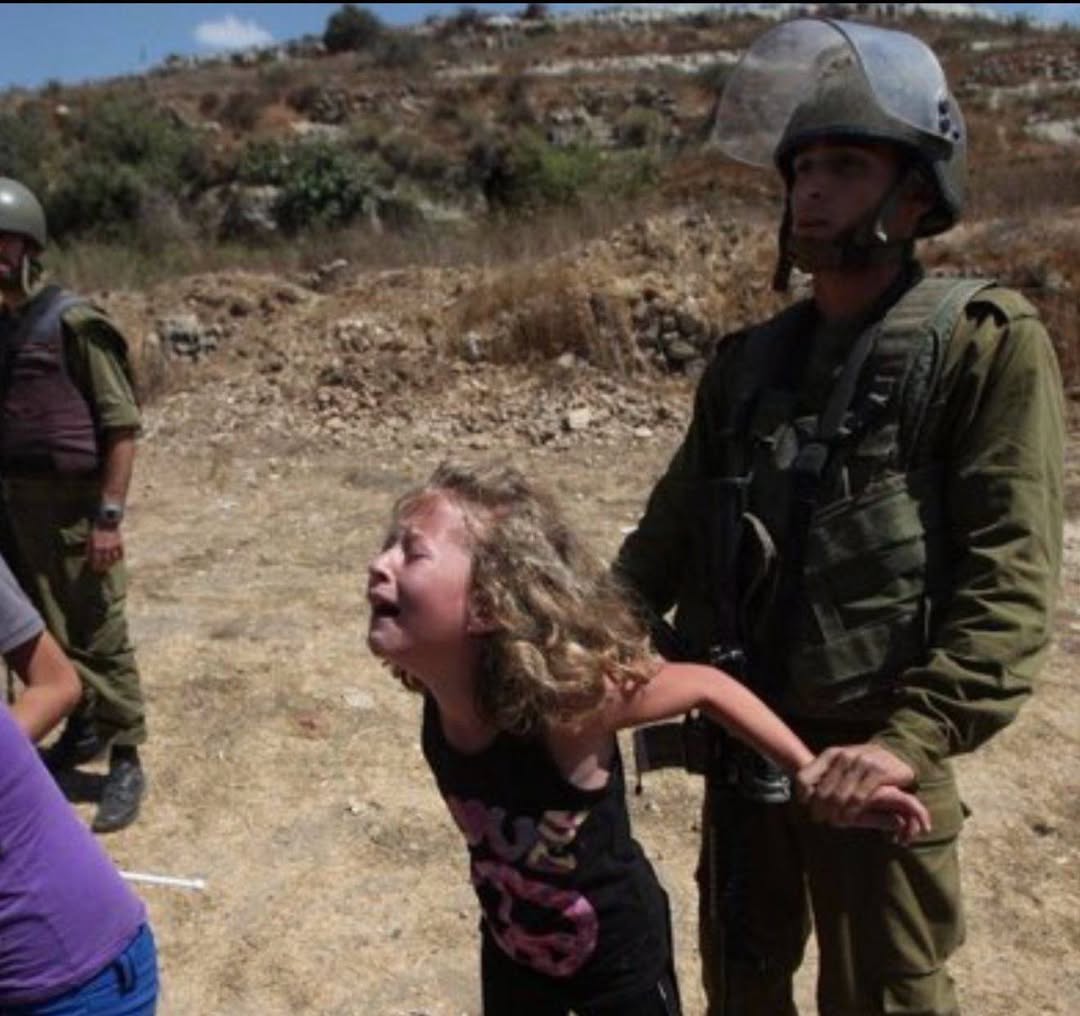 Pain of Gaza is a ‘Non-stop’ Israeli Stain
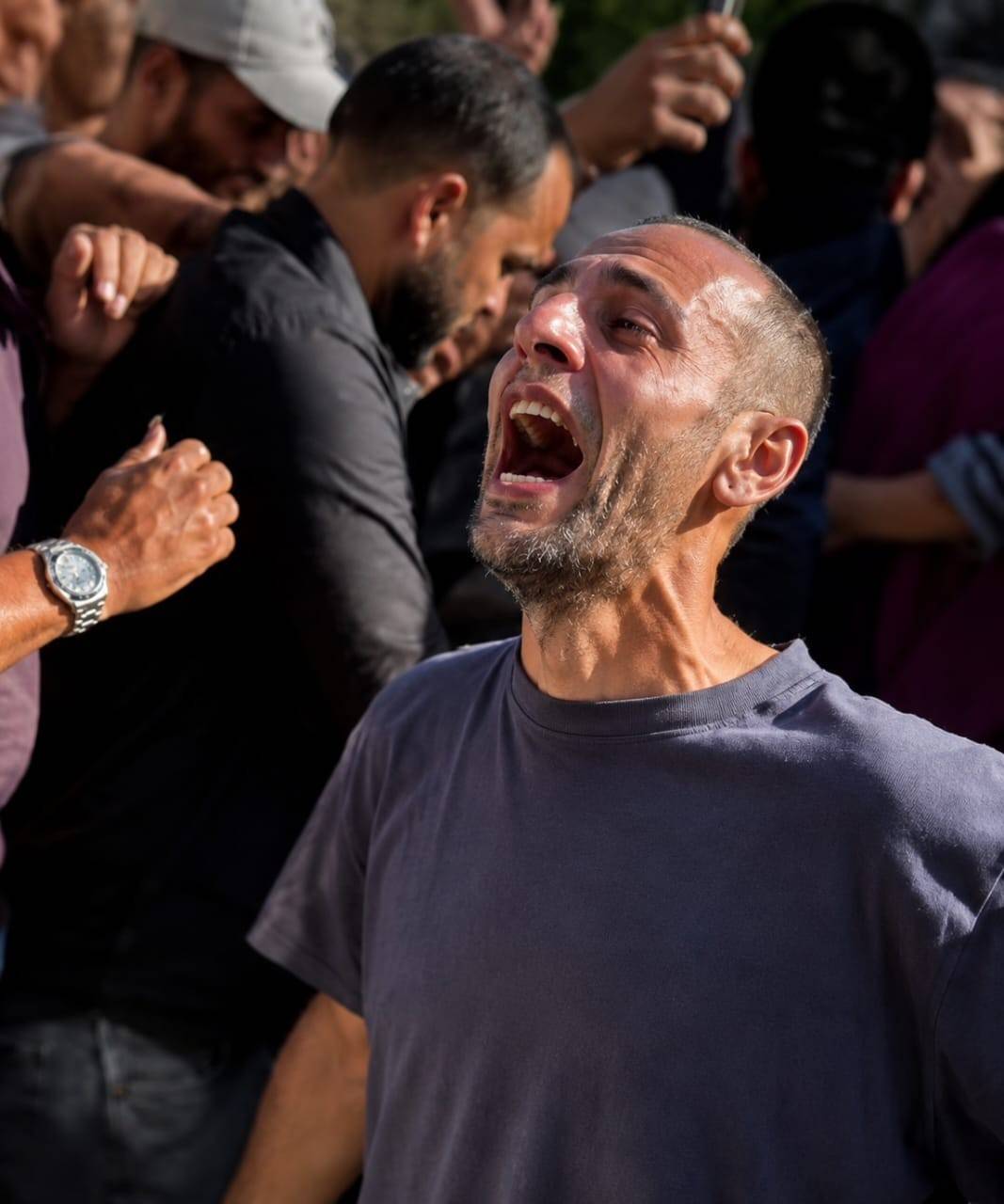 Freed Majdalawi Shouts Aloud For Palestinian Prisoners
 Aldous Huxley on Propaganda, Censorship
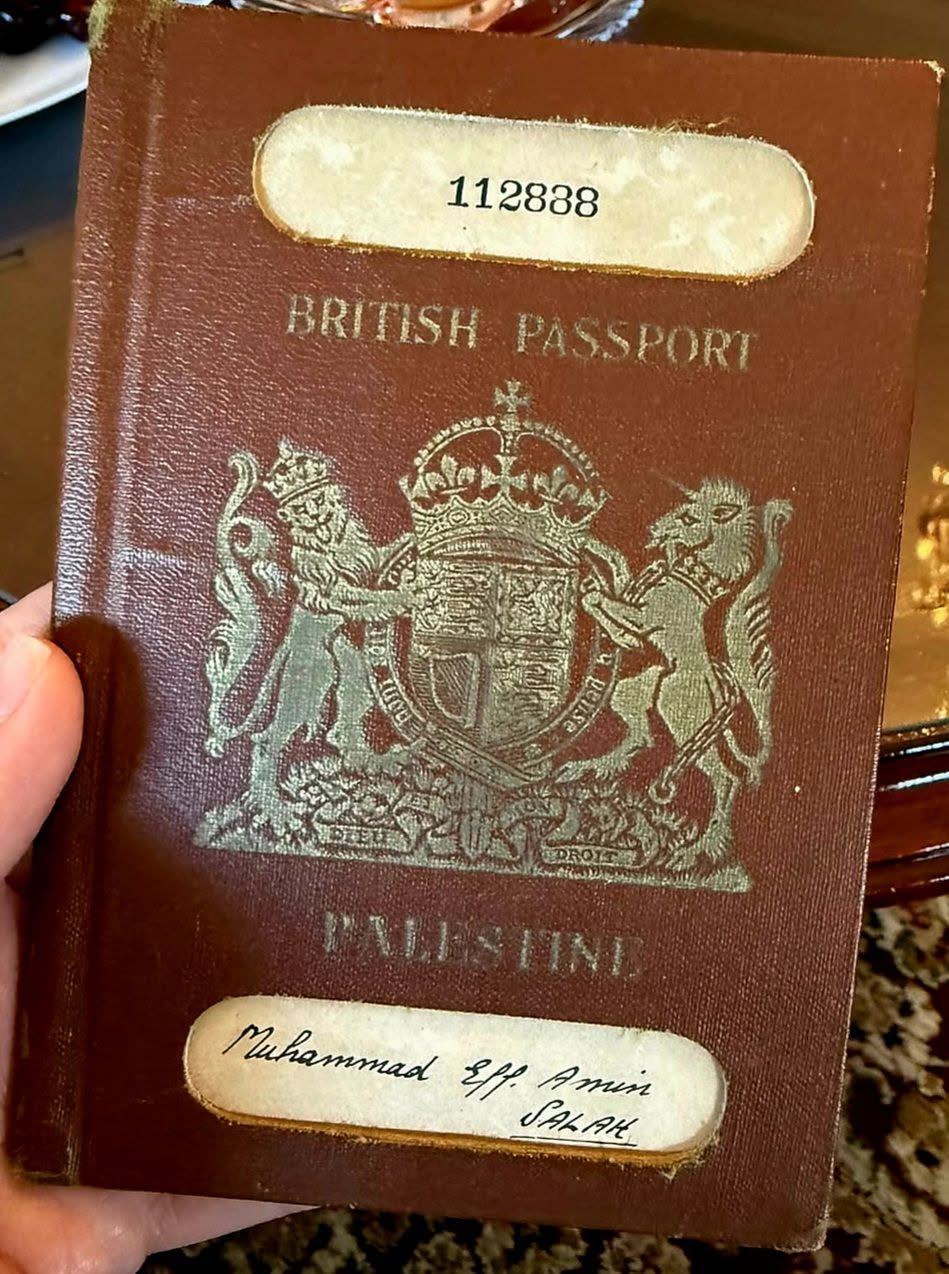


 Saleem Ayoub Quna
 marwan



































Diving in a War Zone
 CrossFireArabia
- June 8, 2026
By Jing Zhang
When US and Israeli forces launched strikes on Iran on 28 February, triggering one of the most serious geopolitical crises in years, the Strait of Hormuz – a narrow channel just 34 kilometres wide at its narrowest point – became a global flashpoint overnight.
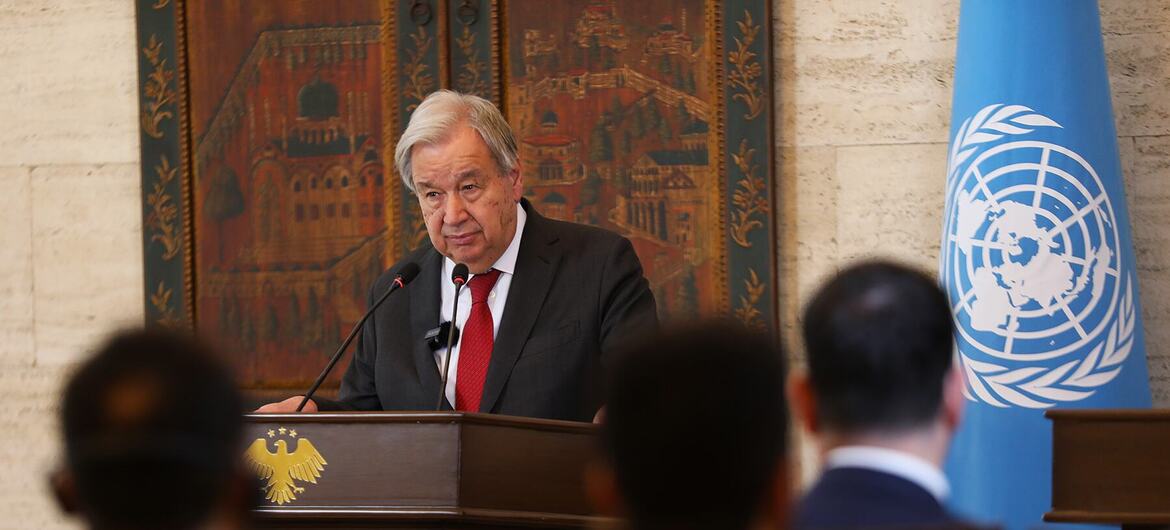
Iran closed the waterway to foreign shipping, attacking merchant vessels and cutting off around 20 per cent of the world’s seaborne oil trade. Some 20,000 seafarers were stranded in the Persian Gulf. The UN Secretary-General called for an immediate ceasefire.
Beneath all of it, the fish kept swimming.
Back in the water
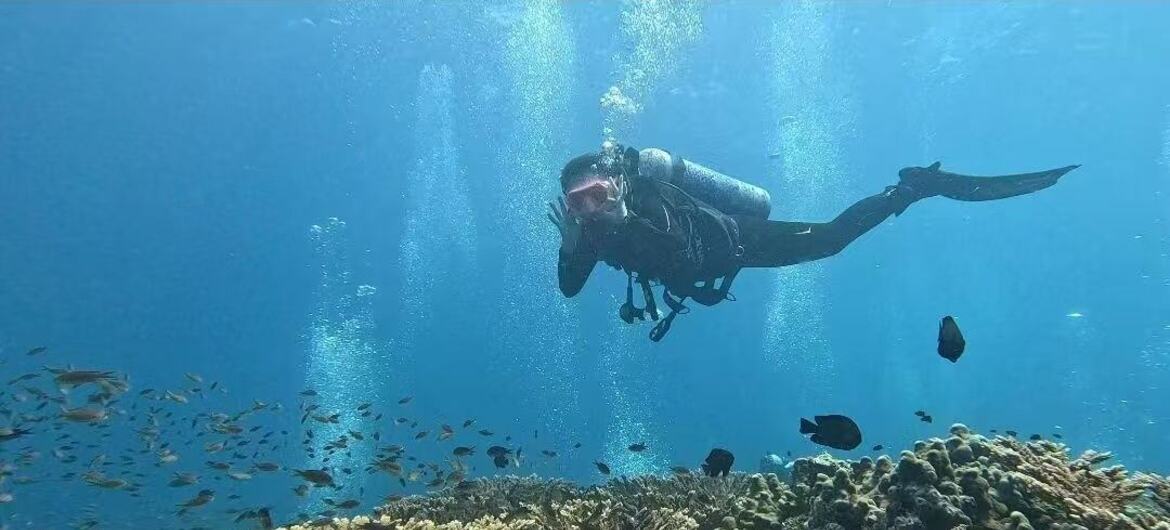
Three Chinese divers based in the United Arab Emirates (UAE) – diving instructor Rui Li, freediver Shanshan Du and technical diver Jie Zhang – had been locked out of the water for weeks by the coastal closure. When a ceasefire allowed limited access in mid-April, they went straight back in.
World Oceans Day, marked each year on 8 June, carries the theme this year of Reimagining the Relationship Between Humans and the Ocean. For these three, that reimagining is anything but abstract.
“We were actually a little worried before setting off,” says Du, who dived the narrowest stretch between the UAE and Oman on 18 April, just days after the UN welcomed Iran’s announcement that the strait would be open to commercial vessels during the ceasefire.
“But after more than two months, we all felt it was fantastic to be able to dive again. We encountered a large group of dolphins. There was none of the war-torn atmosphere I had imagined – only peace and beauty before my eyes.”
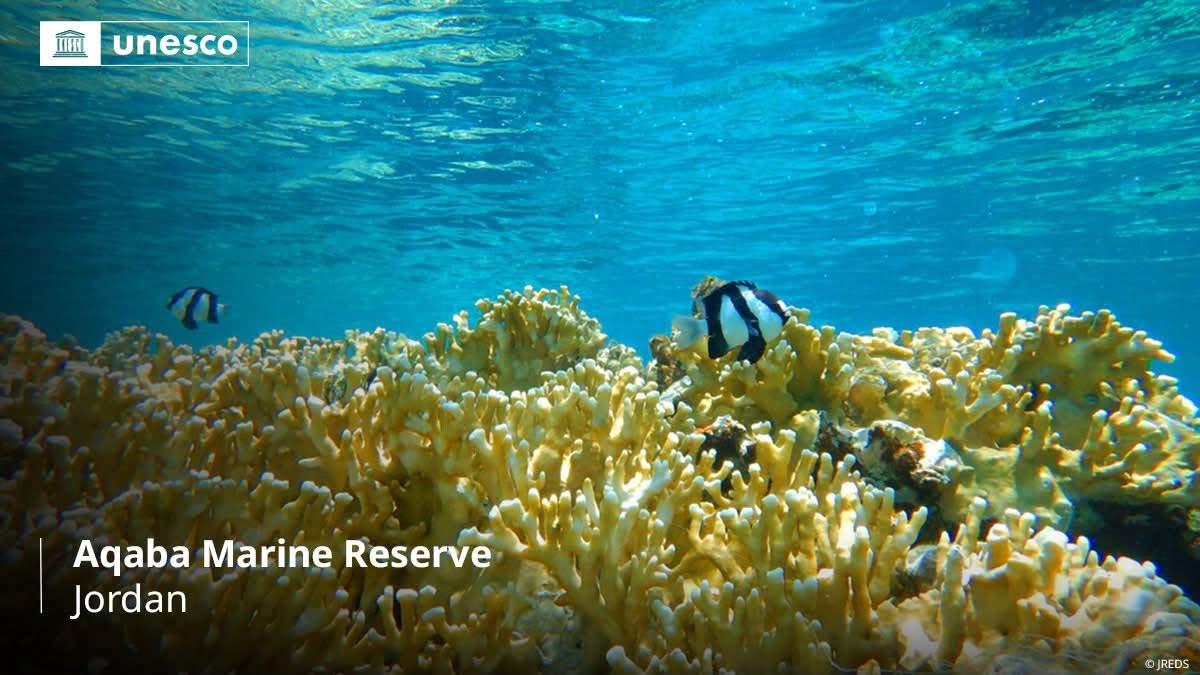
Zhang, who dived the area as recently as last week, describes coral diversity she has rarely encountered elsewhere – soft and hard corals varying with the topography, and sea turtles gathered in such numbers they evoked a nature reserve.

Troubling signs
She also noticed something more troubling. “I saw more white debris on the seabed than before,” she says, uncertain of its origin. And when she and her companions followed dolphins near the eastern side of the strait, the water around the animals was streaked with green algae, oil fumes and floating rubbish.
“I recalled that when I used to chase dolphins, the water was blue. Seeing this scene with my own eyes is still very heartbreaking.”
Li is careful to hold both realities at once. The strait is not the world’s most biodiverse marine zone, he notes, but its complex topography sustains coral reefs of unusual variety – formations “as white as silver needles” alongside colonies “as purple as pine forests” – as well as seahorses, whale sharks and species rarely seen elsewhere.
He describes witnessing a boat captain who, unable to dive and with no other means of communication, could reliably find a pod of dolphins that seemed to recognise him. “We would greet each other and then go our separate ways,” Li says. “This place is truly magical.”

Potential catastrophe
Yet he is also acutely aware of what armed conflict can do to such a place. An attack on oil storage facilities, he points out, could be catastrophic for marine life. “Many marine organisms are small and vulnerable. A single attack could be enough to wipe out some amazing species that have never been seen by humans.”
Zhang frames the underwater world’s vulnerability in blunt terms. “No one can speak for the underwater ecosystem – fish can’t speak, and neither can large animals.
“We dump all the disputes, wars and pollution on land onto the ocean, ignoring the fact that the ocean has no good self-protection capabilities and can only bear all the conflicts and damage caused by human activities.”
Diving has quietly dissolved certain certainties for all three. “Underwater, the ocean has no borders,” says Zhang. “Ocean currents and schools of fish move freely. When whale sharks cruise, they follow fixed routes through different countries – they are free. Humanity should share this blue world instead of tearing it apart with disputes.”

Mother ocean
Li reaches for a different metaphor – warmer, and perhaps more honest about the limits of human agency. The relationship between people and the sea, he suggests, is something like that between a child and a parent: the ocean sustains us, nurtures us, occasionally punishes us.
“We have grown old enough to want to protect it, he says, yet what we can actually do remains small. “Our parents are still quietly waiting for us, helping us, and continuing to nurture us.”
Du, diving in a country where people of dozens of nationalities converge, has found that underwater, borders feel beside the point. Communication happens through gesture alone. “Because of this hobby, and because of the ocean, it has created a wonderful environment for us.”
The conflicts raging above the surface have not ended. Talks between Washington and Tehran remain fragile, conditions volatile. But 71 per cent of the Earth is ocean – and, as Li says to anyone who has yet to see it: come and touch the refreshing water whenever you can.

Netanyahu, Iran and The ‘Destructive’ Israeli Personality
- CrossFireArabia
- June 8, 2026
By Dr Adnan Naeem
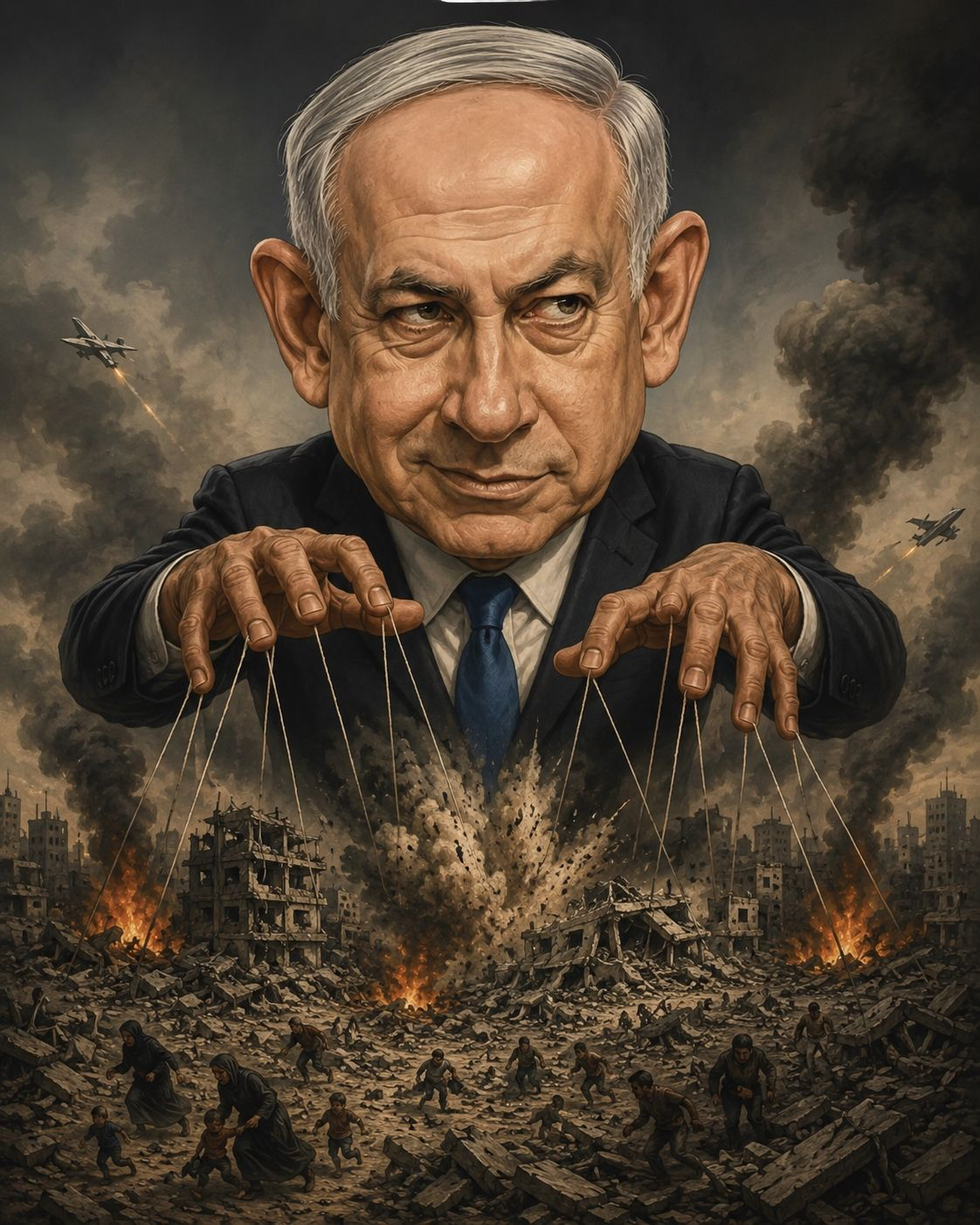
The recent escalation between Israel and Iran suggests that Prime Minister Benjamin Netanyahu is currently experiencing one of his most complex and perplexing political moments. The man who has long relied on military force as a tool to resolve conflicts and impose realities now finds himself besieged by outcomes that fall short of his stated objectives and the immense cost borne by the entire region.
In Gaza, after months of war, destruction, and continuous military operations by the Israeli army, fundamental questions remain unanswered: Where is the victory promised to the Israelis? Where are the strategic achievements that justified the continuation of the war? The Gaza battle was transformed from a project for a swift resolution into an open-ended war of attrition, with the political, security, and humanitarian costs increasing daily and rapidly.
As for the northern front (Lebanon), Netanyahu has failed to impose the equations he repeatedly wanted to create. Instead of restoring Israel’s image of deterrence, new realities have emerged confirming that the region does not respond to threats, and that the power balance has become far too complex to be determined by the rhetoric of force or displays of military capability.
At the heart of these shifts, Iran has emerged as a model distinct from the many adversaries Israel has traditionally dealt with. Tehran does not merely declare its right to retaliate; it exercises this right whenever it perceives its interests or sovereignty are threatened. The recent regional confrontations demonstrated that a policy of threats is no longer sufficient to subdue or deter adversaries while military calculations have become far more costly and complex than Netanyahu imagined.
It is to be noted while Netanyahu sometimes speaks of opportunities for negotiation or security and political arrangements, he at the same time continues to generate the conditions for escalation. How can peace be built while the circle of confrontation widens? And how can the world be convinced of the seriousness of the political process when the language of force remains the sole instrument for managing the conflict?
He appears like a cunning fox, claiming to be engaged in negotiations for peace but focusing on security matters rather than the political file. The security file establishes a limited, relative stability, not a lasting one, waiting to reignite conflict in the region, particularly on the Lebanese front.
Netanyahu works on downplaying and delaying the importance of resolving the political issue first. He thus evades political obligations and commitments under international pressure regarding Lebanese rights for instance, most importantly ( is a complete withdrawal, even from the Shebaa Farms, demarcation of borders, including maritime borders, and Lebanese rights to the gas fields off the Lebanese coast – the Karish field).
This contradiction reveals a crisis deeper than a mere disagreement over military tactics; it reflects a personal political predicament facing Netanyahu. He understands – as he approaches the general elections – that a ceasefire could open the door to domestic accountability regarding security and political failures, and could revive questions about his political future, not to mention corruption cases and crises such as his dismantling of the judicial system and the conscription of Haredim. Therefore, it seems the continuation of the tension gives him more room to maneuver than political compromises would.
Within Israel itself, and as the general elections approaches, the gap between Netanyahu and growing segments of society widens. The opposition is gaining strength, protests continue unabated and the families of fallen and wounded soldiers are raising their voices in an unprecedented manner. Meanwhile, criticism is mounting from security and military figures who believe the government lacks a clear vision to resolve the crisis.
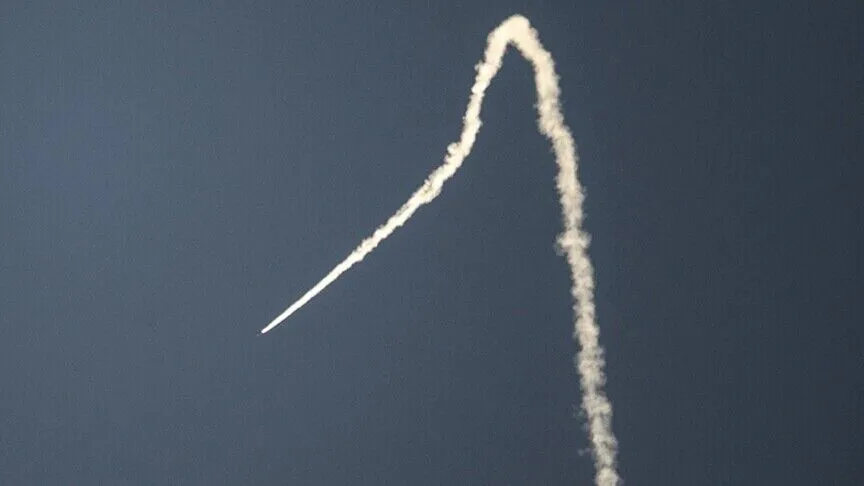
Today, Netanyahu’s image resembles that of his missiles: Soaring into the sky, creating a deafening roar, but quickly returning to reality, where difficult questions and stubborn facts await him. Wars may postpone crises, but they do not eliminate them, and escalation may temporarily alter the landscape, but it does not create a lasting victory.
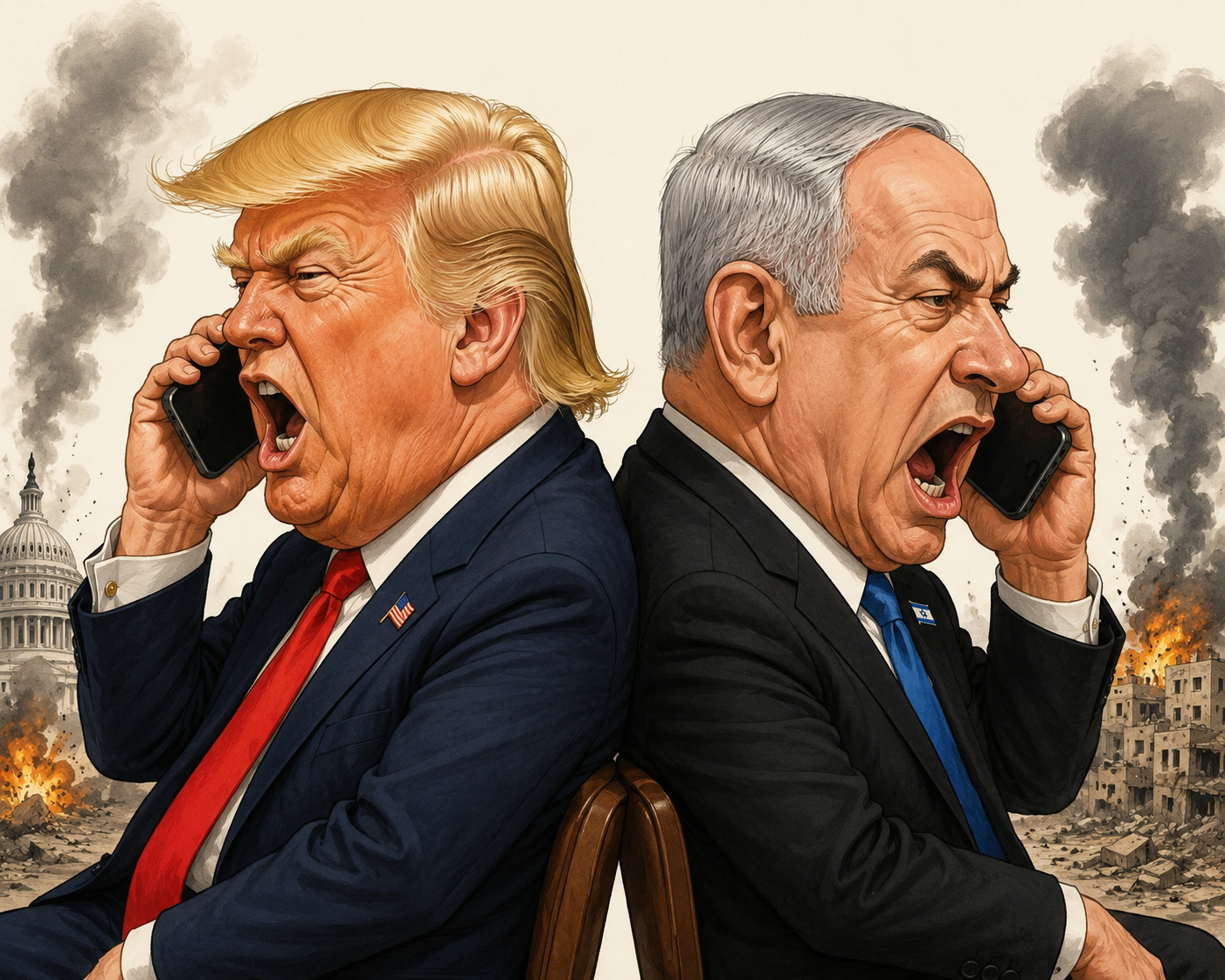
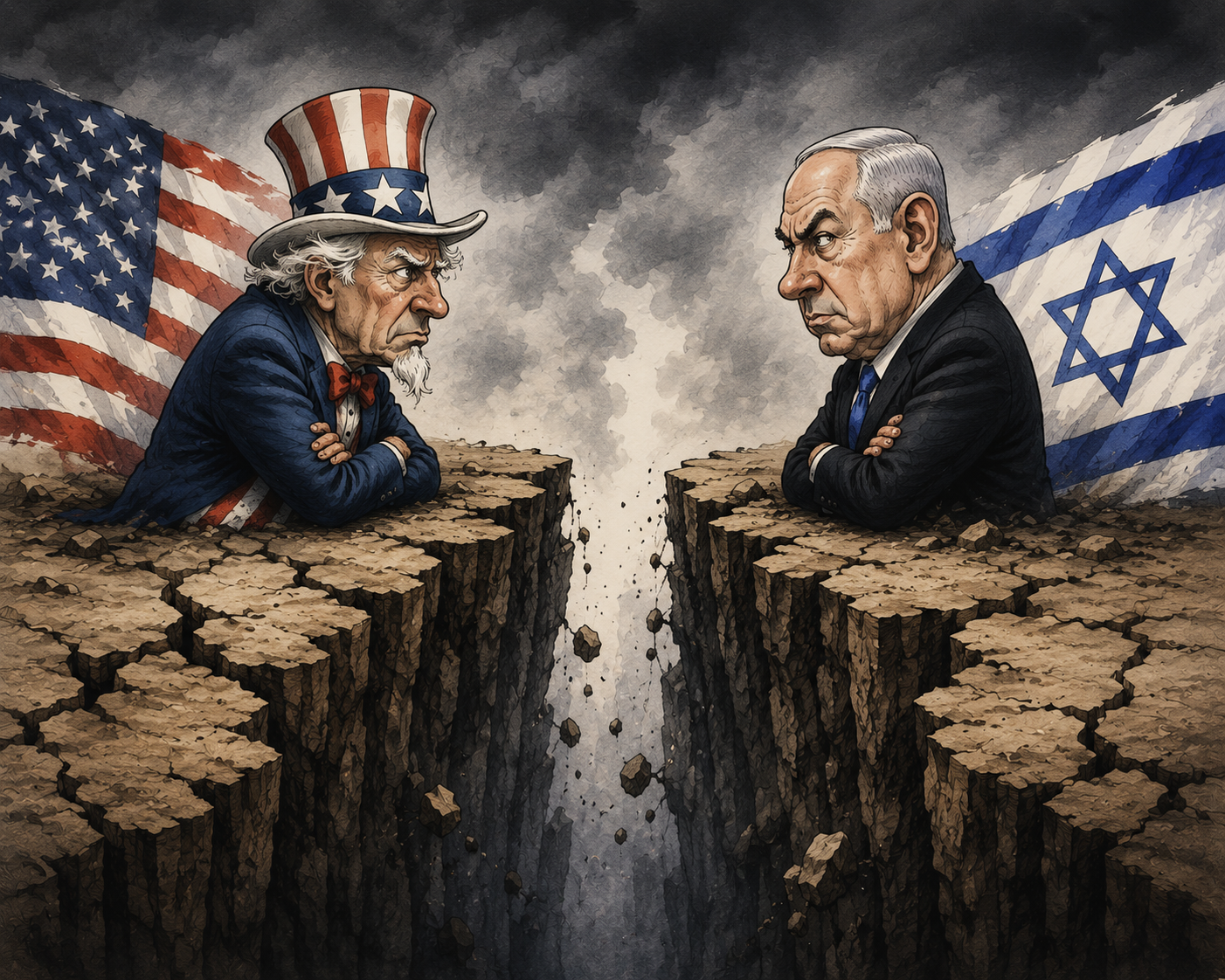
Conversely, the United States appears more inclined toward de-escalation and preventing the region from erupting into a full-blown war. Washington understands its strategic interests require containing the conflict, not expanding it. It prefers pursuing political and security arrangements that reduce the likelihood of a major confrontation. However, this approach clashes with Netanyahu’s desire to keep the region on the brink of conflagration, hoping to alter the facts on the ground or escape the demands of domestic politics.
Between heaven and earth, Netanyahu oscillates between the rhetoric of power and the reality of impotence, between his political ambitions and the limits of what military force can achieve. As for the region, it continues to pay the price for this oscillation, which has so far produced nothing but more tension and instability.
This article, written by Dr Adnan Naeem, an Israeli affairs expert, was published in the Arabic Maannews website and reprinted in crossfirearabia.com
Iran Anounces End of Israel Attacks, Warns of More If…
- CrossFireArabia
- June 8, 2026
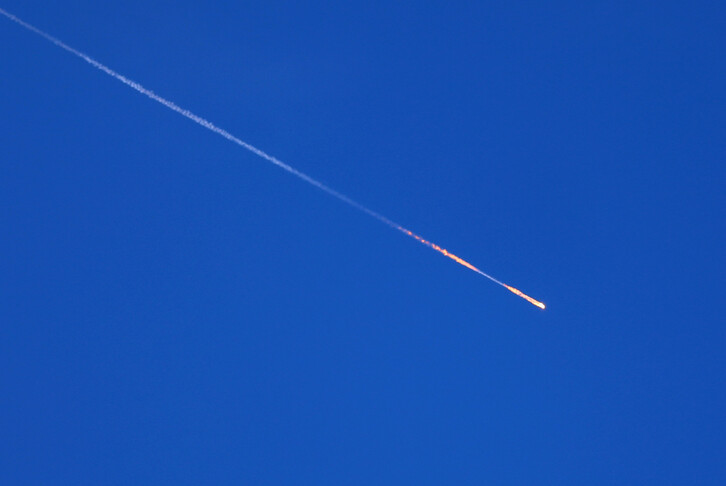
Iran on Monday announced an end to its attacks on Israel, warning of a “crushing” response if Israeli attacks against Lebanon continued.
“Following the aggressions and evils of the brutal Zionist regime in South Lebanon and the Dahiya region, which took place with the support of the criminal America, the powerful armed forces of the Islamic Republic of Iran gave a painful response to this regime in order to support the oppressed people of Lebanon,” the Khatam al-Anbiya Central Headquarters said in a statement carried by the semi-official news agency Tasnim.
Israel and its supporters “should have learned” lessons from Tehran’s response, the military added.
“On this basis, the cessation of armed forces operations is announced.”
It, however, warned that “if the aggressions and evils continue, including in South Lebanon, much more severe and crushing measures will be on the way.”
Tensions escalated on Sunday, when Israel bombed the Lebanese capital Beirut, despite an ongoing ceasefire, prompting Iran to launch missiles at northern Israel in retaliation, with Israel launching several waves of airstrikes against Iran.
Meanwhile, Israeli newspaper Israeli Hayom reported that Tel Aviv and Washington sent a message to Tehran stating that no further attacks will be launched by Israel if Iran does not resume firing.
In a post on his Truth Social platform early Monday, US President Donald Trump called on Israel and Iran to stop fighting “immediately” in the wake of Monday’s tit-for-tat airstrikes. Anadolu
31 Missiles Fired on Israel From Iran, Yemen
- CrossFireArabia
- June 8, 2026
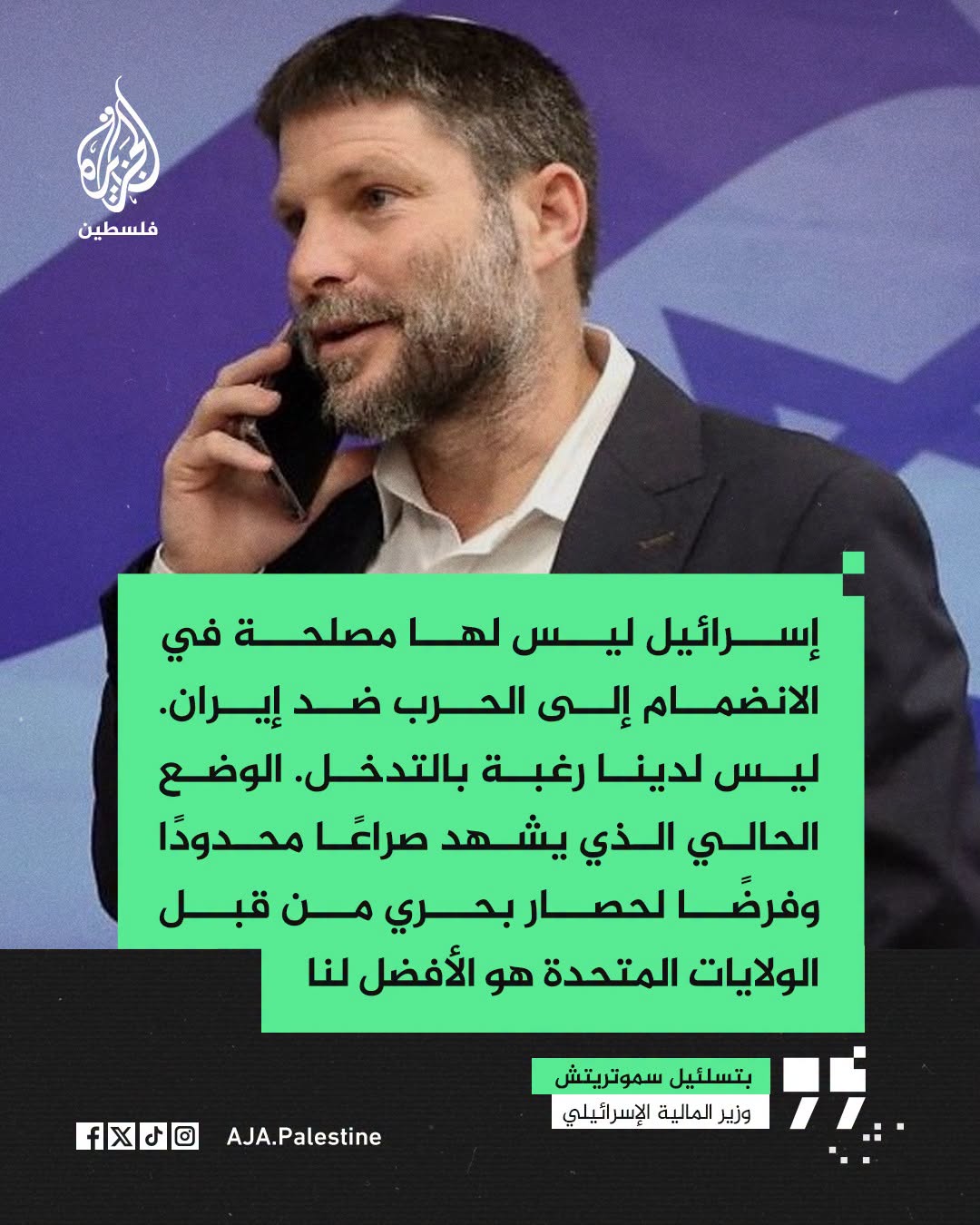
Israeli officials say their army detected about 30 missiles that were fired from Iran and one from Yemen since Sunday evening. This move was unexpectedly made in retaliation for an Israeli airstrike on the southern suburb of Beirut, the Lebanese capital.
Israeli Army Radio reported that “since last night, about 30 missiles have been launched from Iran and one from Yemen at Israel,” according to the Anadolu news agency.
In response, the Israeli military stated that dozens of its warplanes conducted airstrikes it claimed “destroyed strategic defense systems” in Iran.
Meanwhile, Israeli Transportation Minister Miri Regev announced, Monday, that no decision has yet been made to close the Israeli airspace or suspend operations at Ben Gurion Airport following the renewed conflict with Iran.
Regev added, via the American company X, that she is conducting situation assessments with the ministry’s director general, the Airports Authority, and all relevant professional bodies.
“At the same time, discussions are underway, at the request of the Home Front Command, to reduce the number of people at the Ben Gurion Airport to 2,500,” she said.
Earlier on Monday, Channel 12 reported passengers on an Israeli El Al flight were evacuated after sirens sounded at Ben Gurion Airport near Tel Aviv, following the detection of missile launches from Iran.
When the US and Israel launched their war on Iran on 28 February, Israeli airspace was immediately closed and then gradually reopened.
Ignoring a ceasefire that began on April 17, Israel continues its aggression on Lebanon, which began on March 2. This aggression resulted in the death of 3,558 and injury of 10,870 with over one million displaced persons.
Despite Iran’s warnings against targeting Beirut’s southern suburbs, Israel reignited tensions on Sunday evening with an airstrike on the area, killing two and wounding 11. Israel claimed to have targeted a command and planning center belonging to Hezbollah.
And as a result on Sunday evening, Tehran began launching missile barrages at Israel, which subsequently announced its fighter jets bombed military targets in western and central Iran. Israeli assessments indicated the confrontation could continue for several days.
Since April 8, a truce has been in place between Tehran and Washington following the war waged by the United States and Israel, which, according to Tehran, left more than 3,000 dead.
Iran retaliated by launching attacks that killed Americans and Israelis, and also carried out attacks against what it claimed were American targets in Arab countries. However, some of these attacks resulted in civilian casualties and damage to civilian infrastructure, which was condemned by the targeted countries.
Israel has occupied Palestinian territory and parts of Lebanon and Syria for decades, refusing to withdraw and allow the establishment of an independent Palestinian state, as stipulated in relevant United Nations resolutions.