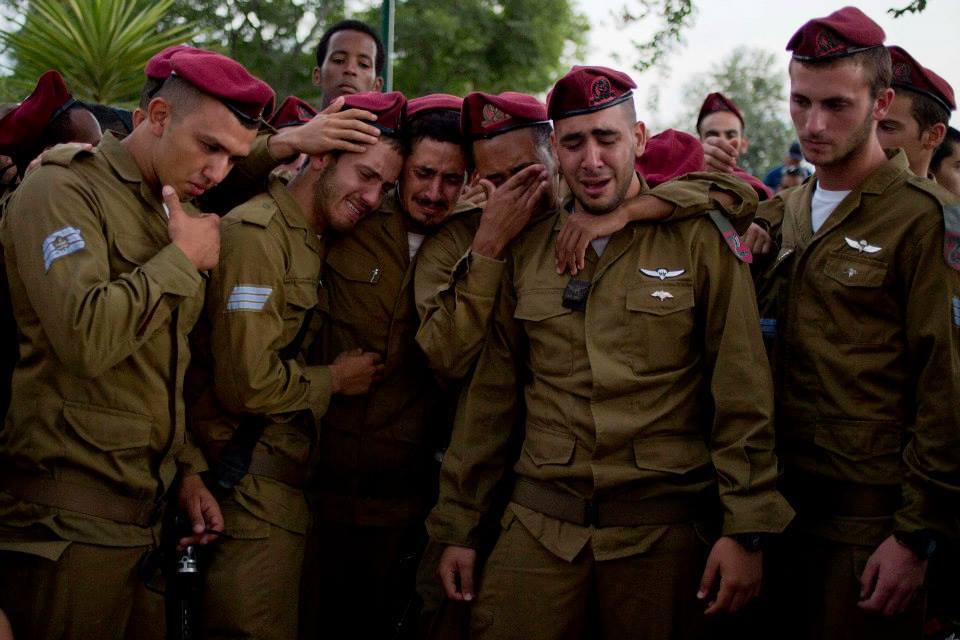
 Ehud Olmert: Gaza Belongs to The Palestinians
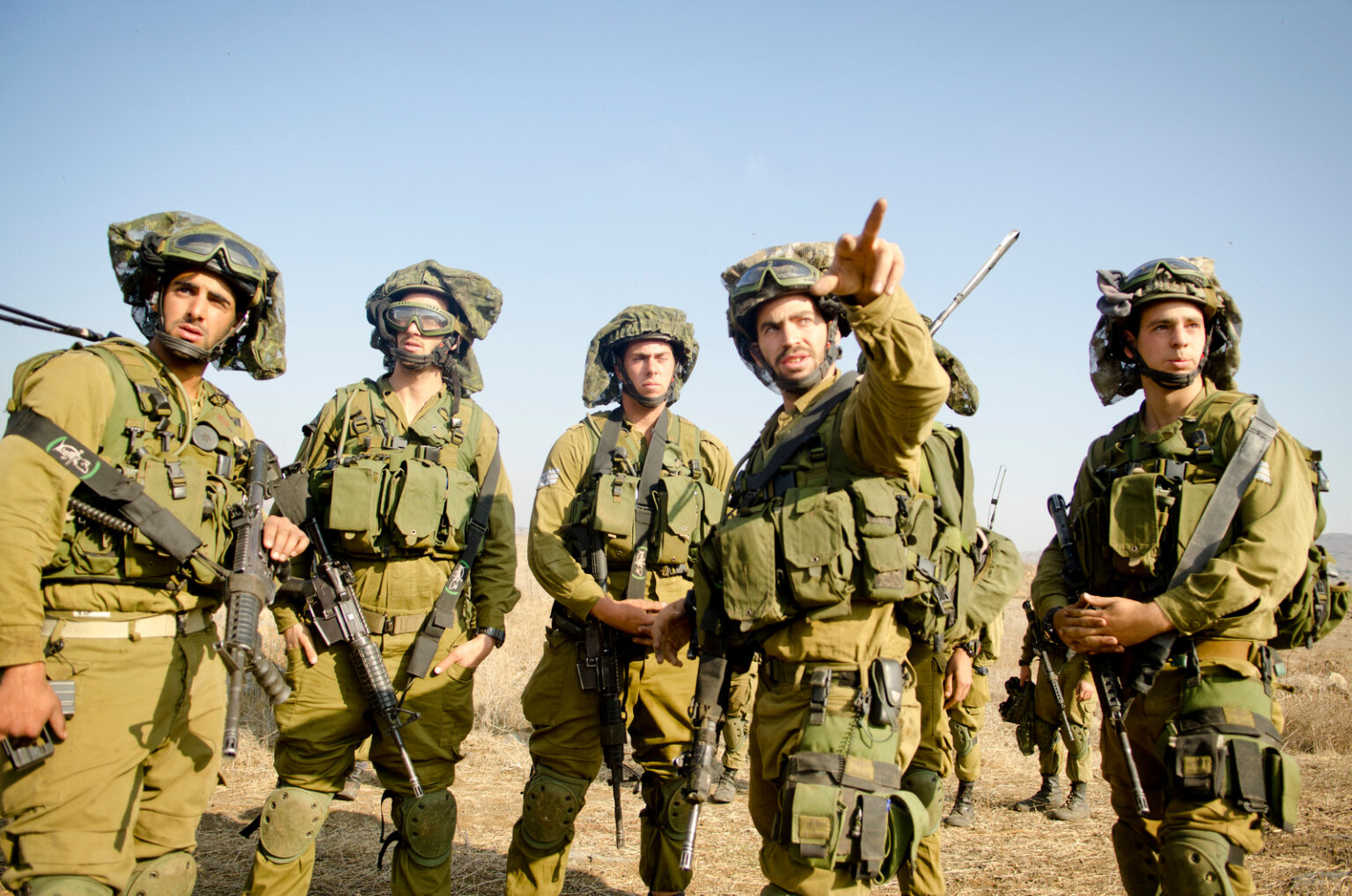 300 Israeli Soldiers Call For an End of ‘Settler Terrorism’
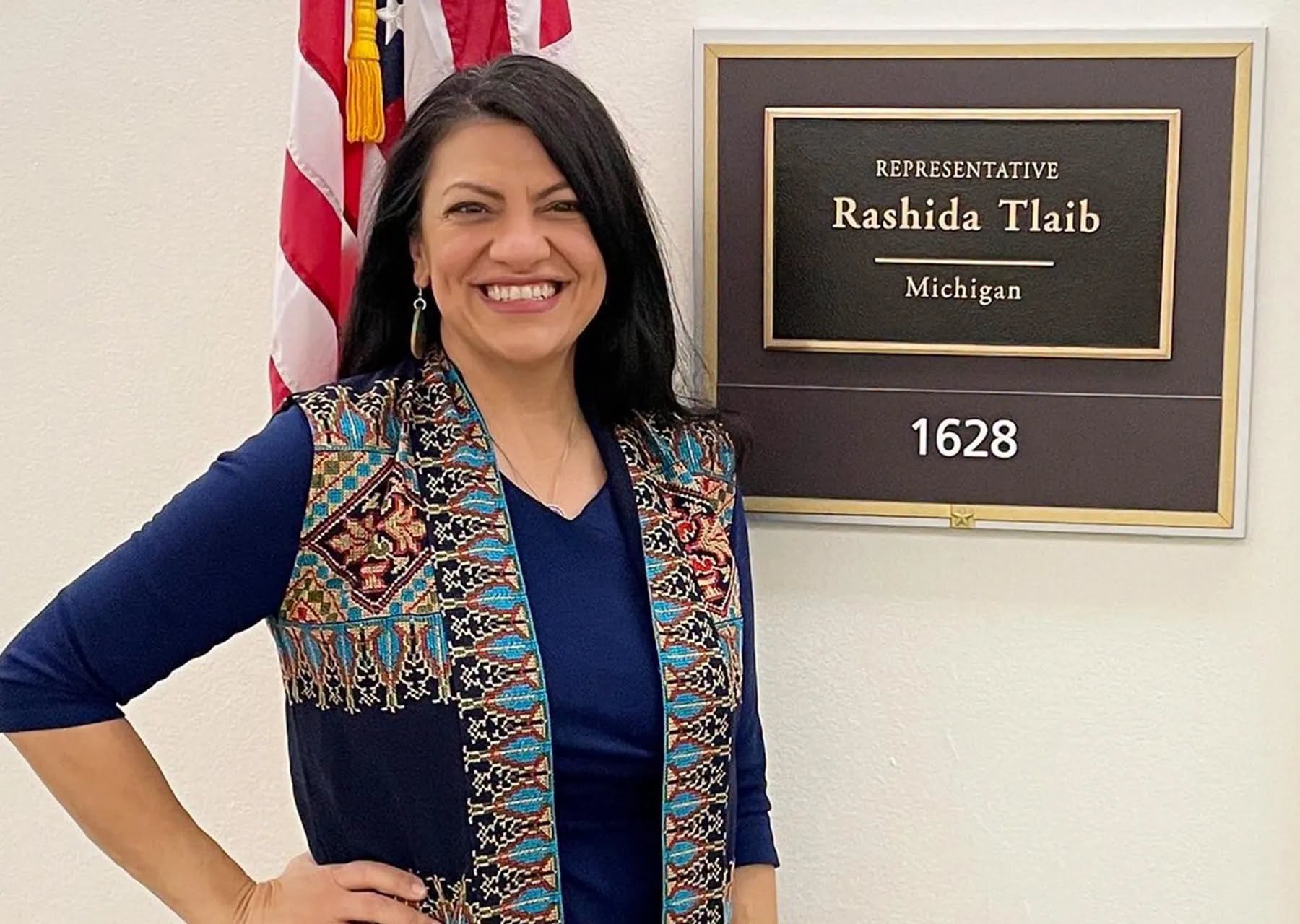 Reshida Tlaib Sweeps in Polls
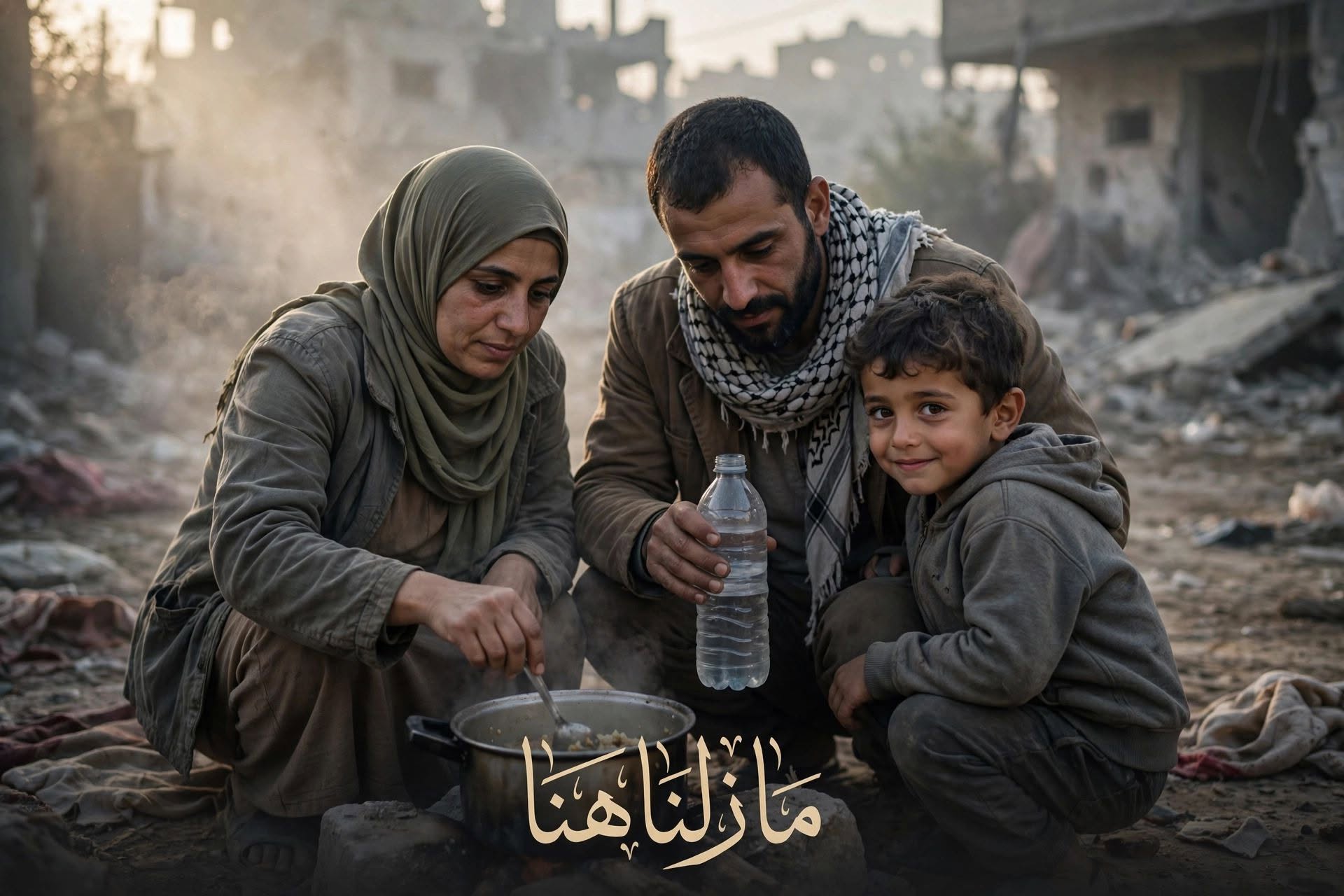 ‘We Are Still Here – Gaza’
 The Mecca Agreement: Is This The Beginning?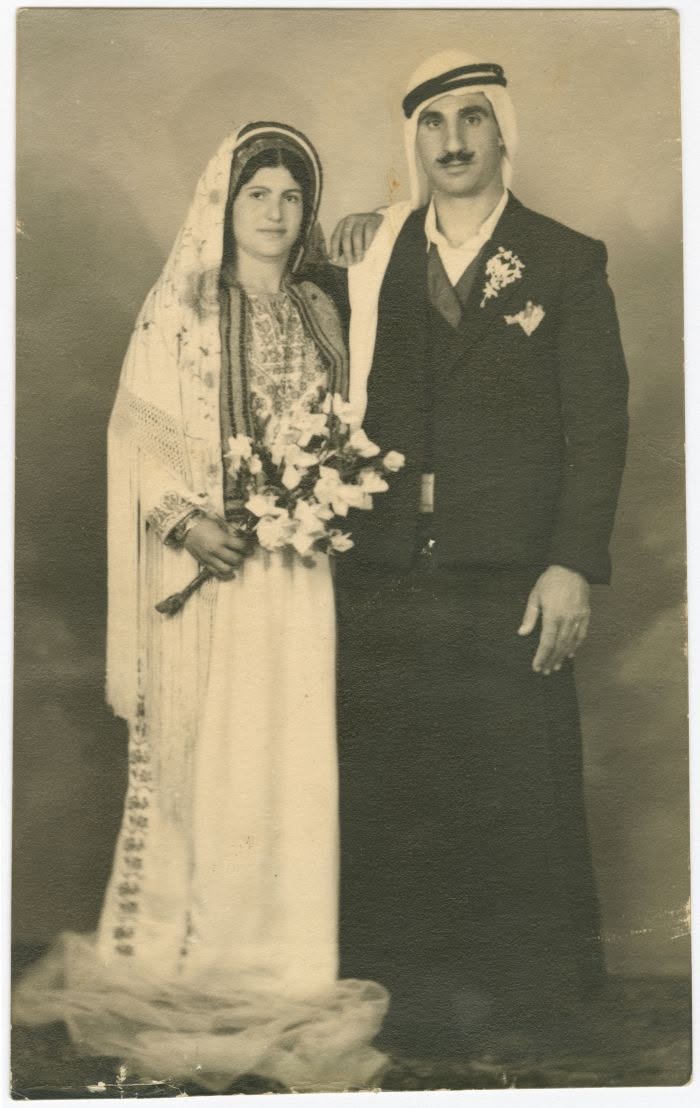



Ehud Olmert: Gaza Belongs to The Palestinians
 CrossFireArabia
- August 12, 2026
 CrossFireArabiaCrossFireArabiaCrossFireArabiaCrossFireArabia
 Heba
Heba marwanCrossFireArabiamarwanHebaCrossFireArabiaHebamarwanmarwanCrossFireArabiamarwanmarwanmarwanmarwanmarwanmarwanmarwanmarwanmarwanCrossFireArabiaCrossFireArabiamarwanmarwanCrossFireArabiaCrossFireArabiamarwanCrossFireArabiamarwanHebaHebamarwanmarwanCrossFireArabiamarwanmarwanmarwanmarwanCrossFireArabiaCrossFireArabiamarwanmarwanmarwanCrossFireArabiamarwanmarwanmarwanmarwanmarwanCrossFireArabiamarwanmarwanmarwanmarwanCrossFireArabiamarwanmarwanmarwanmarwanmarwanmarwanmarwanmarwanmarwanmarwanCrossFireArabia
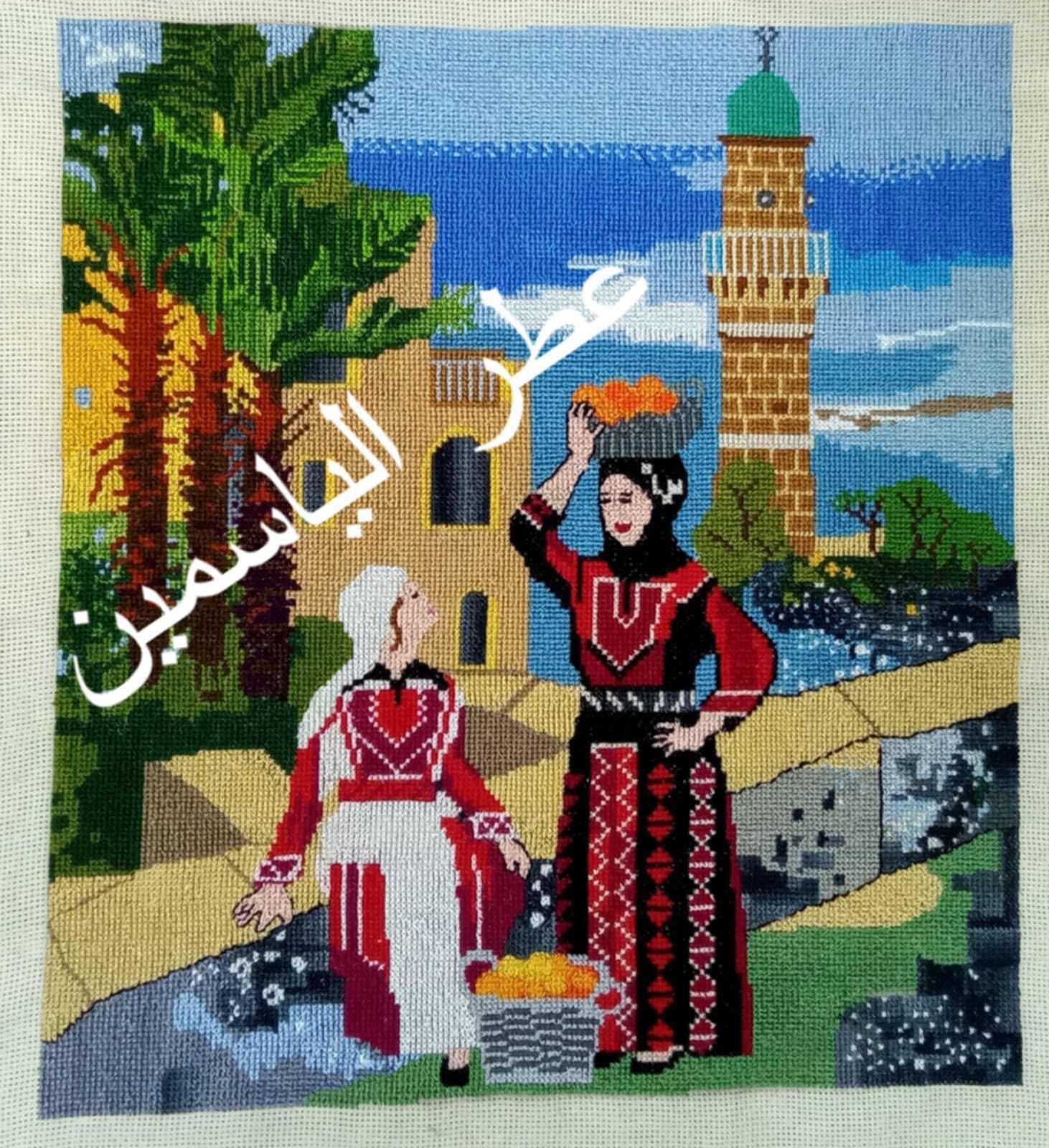
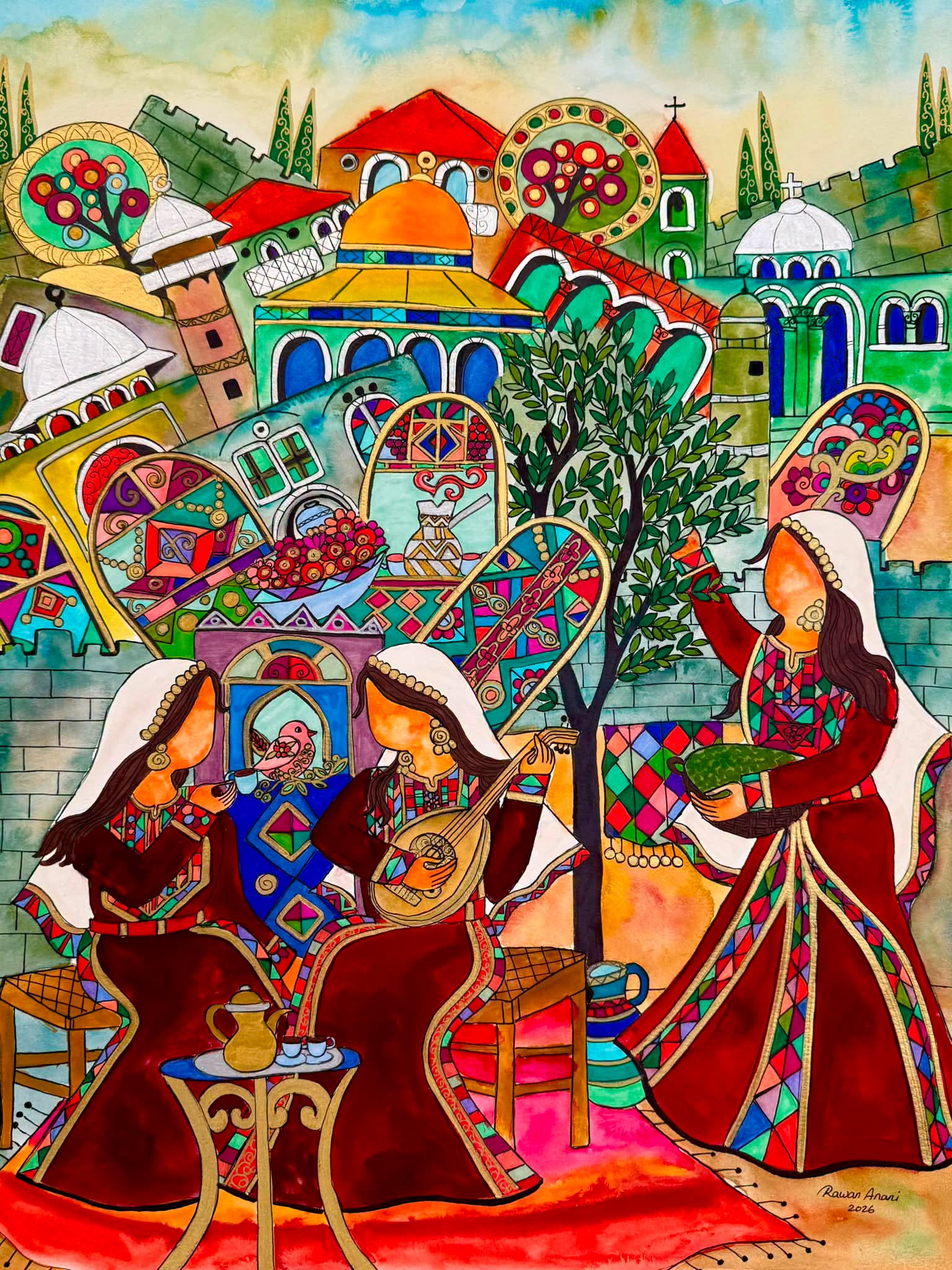
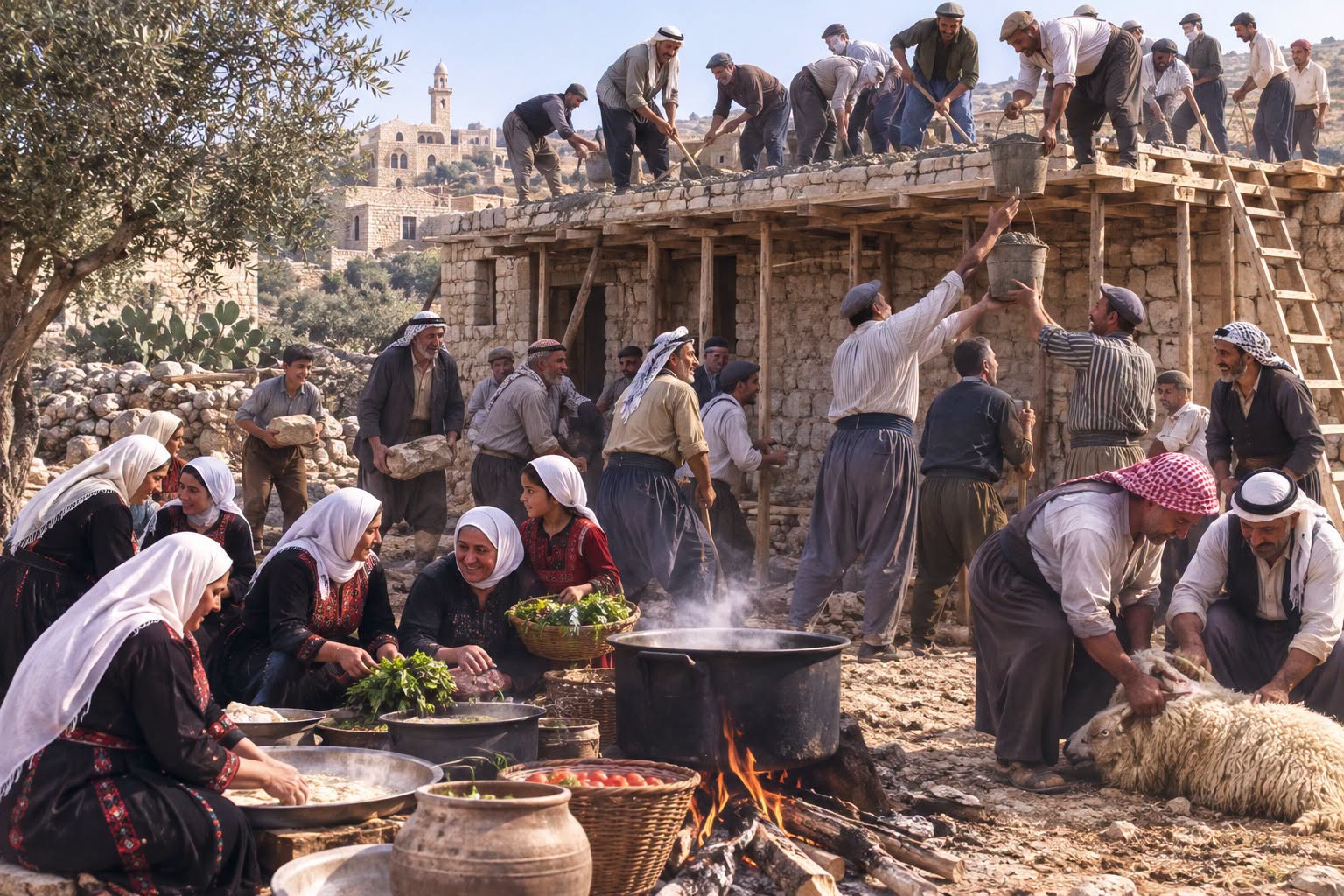
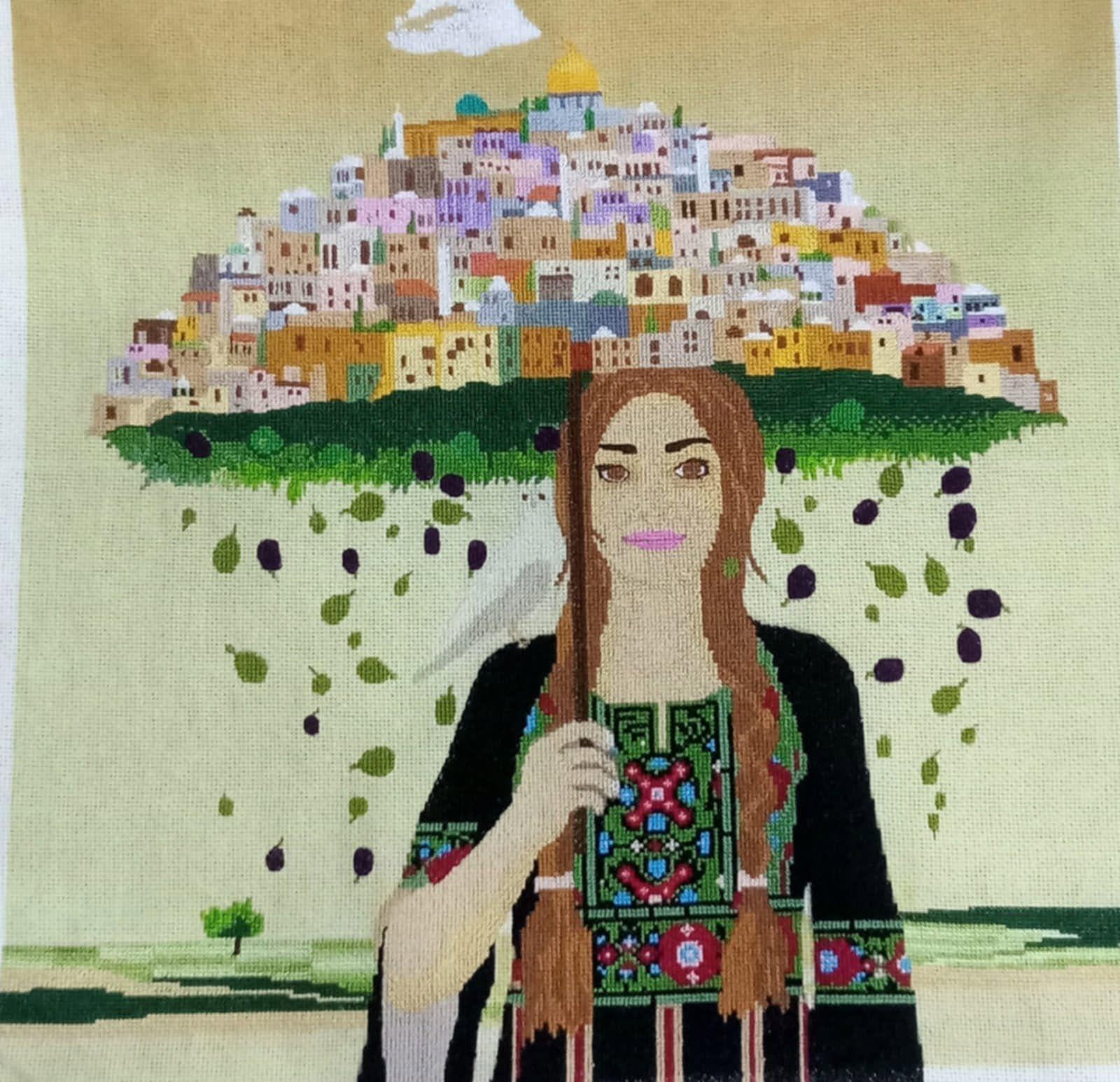
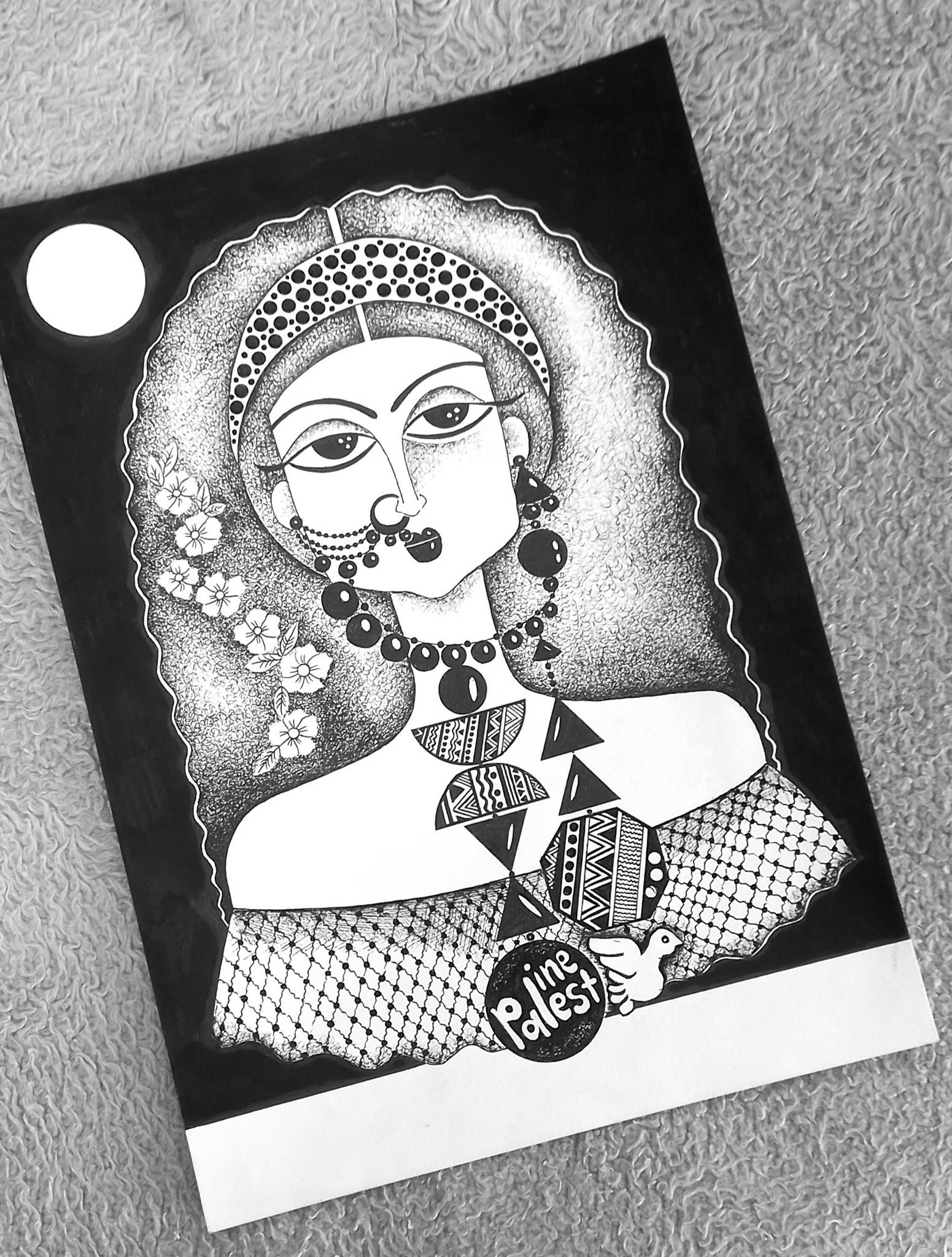
Palestinian embroidery is a work of art. Unfortunately, it receives little promotion worldwide. Palestinian embroidery is our most beautiful heritage art, and we have been working to revive this tradition for generations.
CrossFireArabia
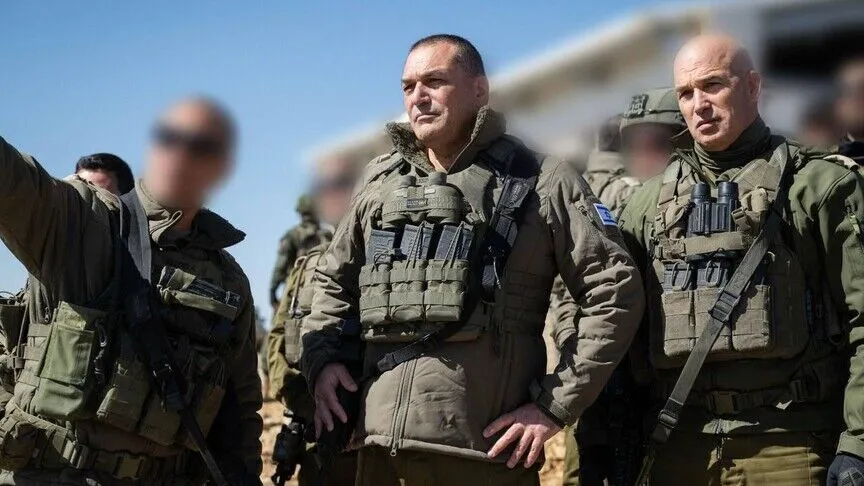
This is what Tzipi Hotovely, former Israeli ambassador to the UK said according to reports on the social media.
marwan
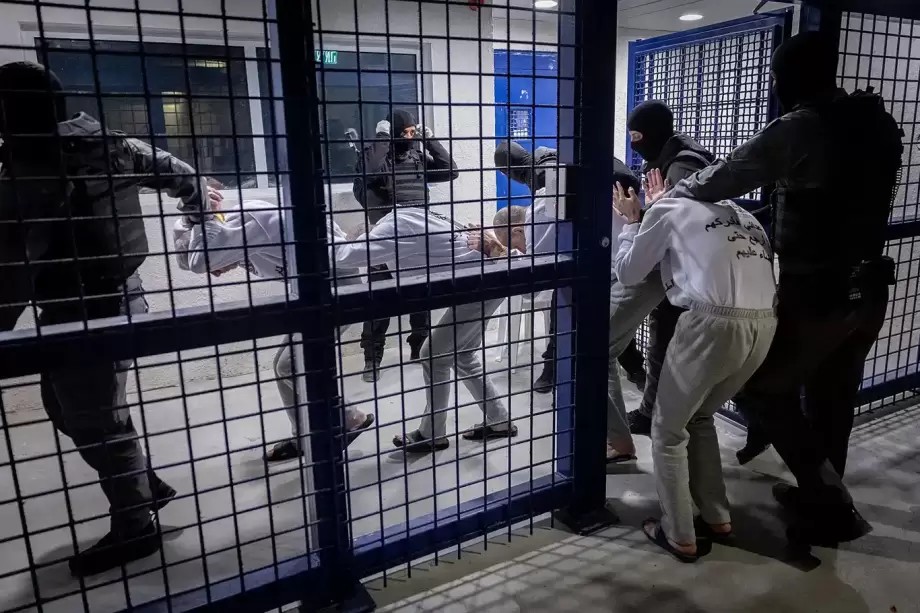
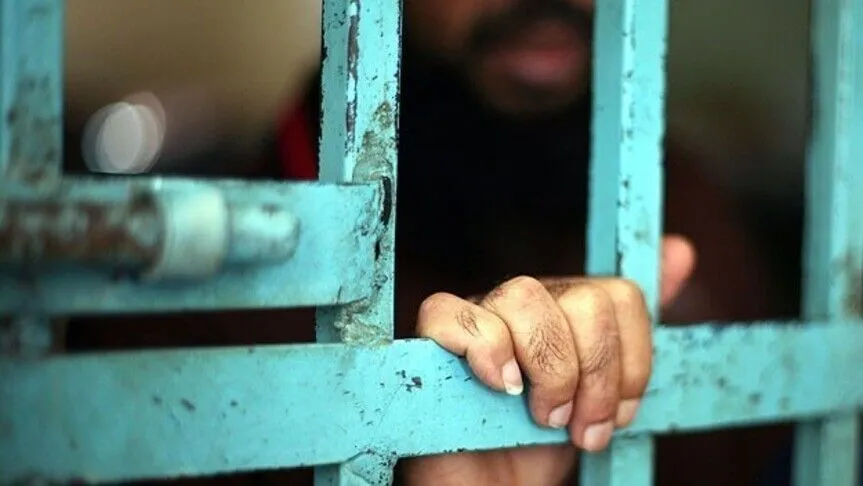
CROSSFIREARABIA – A research paper by the Prisoners Media Office shows Palestinian prisoners are experiencing the worst times in Israeli jails for the month of July. Prisoners are being subjected to torture, starvation, negligence and medical isolation. The paper which was published Tuesday, shows the number of Palestinians behind bars today is unprecedented with their total number at 9400. They include 94 female prisoners, 350 children and 1320 on administrative detention under what Israel calls the “Unlawful Combatant Law.” It further shows that since the war on Gaza, the number of those detained stood 24,600 people. The paper documents an escalation in the “oppressive operations” inside Israeli jails and which include raids on prisoners’ cells, beatings of prisoners, use of rubber bullets against them, frequent use of police dogs besides, solitary confinement and humiliating searches. The paper also shows that female prisoners are subjected to violations, pointing to the Damon Prison where diseases are rife, medical negligence persists, and the documentation of physical and sexual torture against female Palestinian prisoners. See full article here.
marwan
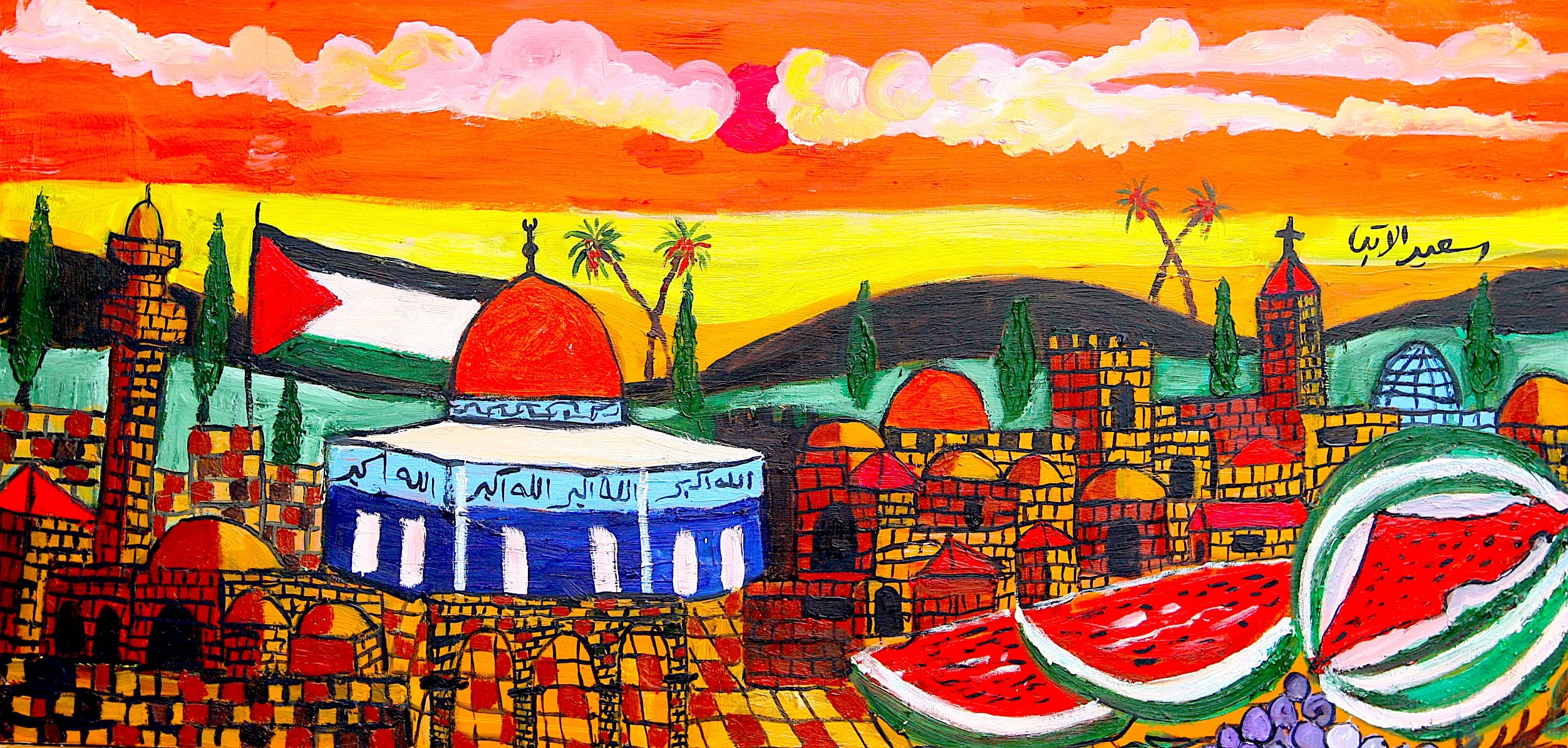
Said Alatab writes:
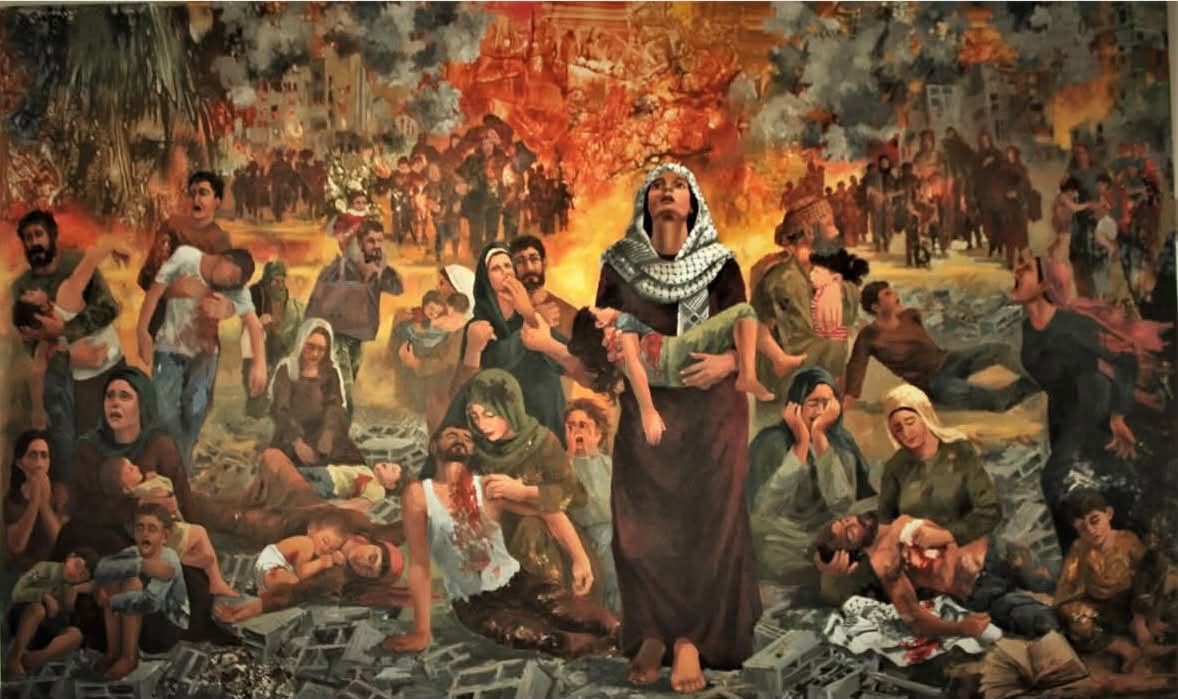
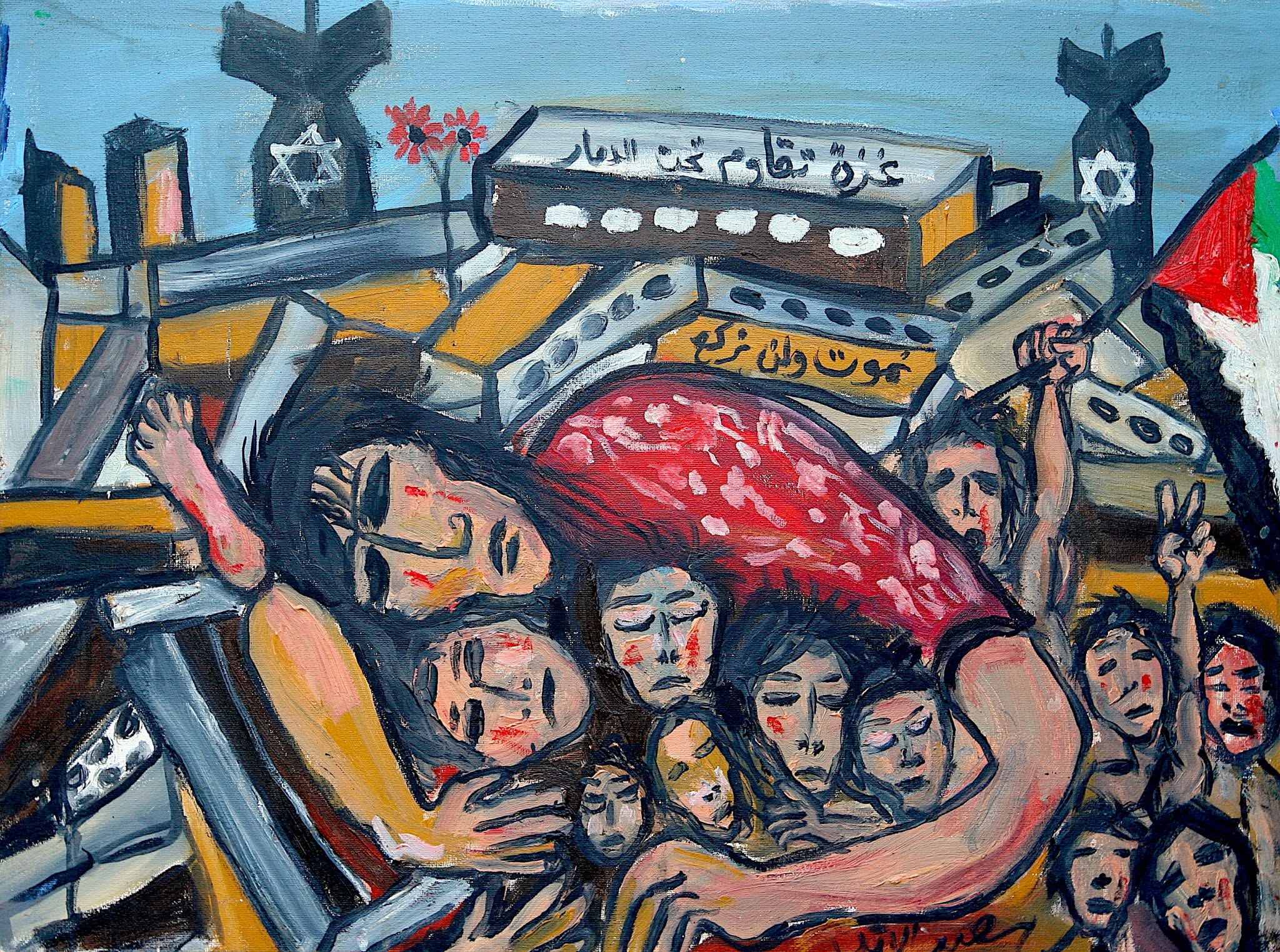
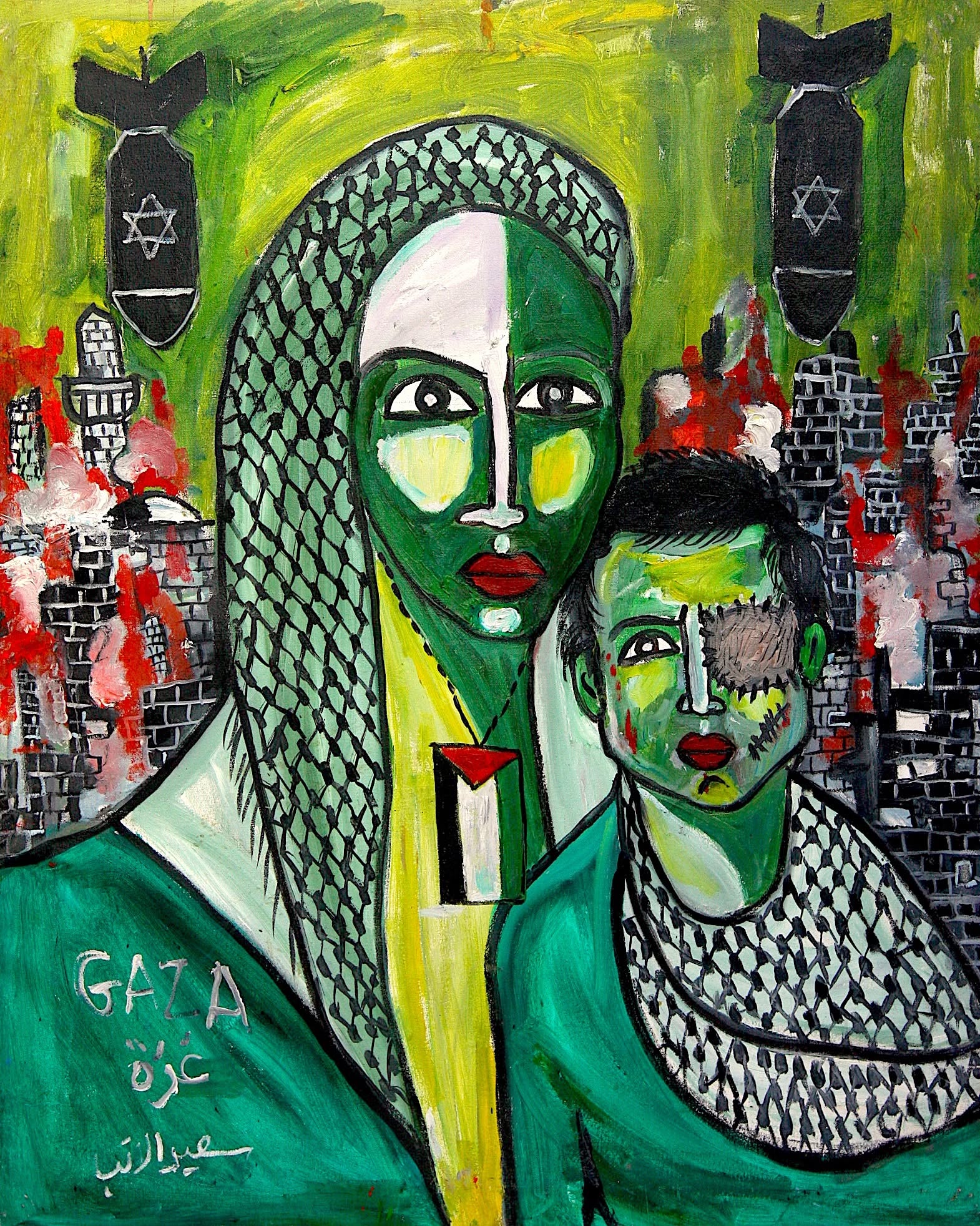
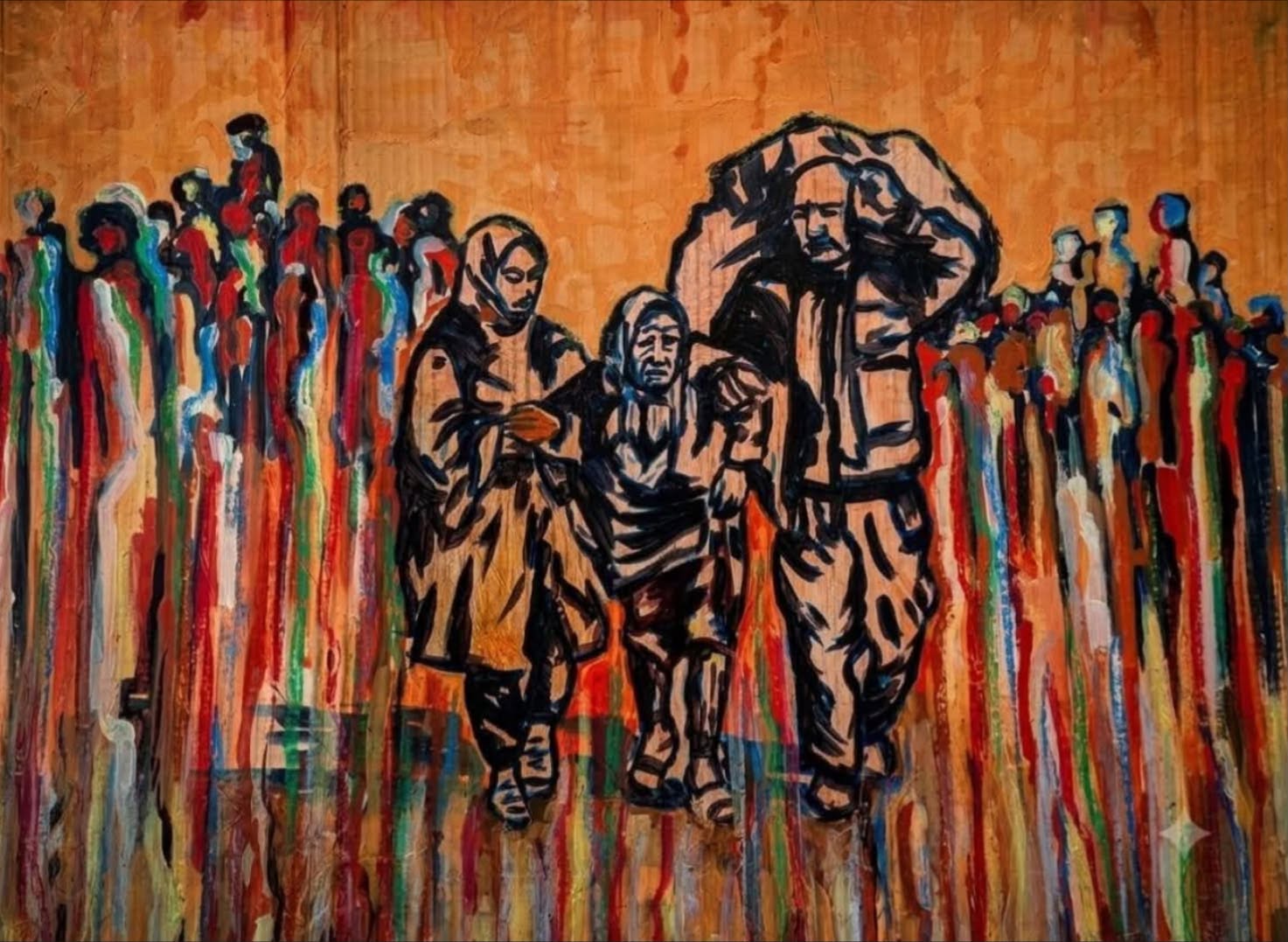
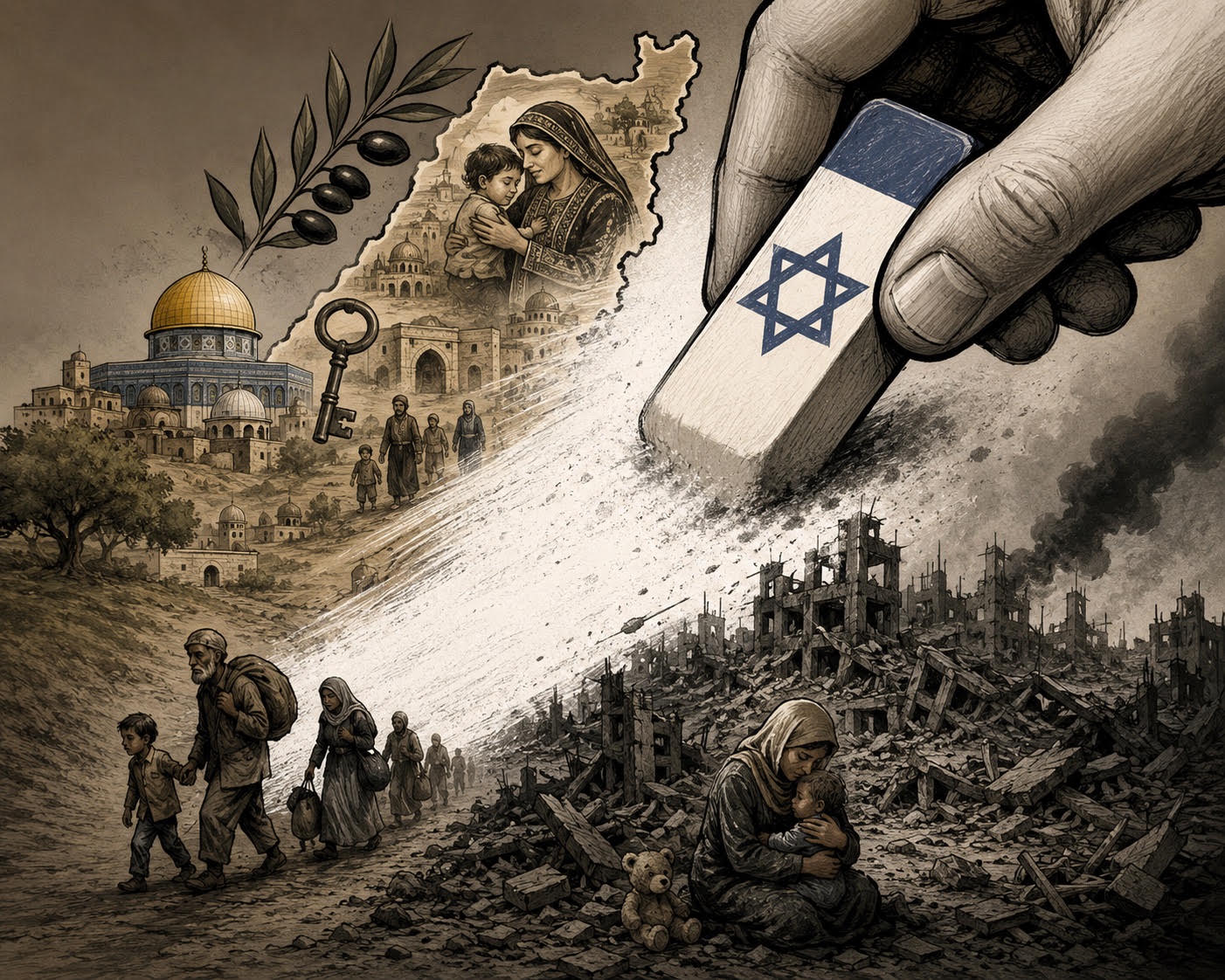
My painting depicts a Palestinian mother and her children trapped beneath the rubble after bombing Gaza City. This work reflects the immense suffering, loss, and tragedy endured by innocent families caught in war. Through this painting, I hope to honor the victims and remind the world of the human cost of violence. Please share it. Please share and support my art
Alatab is a professional artist currently living in the United States having immigrated there in 1979. He was born in the Sabra and Shatila Camp in Beirut in 1959. After studying art in New York he became a professional artist with alluring paintings that display fascinating features which he says are inspired by his personal journey, struggles, and observations of the world.
“I often explore suffering, hope, and the human condition,” he points out. Currently, as his displayed works show, he is focusing on the war in Gaza and the suffering of its civilians. “For me, art is more than a career. It is my life’s purpose, a way to preserve memory and inspire reflection. I continue to paint to express truth, emotion, and hope.”
One of the artists who has influenced Alatab most is the great artist Vincent Van Gogh. “I feel a deep connection to his emotion, honesty, and intensity. His dedication to painting despite hardship inspires me to continue creating art that reflects my life, my struggles, and my vision of humanity,” he comments.