 Returning to Haifa – A Novel
 Yemen’s Asma Ali Appointed First US Judge in Mississippi
 Israel Violates The Ceasefire Over 4000 Times
 UNICEF: 300 Children Died in 300 Days in Gaza
 Dalal Abu Amneh: A Musician, A Neurologist





Returning to Haifa – A Novel
marwan
- August 8, 2026
 marwan
 CrossFireArabiaCrossFireArabiamarwanCrossFireArabiamarwan
 HebaHebamarwanmarwanCrossFireArabiamarwanmarwanmarwanmarwanCrossFireArabiaCrossFireArabiamarwanmarwanmarwanCrossFireArabiamarwanmarwanmarwanmarwanmarwanCrossFireArabiamarwanmarwanmarwanmarwanCrossFireArabiamarwanmarwanmarwanmarwanmarwanmarwanmarwanmarwanmarwanmarwanmarwanmarwanCrossFireArabiaCrossFireArabiamarwanCrossFireArabiamarwanmarwanCrossFireArabiamarwanmarwanmarwanmarwanmarwanmarwanmarwanmarwanmarwanmarwanmarwanmarwanmarwanmarwanmarwanCrossFireArabia
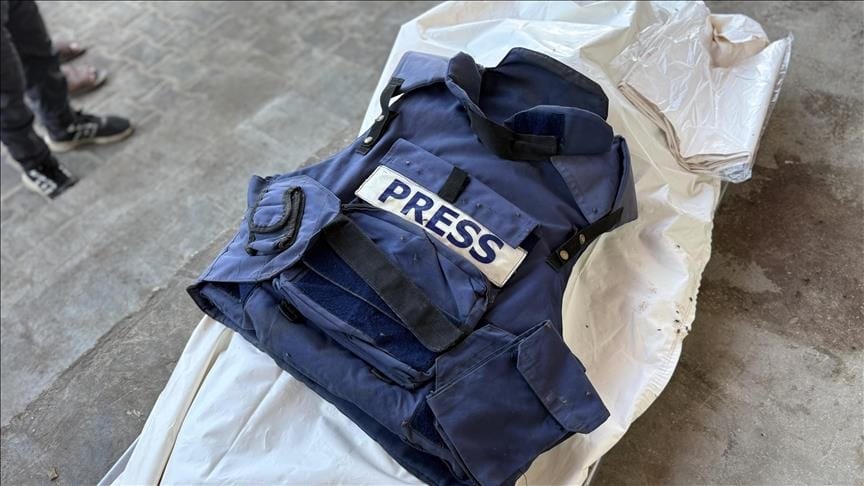
A record of 129 journalists and media workers were killed worldwide last year, with Israel responsible for two-thirds of the global total, the Committee to Protect Journalists (CPJ) reported, Wednesday.
The New York-based committee said 2025 was the deadliest year for the press, with the majority of those killed were Palestinian journalists and media workers killed by Israel in the Gaza Strip.
“Journalists are being killed in record numbers at a time when access to information is more important than ever,” CPJ Executive Director Jodie Ginsberg said in a statement.
“Attacks on the media are a leading indicator of attacks on other freedoms, and much more needs to be done to prevent these killings and punish the perpetrators. We are all at risk when journalists are killed for reporting the news.”
CPJ said more than three-quarters of journalist deaths in 2025 occurred in conflict zones.
The committee noted an increase in the use of drones to kill journalists last year, with 39 journalists killed by drones, including 28 reporters in Gaza by the Israeli army.
CPJ said that nine journalists were killed in Sudan and four in Ukraine last year.
“The numbers were still very low compared to Israel, which remains a significant exception,” it added.
The committee said that the rising number of journalist deaths “is fueled by a persistent culture of impunity,” with very few transparent investigations conducted into the 47 cases of targeted killings of journalists in 2025.
“No one has been held accountable in any of the cases.”
It warned that the continued failure of government leaders to protect the press or hold their attackers to account “lays the groundwork for more killings, including in countries not at war.”
CPJ called for radical reform in the ways governments investigate journalist killings “in order to bring perpetrators to justice, including establishing an international investigative task force and imposing targeted sanctions,” Anadolu reported.
The Israeli army has killed more than 72,000 people, mostly women and children, and injured over 171,000 others in Gaza in a two-year offensive since October 2023.
The assault was halted under a US-backed ceasefire that took effect on Oct. 10. Despite the truce, Israeli forces have committed hundreds of violations through shelling and gunfire, killing at least 615 people and injuring over 1,600 others, according to Gaza’s Health Ministry.
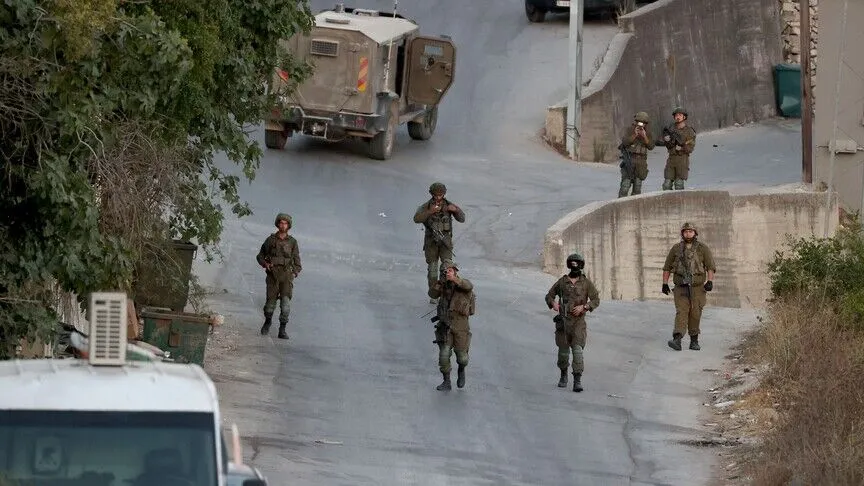
Israel has also escalated its assaults in the occupied West Bank since the Gaza war, killing at least 1,112 Palestinians and wounding about 11,500 others during the same period.
 Dr Khairi Janbek
By Dr Khairi Janbek
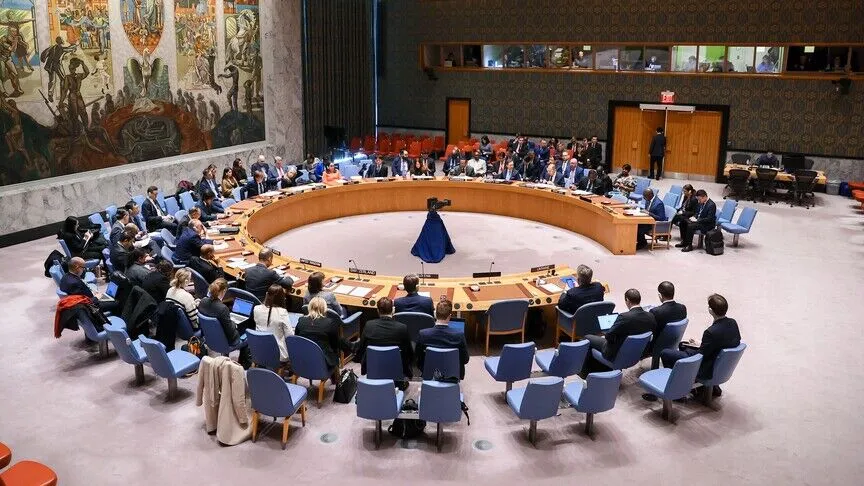
Even from the moment of its inception, the UN was subjected to constant criticism and derision. Though it started as a coalition of the willing in order to deal with differences and sources of conflict in a peaceable and/or diplomatic manner, the term willing remained nebulous.
The strong and mighty wanted to bend this will to suit their interests, and the weak and the needy wanted to bend this will for their own protection. Still in this dialectical formula the need for the UN remains as the only viable formula which offers the possibility of negotiations in the Churchillian wisdom of jaw jaw, better than war war, and it remains in this sense, the standard which provides the vaneer for international legality and the semblance of consensus.
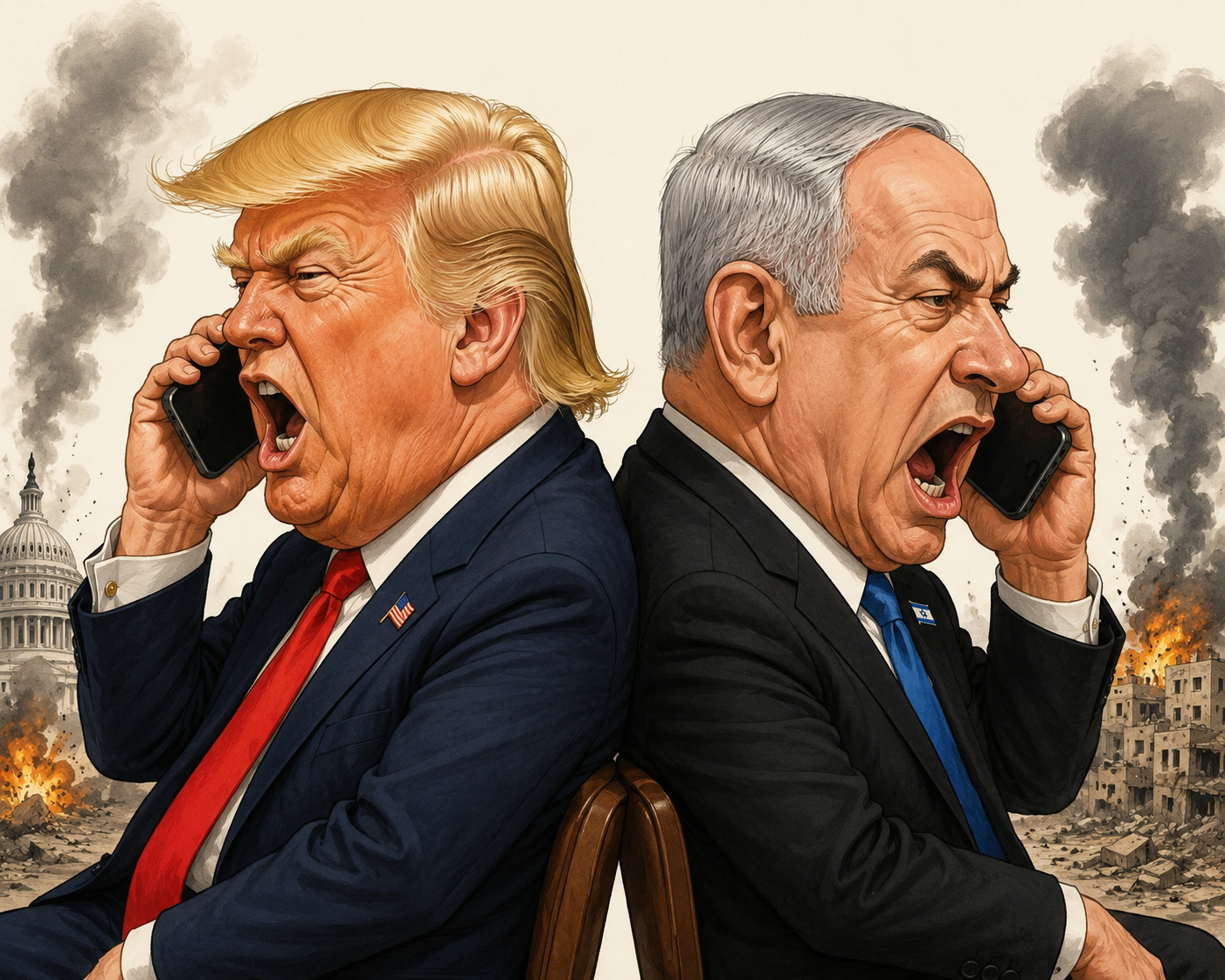
Then suddenly and apparently, the concept of the Donald Trump Board of Peace emerged on the scene, thought of, initially, as an effort to deal with the mayhem of Gaza, and to which one may add ironically and cynically, that the most two concerned parties – Palestinians and Israelis – are out of its functioning. On top of this, the notion was propelled in the media that this Board is really an attempt to replace the UN.
So in this context we can assume what is meant is that if the UN started, all these years ago, as a coalition of the willing, today’s Board of Peace is a coalition of the frightened, of states who want to stay on the good side of Trump. This is aside from the reluctant opportunists whom seek some benefits out of becoming a member of this entity.
On the face of it, one can say that the real purpose of its establishment is not to replace the United Nations per se, but a serious attempt to bypass the UN and redefine international relations in accordance with the Trump notion of who is the enemy of peace and who is its friends, with the essential outlook of not needing the international organization at all. Under the new legality, it is Trump who lays down the law, and the one whom distributes the spoils. As for the UN it remains in his eyes as a gathering for losers.
But if we go back to the beginning, in fact the Board of Peace, not only got the blessing of the UN for its creation, but also the support of the Security Council with resolution 2038, but then again, it was linked to the reconstruction and ‘stabilization’ of Gaza, while the current format of the Board emerged on the sidelines of the recent World Economic Forum meetings.
Now irrespective of some in the international community wanting to spite Trump or of waning his influence, there is a serious and big concern that President Trump and the fact that he is presiding over this Board, will mean that the talked about peace will be the peace of the strong imposed by the strong. In itself this rings many alarm bells on the strategic level for many regions in the world about the kind of peace Trump is talking about.
Among the myriad of world conflicts, currently the Palestinian problem, Ukraine war, and Iran, stand out as the most deadly and critical. So in what shape the proposed peace will come?
Dr Janbek is a Jordanian writer based in Paris.
CrossFireArabia
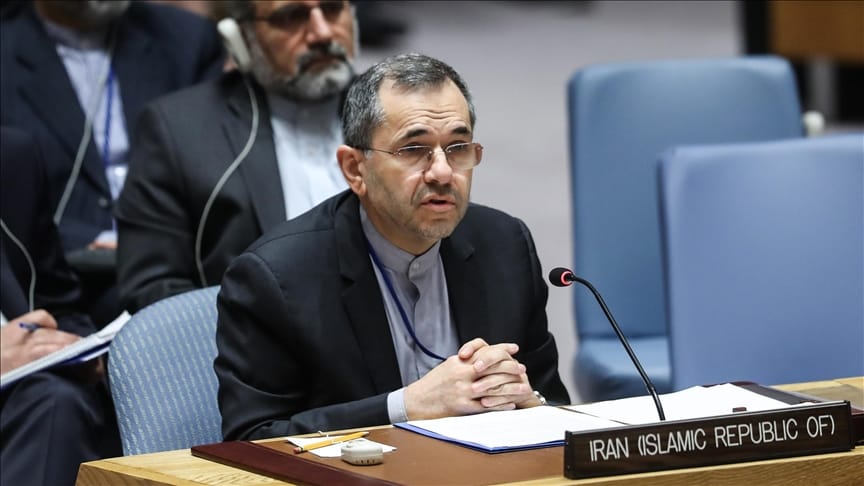
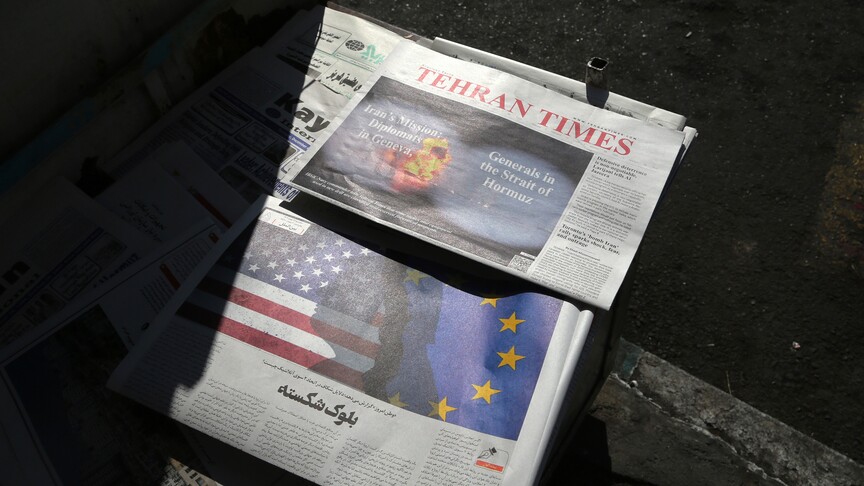
Iran’s Deputy Foreign Minister Majid Takht-Ravanchi said on Tuesday that Tehran is ready to reach a nuclear agreement with Washington “as soon as possible” as the two sides prepare for a new round of negotiations in Geneva.
Iran will do “whatever is necessary” to make that happen, Takht-Ravanchi, a member of Iran’s negotiating team, said in an interview with the US broadcaster NPR.
He said the Iranian delegation will enter the negotiating room in Geneva with “full sincerity and good faith,” while hoping the goodwill will be reciprocated by the Americans according to Anadolu.
“If there is political will on all sides, I believe an agreement can be reached very quickly,” he said.
A veteran diplomat and former Iranian ambassador to the United Nations, Takht-Ravanchi was also involved in the negotiations that led to the landmark nuclear deal in 2015.
Iran and the US have held two rounds of indirect nuclear negotiations under Omani mediation since last month, following efforts by regional countries, particularly Türkiye, to revive nuclear diplomacy that was suspended after the US-backed Israeli attack last June.
Following the last round of talks in Geneva, both sides expressed optimism and said they had agreed on “guiding principles” that could pave the way for a potential agreement.
The deputy foreign minister said they intend to continue indirect talks with the American side in Geneva “within the same framework” as in Muscat and Geneva.
On whether a draft proposal being prepared by Iran will include matters beyond the nuclear issue, Takht-Ravanchi said the subject of the negotiations will remain the nuclear issue, and that is “agreed upon by all parties.”
He further stressed that a war would be impossible to contain once it starts, describing it as a “real gamble” from Tehran’s perspective.
“Let us focus on diplomacy, because diplomacy will benefit everyone. There is no military solution to Iran’s nuclear file,” he said, warning that the entire region would suffer the consequences of war if it breaks out.
The senior diplomat also dismissed speculations that Iran would attack its neighbors, such as the United Arab Emirates or Saudi Arabia, in the event of war, saying Iran would instead target US assets in the region.
The ongoing talks between Tehran and Washington come amid a massive US military buildup in the Gulf region and President Donald Trump’s threat to take military action if the nuclear talks fail.
Iran’s Islamic Revolutionary Guard Corps (IRGC) has held several military drills as part of preparations for any potential war.
CrossFireArabia
Military strategic expert Nidal Abu Zeid stated that Iran has activated its multi-layered command structure, indicating it fears that its top leaders could well be targeted. He explained that Supreme Leader Ali Khamenei has entrusted his advisor, Ali Larijani, with assuming command in the event of an attack, and has instructed various leaders to establish four alternative layers to prevent a collapse of the decision-making chain.
In his interview with Jordan 24, Abu Zeid pointed out that this move signifies Iran’s shift from centralized command to decentralized decision-making, ensuring the continuity of state and military administration during what he described as the “critical 48 hours” in the event of a surprise attack.
Abu Zeid believes the photograph released by the White House of the dinner that brought together US Secretary of State Marco Rubio and Secretary of Defense Pete Hegseth—both among the most ardent advocates of escalating tensions with Iran—reflects the outlines of a decision that may lean towards a military option. He added that Thursday’s meeting is still on, but that US President Donald Trump’s request for a draft negotiating framework 48 hours before the meeting may be part of a deceptive tactic aimed at achieving the element of surprise. This timeframe, he believes, is also sufficient for the aircraft carrier USS Gerald R. Ford to arrive at the port of Haifa.
Abu Zeid suggested that Trump might decide to launch a limited military strike while keeping the door open for negotiations, in order to pressure Tehran into making concessions during the upcoming meeting. He anticipates that the Iranian response will remain “restrained” if Tehran is assured that its leaders will not be targeted in the initial wave of strikes.
However, he warned that if Iran remains intransigent regarding Washington’s conditions, the US strike could expand to include high-value targets, including prominent leaders.
CrossFireArabia
By Sufian Al-Tal
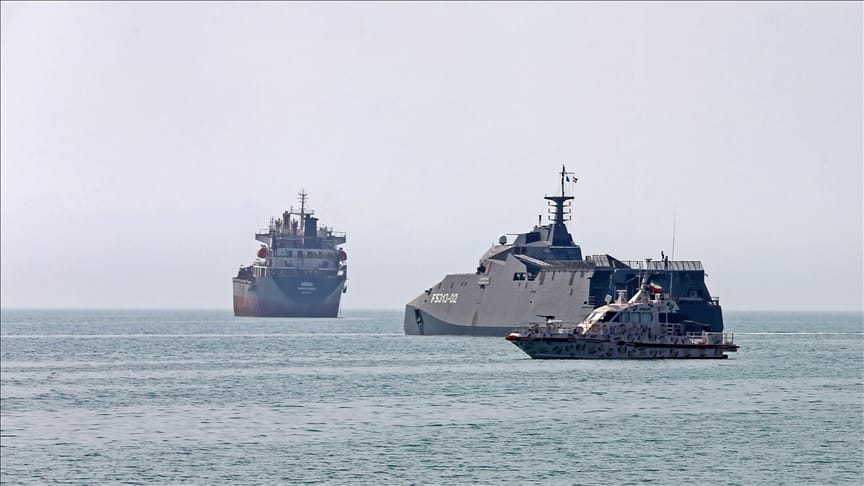
Construction of the aircraft carrier USS Gerald R. Ford began in 2005. Its plans were fully prepared and built on defensive foundations that, based on the data and military science available up to 2005, made it unsinkable.
However, between 2005 and 2025, 20 years of scientific and military development passed, and new sciences emerged and clashed, which the aircraft carrier’s plans and designs at the time did not take into account. In addition, the aircraft carrier USS Enterprise, which entered service in 1961, was officially decommissioned on February 3, 2017, after more than 55 years.
Thinking strategically?
The aircraft carrier USS Gerald R. Ford is one of the most advanced warships in modern history and is often referred to as “unsinkable.” However, while this description is valid in its military context, it remains relative, not absolute. The real question is not whether sinking it is theoretically possible, but whether its defensive design philosophy can still keep pace with the rapid scientific and military advancements the world witnessed between 2005 and 2025.
Work on the design of the aircraft carrier began at the start of the new millennium. This means that the engineering plans and defensive doctrines upon which it was based were grounded in the military science, weapons technologies, and anticipated threat patterns available at the time.
At that time, traditional naval threats, such as anti-ship and anti-submarine missiles, were known and incorporated into existing defense systems. This allowed the USS Gerald R. Ford aircraft carrier to be designed as a highly fortified, multi-system vessel capable of absorbing damage without losing combat capability. From an engineering perspective, no naval vessel is designed with the absolute impossibility of sinking in mind, but rather with the principle of survivability after being hit.
The aircraft carrier USS Gerald R. Ford relies on a complex internal layout that minimizes the risk of cascading sinking, advanced fire suppression and damage control systems, and the ability to continue operating even after sustaining direct hits. However, all of this assumes a specific type of threat and relatively conventional combat scenarios within the parameters of that era.
Hypersonic missiles
Between 2005 and 2025, the military world witnessed significant developments that were not part of the initial design calculations. Among the most prominent of these are the emergence of hypersonic missiles with speeds and trajectories that are difficult to intercept, the growing capabilities of cyber warfare targeting command and control systems, and the rise of drone swarms as a means of overwhelming defenses through saturation. Additionally, advancements in sensor technologies and artificial intelligence have enabled the tracking of small, large, complex, and moving targets. These transformations do not necessarily imply that the aircraft carrier has become weak, but they do raise legitimate questions about the adequacy of the defensive philosophy established two decades ago.
At that time, conventional maritime threats were well-known and integrated into the carrier’s design, which relied on layered defenses and advanced damage control systems. However, between 2005 and 2025, the world experienced tremendous and rapid scientific and military advancements. China, for example, has surged in military spending and innovation, with its development rate increasing by approximately 250–300% between 2005 and 2025, making it one of the world’s closest competitors.
In contrast, the United States maintained its dominance, albeit at a slower pace, with an estimated development rate of 160–180%. Russia, on the other hand, achieved selective modernization while preserving its nuclear capabilities, with an estimated development rate of 140–160%.
Iran, starting from a modest base, made a relatively significant leap in its missile and drone capabilities, with an estimated development rate of 300–350%. In this context, another question arises concerning the thinking of some countries that do not seek to emulate the United States in terms of fleet size or number of aircraft carriers, such as China, Russia, or Iran. Instead of engaging in a costly, conventional arms race, these countries’ military thinking (thinking outside the box) focuses on circumventing this model and seeking unconventional means to neutralize, disable, or directly destroy the platform.
Within this framework, discussions arise regarding technologies based on radiation, microwaves, or other directed energy sources. In principle, there is nothing to prevent the development of devices based on high-powered microwaves, electromagnetic pulses, or high-energy lasers. However, the potential role of these technologies, as currently understood, is not to melt or physically destroy the carrier’s hull, but rather to disable or confuse sensitive electronics, disable radar, navigation, and communication systems, or disrupt flight control systems on the carrier’s deck.
The idea of melting thick marine steel, armored hulls, or parts thereof with beams from combat range is unrealistic given current data, due to the enormous energy requirements, radiation dispersion, and the difficulty of precise targeting of a moving target protected by multiple layers of defense. However, we cannot confirm or deny that there are those who think and work in this field, shrouding their activities in absolute secrecy. Surprising the enemy with unexpected weapons has always been, and remains, a core element of military planning.
The real danger lies not in a super-radiation weapon, but in the integration of multiple fields, such as a cyberattack that disrupts combat command and control systems, electromagnetic jamming that confuses sensor systems, followed by a conventional physical attack. In such a scenario, the carrier transforms from a highly organized platform into a complex system suffering from information bottlenecks, one of the most serious challenges facing modern armies. Military history shows that what is described as secret science is not the discovery of new physical laws (which would be astonishing and groundbreaking if it occurred), but rather innovative applications of known sciences. The novelty lies in the application of these sciences.
This is often in the method of integration and deployment, not in the essence of the science itself. Therefore, despite the possibility of technologies whose details have not been disclosed, it is necessary to mention a Chinese and an Iranian development:
The media is currently reporting on a Chinese achievement dubbed the “aircraft carrier killer,” an air-launched ballistic missile likely designed to target American aircraft carriers and warships. Since this missile is hypersonic and employs a special guidance system, it is capable of maneuvering and evading anti-ship weapons.
Regarding Iran’s threats that a weapon capable of sinking a ship is more dangerous than the ship itself, Israeli sources are discussing the “Whale torpedo,” which is launched underwater, operates in a supercavitational cavity, and moves within a gas bubble that reduces its water resistance. At speeds of up to 360 km/h, it reduces the reaction time of targeted ships and makes interception difficult.
In conclusion, bypassing conventional weaponry has become a reality, and disabling an aircraft carrier is now, theoretically, possible. However, completely sinking one remains a secret weapon, not disclosed by those who possess it, in order to surprise the enemy.
This article is a translated piece of an Arabic version that appeared in Al Rai Al Youm.












































 Saleem Ayoub Quna