After 42 Years Jordanian Freed From Syria Prisons

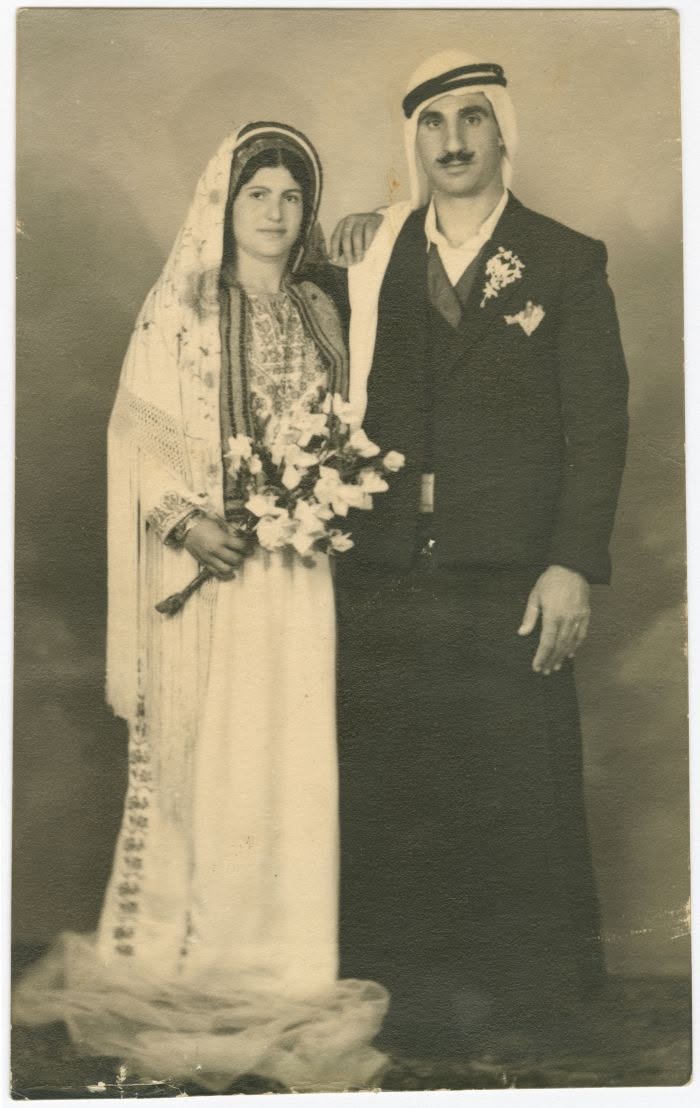
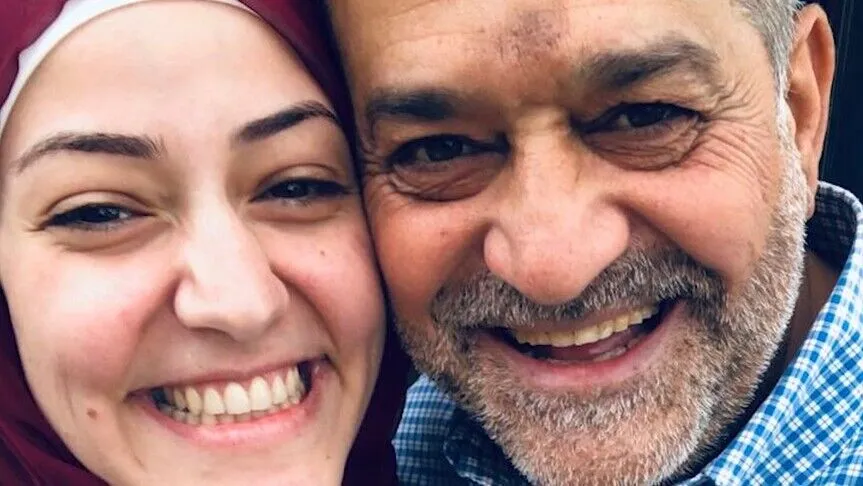
The Jerusalemite Walid Barakat, who hails from the village of Nabi Samouil, northwest of occupied Jerusalem, was released and reunited with his family in Jordan after entering prison life in Syria as a young man at the age of 26.

Barakat said that “life was written for him several times in prison after he was close to death,” and that he learned of his life sentence after 30 years of imprisonment.

Barakat’s nephew pointed out that “his uncle arrived at the border physically exhausted after the opposition forces took him there immediately after he revealed his nationality,” adding “Walid has a large family in Jordan that will embrace him forever after years of forced absence from them.”

He added that “Walid spent 14 years in solitary confinement, and that the family did not know exactly where he was, whether he was detained in Syria, Turkey or Lebanon, until his name was listed in 1996 among the Palestinian detainees in Syrian prisons in a newspaper through the efforts made by international human rights organizations.”

He said, “the family started communicating with him through some Syrians who contact him by phone, and they told him of our news and they conveyed his news to us.”

Walid was arrested by Syrian forces at the Damascus airport on 31 October, 1982, and was subjected to solitary confinement in Tadmur prison for many years, where he experienced the worst forms of torture, before the opposition forces opened the prison doors and freed the prisoners and he immediately headed towards the border with Jordan, according to his family.

The family added that “Walid never saw sunlight during his solitary confinement, and inside the prisons he became a number that was called out like the rest of the prisoners.”

His relatives said, “the only meeting that brought him together with one of his family members was in 2005 when Hatem’s father and sister traveled to Syria and met him in Mezzeh prison in Damascus, and no one was able to visit him after that.”

On 27 November, the Syrian armed opposition factions launched their “Deterrence of Aggression” operation, starting from Idlib and Aleppo, then Hama and Homs, arriving in Damascus, which they entered at dawn last Sunday, announcing the fall of the Assad regime according to the Quds News Network.

Continue reading
‘Arab Spring’ Continues Withering

By Saleem Ayoub Quna
After December 2010 when a desperate and angry Tunisian young man of the name of Mohammad Bouazizi, dramatically immolated himself, an unprecedented wave of mass protests against incumbent totalitarian regimes swept five Arab capitals: Tunisia, Cairo, Tripoli, Yemen and Damascus.

The simultaneous civic uprising in these countries was deceitfully baptized as the “Arab Spring”, which initially won the hearts of millions of Arabs. But it did not take long before the average Arab citizen started realizing that it was one thing to get rid of a dictator or topple a regime, and completely another thing to have a plan for the day after!

It was the same course of events in the five capitals except for Tunisia: Street demonstrations, clashes with police, havoc and death, under the watchful eyes of disguised outside interference and finally a forced humiliating departure, imprisonment or execution of the incumbent ruler and his entourage.

In Tunisia, the military sat on the fence! Consequently, the violence and loss of life was minimal there, while in the other four countries the toll was higher and kept rising until the end.

The last leg of the fake “Arab Spring” was Syria, where the clashes between the forces of the regime and the opposition groups, mostly of Islamic orientation, dragged on and gradually turned into open urban warfare.

Syria’s distorted model of the “Arab Spring” took nearly 14 years, simply because the regime, at a certain crucial turning point in 2015, resorted to outside direct support, namely from Russia, Iran and Hezbollah.

Opposition groups in Syria and their sympathizers never forgot or forgave the brutal crackdown they were subjected to in the city of Hama back in 1982 by the Hafez Al-Assad’s regime.

Of course Russian, Iranian and Hezbollah’s response to help Assad’s regime in 2015, was not an act of charity. Each party had their own agenda and motivations; Iran sought to ascertain its regional clout, while continuing to arm Hezbollah in Lebanon through Syria and Iraq; Russia wanted to strengthen its foothold in Syria in a move to counter balance American encroaching measures in northern-eastern Syria, the oil rich land, where the latter supported the local Kurdish population.

Hezbollah was paying back the debt for the Syrian regime that facilitated the transfer of Iranian military hardware.

Today, Syrians are celebrating the end of the 53rd year of the rule of the Assad dynasty, except, maybe by a handful of them. As the saying goes: Loss and defeat are born orphans; victory and success gets many adopters!

The Syrian groups who took over from the previous regime are multiple in number and diverse in outlook; like an art work of a mosaic, from a distance, it looks picturesque and colorful, but from within and in detail, it clearly lacks coherence and chemistry.

As things stand now in Syria and its surroundings, there is not much room for optimism, despite the big change! Many outside players are gossiping about the future of this beleaguered country in ways that reveal that what they are doing is more than gossiping. They are working on concrete ideas and plans for the day after in Syria while, during the coffee breaks, they watch those who are dancing and chanting in the squares and streets of Damascus!

This opinion was especially written for Crossfire Arabia by Saleem Ayoub Quna who is a Jordanian author writing on local, regional and international affairs and has two books published. He has a BA in English Literature from Jordan University, a diploma from Paris and an MA from Johns Hopkins University in Washington. He also has working knowledge of French and German.

Continue reading
Netanyahu Knows I Want The Gaza War to End, Trump Says

US President-elect Donald Trump told the Time magazine, Thursday, that Israeli Prime Minister Benjamin Netanyahu knows he wants the Gaza genocide war to end.

“The Middle East is going to get solved. I think it’s more complicated than the Russia-Ukraine, but I think it’s easier to solve,” Trump said, according to a transcript of the interview.

The interview appears in the upcoming issue of Time, which named Trump as “Person of the Year” for the second time, the first being after he first won the White House in 2016.

Speaking about the Israeli assault in Gaza, Trump said Netanyahu “knows I want it to end.”
According to Time, Trump informed Netanyahu of his stance during phone calls the two held during the US election campaign according to the Quds News Network.

Asked if Netanyahu has given him assurances about ending the Gaza war, Trump declined to respond directly, saying, “I don’t want people from either side killed… whether it’s the Palestinians and the Israelis and all of the different entities that we have in the Middle East.”

When Time asked if he trusted Netanyahu going into the second term, Trump took a second before answering: “I don’t trust anybody.”

Asked if he still supports his 2020 “deal of the century,” Trump claimed: “I support a plan of peace, and it can take different forms.”

“I support whatever solution we can do to get peace. There are other ideas other than two-state, but I support whatever is necessary to get not just peace, [but] a lasting peace. It can’t go on where every five years you end up in tragedy. There are other alternatives,” he said.

In the Time interview, Trump also would not come out against a possible Israeli annexation of the West Bank.

Asked whether he still stands behind his “deal of the century,” or if he would let Israel proceed with the annexation, Trump responded: “What I want is a deal where there’s going to be peace and where the killing stops.”

Asked again if he would prevent Netanyahu from annexing the West Bank, Trump avoided responding directly. Instead, he acknowledged having stopped Netanyahu from taking the step.

“There are numerous ways you can do it. You can do it two-state, but there are numerous ways it can be done,” Trump reiterated. “I’d like to see everybody be happy. Everybody goes about their lives, and people stop from dying. That includes on many different fronts.”

On January 28, 2020, Trump formally announced his long-awaited Middle East Peace Plan to resolve the seven-decade-long Israel’s occupation of Palestine. He hailed it as “the deal of the century”. It controversially accepts Israeli calls to annex the Jordan Valley and Israeli settlements in the occupied West Bank and recognizes all parts of occupied East Jerusalem as part of Israel’s capital. These include large parts of the city where more than 300,000 Palestinians live, the Old City and holy sites, including the Al-Aqsa Mosque.

The plan says a Palestinian state would be established only when Palestinian leadership wholly accepts Israel’s new borders, disarms completely, removes Hamas from power in Gaza and agrees to Israeli security oversight on all of its territories until a point in the future deemed ripe for withdrawal.

Continue reading
Israel Must Not Meddle in Syria

By Ali Nasser Mohammed

Arab history witnessed the rise and fall of states. This was most notably the Umayyad state, taking Damascus as its capital and from there on reaching Andalusia. It finally collapsed at the hands of its Abbasid oppressors, who moved the seat of the Umayyad caliphate to Baghdad as lead by Abu al-Abbas al-Saffah.

The Abbasids inturn did not learn from the lessons of the Umayyads and do away with the struggles between themselves until their Arab feature faded and dominated by the Seljuks until the arrival of Saladin, who led the Battle of Hattin in 1187 and broke the power of the Crusaders. After this victory, Saladin regained Jerusalem.

What is happening in the occupied Gaza Strip and the West Bank, Lebanon and Syria is not the last. Today, and now, Israel occupying Mount Hermon and the buffer zone despite an international decision and a 1974 agreement, proving the chain of Zionist expansion and foreign interference in Arab affairs to weaken and subjugate them one after the other.

As for the extended past, Syria rejected normalization according to Israeli whims and strategic interests that may be achieved after the earthquake of 8 December, 2024.

During my meeting with the late President Hafez al-Assad, his attention was drawn to a large copper plaque hanging on the wall of his office depicting the Battle of Hattin. He said: “The Arabs fought the Crusaders for more than 100 years until they expelled them from Jerusalem and other Arab countries, and that the fate of Israel will be like the fate of the Crusades.”

He then spoke about an offer made to him by the also late Israeli Prime Minister Yitzhak Rabin, which included withdrawing from the Golan while keeping Lake Tiberias, which he said the Israelis “like to wet their feet in its waters,” in exchange for recognizing the Zionist entity. Al Assad rejected this offer and stressed that the Israeli flag would not be raised in the skies of Damascus except by establishing a Palestinian state with Jerusalem as its capital.

Israel incursions

The Golan, which Hafez al-Assad refused to be a deal at the expense of the Palestinian cause, today witnesses an incursion by the Zionist enemy into its buffer zone at the ceasefire line and the enemy’s prime minister’s renewed declaration that the Golan Heights will remain Israeli forever.

Not content with that, Israel launched more than 480 raids that destroyed military sites, strategic weapons depots, surface-to-air missiles, fighter jet squadrons, dozens of helicopters, airports, air defense batteries, and the military infrastructure of the Syrian army, which was founded on 1 August, 1946. At the same time, the Israeli navy carried out large-scale strikes to destroy the Syrian naval fleet, including coastal defense systems and ships containing sea-to-sea missiles.

What is shameful for both the Syrian and Arab sides is that paralyzing the role of the Syrian army does not serve the interests of Syria and the Arab nation, its security, dignity, and national role. The army was actually dissolved without a declared decision, as happened in occupied Iraq in 2003 by America, which made it easy for Israel to achieve a golden goal that it had never dreamed of.

These strategic national gains belong to the Syrian people, not to any regime, regardless of its identity, and they are irreplaceable, which requires the Syrian people and their new government to be deeply aware of the ambitions of the Zionist entity and its allies in the region, which have no end unless Syria’s security and sovereignty are not a priority. Therefore, it has become necessary to work quickly and seriously to preserve what remains of the military establishment, which was and still is the pillar of Syrian power and which has no alternative unless foreign agendas hide something else.

Syria’s recovery from its deep wounds and its strong and majestic return to the Arab arena, in a manner befitting its Arab role and national interests, requires distinguishing the enemy from the friend and clinging to the national interest in addition to unity of ranks, overcoming divisions and the short-sighted policy of revenge.

Our history teaches us that major challenges can only be faced by the will of a unified people and a conscious leadership that realizes that Syria’s strength is a guarantee for the stability of its people and the region and for repelling any aggressive projects that threaten its present and future and the future of the Arab nation.

Today, this nation is in dire need of an Arab project to get it out of the circle of conflicts, wars and sectarianism that undermines the rights of others to draw a better future for the present and the future.

However, this requires vision, will, and insightful and patriotic leadership. Otherwise, Syria and the Arabs will enter a phase of decline, fragmentation and civil wars, and no one will escape this fate from the ocean to the Gulf.

We hope that the Syrian people, who are looking forward to their freedom, independence and sovereignty, will overcome this difficult historical stage in the life of the Syrian state and will be able to achieve their aspirations at the hands of their sons and youth. This is what the Syrian people, with their history and civilization extending deep into history, have accustomed us to.

The writer is a former President of South Yemen before the country was united in 1990.  He wrote this article for the Arabic Al Rai Alyoum

Continue reading