Iran Fires 6,169 Missiles, Drones on Gulf States, Jordan Since 28 Feb

Iran targeted seven Arab countries, mostly Gulf states, with at least 6,169 missiles and drones, in addition to an attack by two fighter jets, in the first 38 days of the US-Israeli war on Iran.

These figures are based on Anadolu Agency’s monitoring and count, using official data and statistics from the UAE, Kuwait, Bahrain, Qatar, Saudi Arabia, Jordan, and Oman, as of 9:15 PM GMT on Monday.

The attacks launched by Iran since 28 February, 2026 are part of what it describes as a response to the ongoing US-Israeli aggression against it since the end of that month.

Tehran specifically maintains that it is not directly targeting those countries, but rather its missiles and drones are aimed at US military bases and other interests. However, some of these attacks resulted in deaths and injuries of civilians, and damaged different infrastructure, including airports, ports, energy facilities, and other buildings.

The UAE has been the most targeted, followed by Kuwait, then Saudi Arabia, Bahrain, Qatar, and Jordan, while Oman has been the least targeted, according to Anadolu Agency’s monitoring and count of the combined number of missiles and drones.

Secretary-General of the Gulf Cooperation Council Jassem Al-Budaiwi stated on television on 26 March that the toll of “Iranian aggression” against the Gulf states exceeded 5,000 missiles and drones. These represent 85 percent of the total missiles launched by Iran during this war.

This means only 15 percent of the Iranian attacks were directed at Israel.

UAE: 519 Missiles and 2,210 Drones

The UAE Ministry of Defense announced in a statement on Monday that “since the beginning of the blatant Iranian attacks, 519 ballistic missiles, 26 cruise missiles, and 2,210 drones have been intercepted.”

Kuwait: 365 Missiles and 786 Drones

The Kuwaiti army stated in a statement on Monday that “since the start of the Iranian aggression on 28 February, 2026, the total number of hostile aerial threats detected reached 350 ballistic missiles, 15 cruise missiles, and 786 drones.”

Saudi Arabia: 88 Missiles and 885 Drones

Saudi Arabia had not announced an updated tally of the Tehran attacks as of Monday evening, but according to Anadolu Agency’s monitoring of data from the Ministry of Defense and a daily count by the official Al-Ekhbariya channel, at least 88 missiles and 885 drones were intercepted.

Bahrain: 188 Missiles and 468 Drones

The Bahrain Defense Force (BDF) announced in a statement on Monday that it had intercepted and destroyed 188 missiles and 468 drones since the start of the Iranian attacks.

Qatar: 218 Missiles, 108 Drones, and 2 Fighter Jets

Qatar had not released an updated tally of the Iranian attacks as of Monday evening. However, according to Anadolu Agency’s monitoring and counting of data from the Ministry of Defense, at least 218 missiles, 108 drones, and 2 fighter jets were intercepted.

Jordan: 289 Missiles and Drones

According to Anadolu Agency’s monitoring and counting as of Monday evening, the Jordanian army reported that 289 Iranian missiles and drones had targeted the Kingdom’s territory since the start of the Iran-Iraq War.

Oman: 19 Drones

Muscat had not released an overall tally of the attacks as of Monday evening. However, data published by the Oman News Agency indicated that the Sultanate had been directly targeted by at least 19 drones.

Continue reading
Haifa Devastated After Iranian Missile

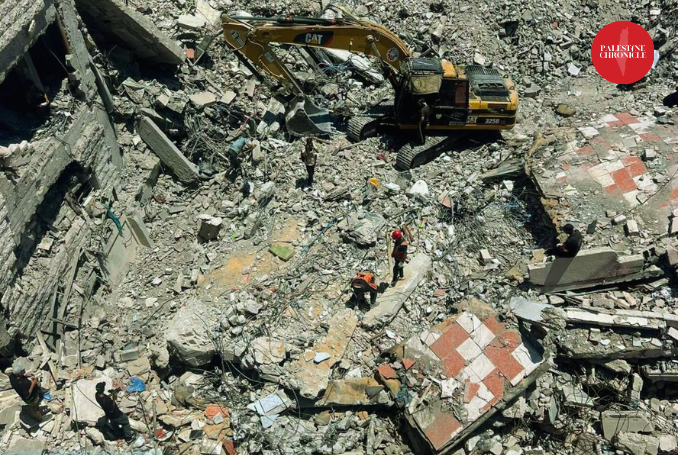
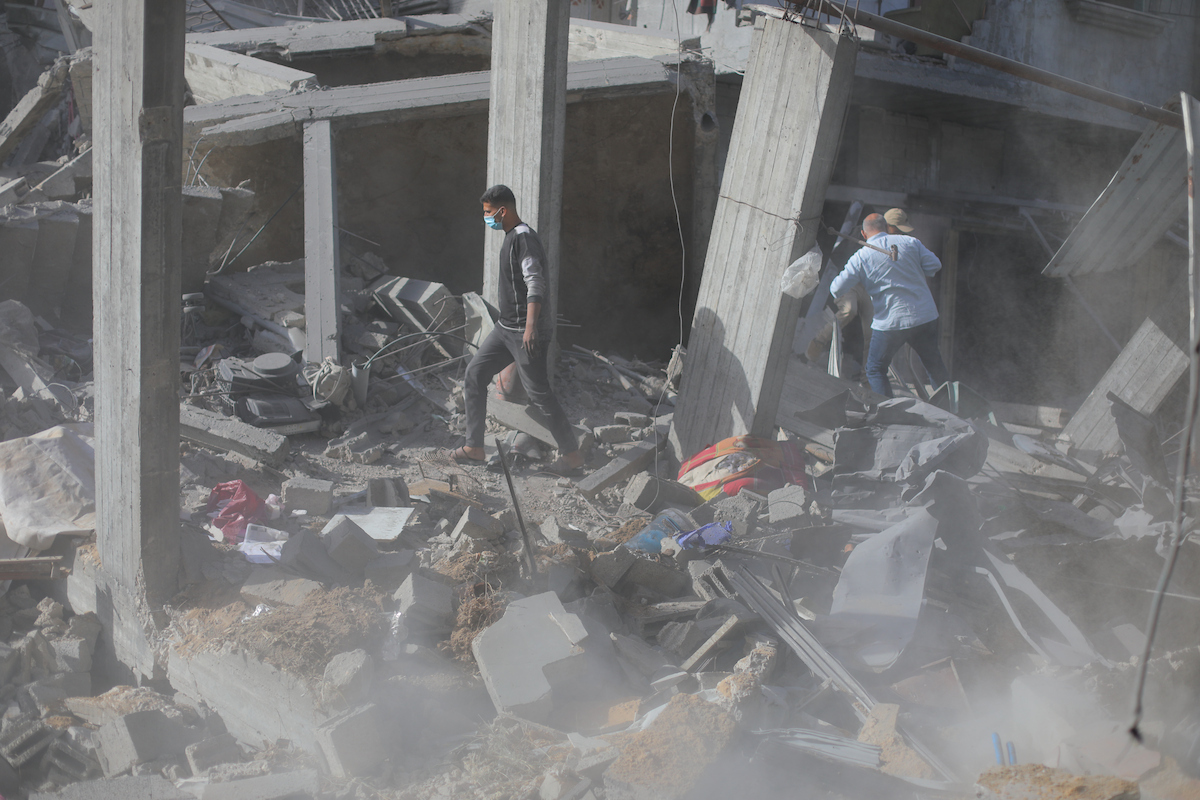
The city of Haifa experienced a night of anxiety after a direct hit on a residential building by a heavy Iranian missile, causing its complete collapse and leaving four people missing under the rubble. Security complications hindered the rescue teams’ access to them.

The situation on the ground became increasingly dangerous, with Israeli police suggesting that the warhead of the missile, weighing hundreds of kilograms, may not have fully detonated, making the building a ticking time bomb.

Behind the scenes of the collapse on the 37th day of the conflict, the scale of the tragedy was revealed:

Rescue teams recovered two bodies and are struggling to reach two others missing by digging a manual tunnel through the rubble. Those with varying injuries were taken to Rambam Hospital, and all neighboring buildings were evacuated for fear of further explosions.

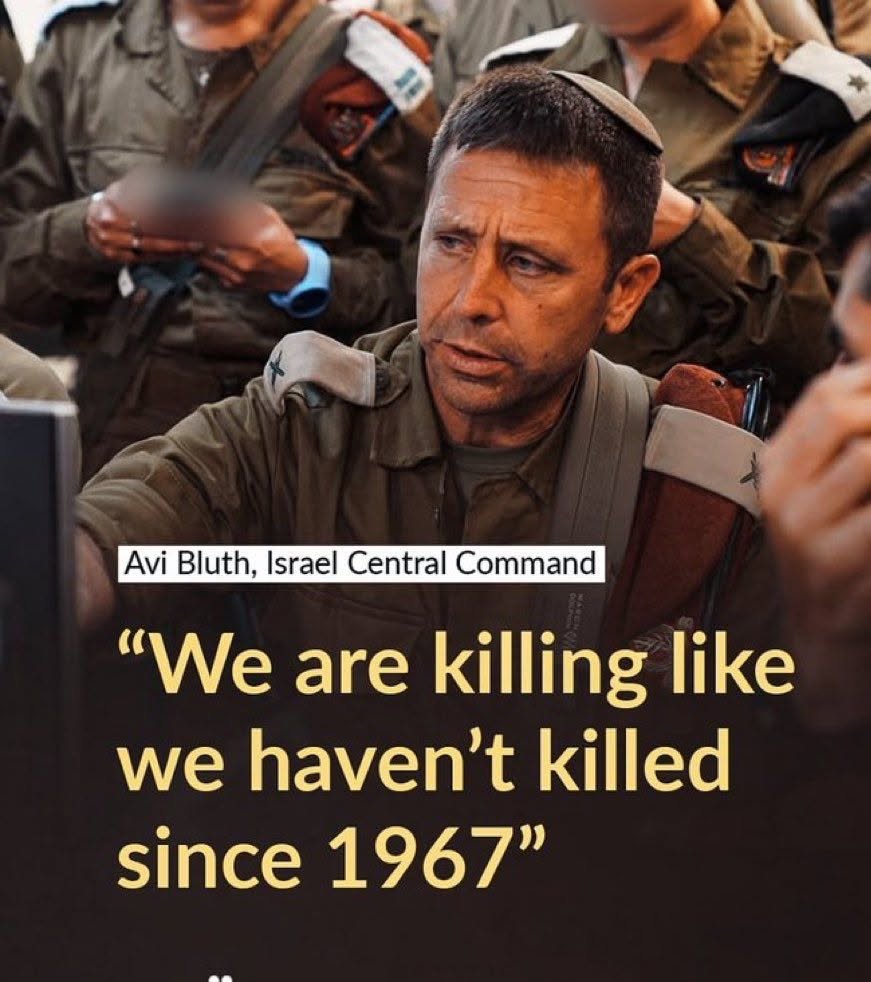
Major General Shay Clapper described the scene as complex, emphasizing that the priority is reaching the missing while being cautious of shrapnel from the unexploded missile. Tehran’s missiles strike deep into the city and disrupt the calculations of the home front:

Iran has focused its recent waves of shelling on Haifa in retaliation for the ongoing US-Israeli airstrikes. Mine clearance experts are racing against time to dismantle the remnants of the heavy projectile before a further catastrophe occurs at the site.

Northern Command concluded its statement by emphasizing that the destruction of the building is immense, even though the warhead may not have been destroyed, reflecting the power of the new generation of projectiles that have entered the front lines.

Continue reading
‘Where Can We Go’ Tahranis Say in Wait For Trump’s Ultimatum

TEHRAN—Like many fathers in Iran, Nariman, a 57-year old teacher, is trying to protect his family from a war that feels closer than ever.

On Monday, he arranged with his two daughters to pack their things immediately and flee Tehran for the relative safety of the northern region of the country near the Caspian Sea where U.S. and Israeli strikes have been less frequent.

Nariman, who did not want to share his last name for safety, made the fraught decision to leave after U.S. President Donald Trump posted an ultimatum on TruthSocial on Sunday: “Tuesday will be Power Plant Day, and Bridge Day, all wrapped up in one, in Iran. There will be nothing like it!!! Open the Fuckin’ Strait, you crazy bastards, or you’ll be living in Hell – JUST WATCH! Praise be to Allah,” Trump wrote.

In a separate post, Trump later added a specific deadline: “Tuesday, 8:00 P.M. Eastern Time.”Most Iranians don’t have access to the global internet because of blackouts, but news travels fast through domestic intranet platforms. Nariman saw the updates and realized the scale of the threat.

“I panicked when I saw this. He wants to ‘blow everything up’ and ‘take the oil?’ He is gonna hit bridges?” Nariman told Drop Site News over the phone, his voice shaking. “I must get my family to safety before things go wrong.”

The family is packing to prepare for a long drive up north, bracing for huge traffic from Tehran of people who have made a similar calculation to flee the capital in the face of Trump’s threat of widespread destruction. When they will return is unclear. But their car is packed with enough clothes and other supplies for what may be an extended time away from home.

Several neighborhoods of Tehran have transformed into scenes of devastation after over a month of Israeli and U.S. airstrikes targeting major public buildings and residential areas of the city. The terrifying rumble of airstrikes has become a regular feature of life in major cities like Tehran, Shiraz, and Isfahan. At least 2,076 people have been killed by US-Israeli attacks since the war began according to the country’s Health Ministry.

Figures from the Human Rights Activist News Agency, a monitoring group funded in part by the U.S. government, put the number at over 3,500 killed, including 1,600 civilians, and several hundred children.

According to figures from the United Nations High Commissioner for Refugees, as many as 3.2 million Iranians had already been internally displaced by the conflict as of mid-March. That number is believed to have risen significantly as the U.S. and Israel have continued to heavily target urban centers in the country.

The war against Iranian infrastructure has already been going on for weeks. Last week, a major bridge connecting the cities of Karaj and Tehran was destroyed in U.S. aerial attacks. The attack killed at least 8 people and wounded dozens more, including in “double tap” attacks after the original bombing that killed several rescuers. Trump later posted footage of the bombing on social media, stating that there would be “much more to follow.”

Israel has also carried numerous strikes targeting steel, petrochemical, and energy targets, as well as pharmaceutical companies and medical centers across Iran—attacks aimed at destroying the country’s substantial industrial base and limiting its ability to recover after a conflict.

Major universities and hospitals across Tehran and other parts of the country have been hit in Israeli and U.S. attacks, raising the fear—even among Iranians opposed to the government—that the war is really about destroying Iranian society rather than achieving its stated aim of stopping the Iranian nuclear program, or diminishing the capabilities of the Islamic Revolutionary Guards Corps.

On Sunday night, U.S. and Israeli airstrikes targeted Sharif University of Technology, one of the most famous engineering schools in the country, in an attack that drew condemnation not just from the government but anti-government activists both in the country and abroad. ”We are caught between two evils: a vengeful Islamic Republic and a deranged, war-loving president,” Nariman said. “I am responsible for my family’s safety, I cannot let them live in peril. I have no choice but to flee Tehran.”

The recent comments by Trump about destroying Iranian power plants and bridges come amid a steady stream of volatile comments by the U.S. president about his intentions for Iran and its people. By now, many Iranians have noticed a pattern: Trump often issues threats while the markets are closed, only to pull back just before they open. There is a widespread hope that his latest ultimatum is simply another bluff.

But for some the situation feels different, owing to recent events. Tehran has been hit increasingly hard by U.S. and Israeli strikes in recent weeks, as the targeting priorities of the two countries shifts from police stations or military sites on the periphery of the city to famous landmarks and infrastructure familiar to all Tehran residents.

“We just have to stay here and hope the Tuesday deadline is another market day bluff.

”The attack on the Tehran-Karaj bridge has alarmed many that fleeing the city may even become impossible if attacks on civilian infrastructure escalate as Trump has promised. While some like Nariman and his family have taken to the road in the wake of his threat, others, however, have no way out even as the air war against Iranian civilians escalates. For those without family outside the capital or the means to travel, the only option is to wait.

“We’ve been sitting in our room just staring at the phone,” said Parisa, a 21-year-old university student living with her roommate in central Tehran to Drop Site News. “My roommate is from a small village in southern Iran and her city is under continuous bombardment; there is no way for us to leave. We don’t have a car, and we don’t have anywhere to shelter. We just have to stay here and hope the Tuesday deadline is another market day bluff.” “I am not panicking because we might lose electricity. We are very well-prepared for that,” she added.

“We bought canned food and hygiene supplies in the first days of the war, and we have been refilling our stocks since.” When asked what she is concerned over, however, she said: “The infrastructure. So many years and countless efforts went into building these things for us. I am afraid we will suffer a major setback. I am young; I don’t want to spend the next five or ten years of my life struggling just to take a hot shower.”

Last-ditch diplomatic efforts are under way to avert further escalation. On Monday, following a Pakistani-mediated proposal for a temporary ceasefire, Iran reiterated its own demands for an agreement setting out a permanent end to the war—trading concessions on its nuclear program for sanctions relief and recognition of its ability to exercise control over the Strait of Hormuz.

The current talks have not resulted in any brisk progress to a final diplomatic agreement that could end the war before Trump’s threat comes into effect.Parisa, like many of her friends, believes that a negotiated solution is unlikely, Iranians are in this for the long haul, and that she must keep her morale high as she stays in Tehran.

Other Iranians who are weighing whether to flee or tough out the war at home are making similar calculations. “I don’t even look at my suitcases anymore,” Elnaz, a 34-year-old painter in Tehran, told Drop Site News. “To flee, you need a destination and the money to get there. I have my brushes and my canvases, and that’s about it. I’m staying because I have nowhere else to go.”

While many are focused on the Tuesday deadline laid out by Trump, Elnaz is also bracing for a longer war. “People act like the world ends or resets on Wednesday morning, but this isn’t going to be over in a weekend,” she said. “Looking at how things are escalating, I think we’re looking at another month or two of this.” “It’s going to be a long, slow process,” she added, referring to the course of the war. “We’re just stuck here waiting.” Drop Site

Continue reading
Iran Shoots Down a US Fighter Jet

Iran shoots down U.S. fighter jet: Iran shot down a U.S. fighter jet over southern Tehran province, according to U.S. and Israeli officials cited by The New York Times as well as reports in Iranian state-affiliated media. An Iranian official told Drop Site News on Friday that the warplane was an F-15 fighter jet and that because of the nature of the strike, the pilot could not evacuate before crashing. Photos of the wreckage were published by the Fars News Agency. “The fighter jet belongs to the 48th Squadron of the U.S. European Command, based at Lakenheath Air Base, England,” the semi-official Tasmin news agency reported. “The squadron has been deployed to the CENTCOM mission area for operations against Iran.”

Continue reading
Report: Strike on US Embassy Causes More Damage Than Previously Thought

An Iranian drone attack on the US Embassy in Saudi Arabia last month caused more damage than previously disclosed, the Wall Street Journal reported on Friday, citing US officials.

The attack occurred on March 3, when a drone bypassed air defenses at Riyadh’s Diplomatic Quarter and struck the American compound. A second drone followed, hitting the same spot and causing another explosion.

The strikes, which took place at night, breached a secure part of the embassy where hundreds of employees would typically work, severely damaging three floors. The CIA station was among the affected areas.

According to the report, Saudi officials initially downplayed the attack, calling it a minor fire with limited damage, but the US officials said the fire lasted for hours and caused significant, irreparable damage to parts of the embassy.

Later that night, more drones were intercepted, with debris landing near a preschool. One drone appeared to target the residence of the top US diplomat in Saudi Arabia, only a few hundred feet from the embassy.

Had the attack occurred during working hours, it could have resulted in mass casualties, officials noted, underscoring the message that Iran can strike at US assets once thought to be secure.

“It was able to produce an indigenously made weapon, fire it across hundreds of miles and put it into the embassy of their top opponent, which means they could have hit anything they wanted in the city,” said Bernard Hudson, a former CIA counterterrorism chief with extensive experience in Persian Gulf states, including Saudi Arabia.

“There’s been a complete blackout on the actual amount of damage done to these places,” he said about US embassies and bases. “That feeds suspicions that a lot more damage may have actually happened.”

Regional tensions have escalated since the US and Israel launched a joint offensive on Iran on Feb. 28, killing more than 1,340 people to date, including then-Supreme Leader Ali Khamenei.​​​​​​​

Tehran has retaliated with drone and missile strikes targeting Israel, as well as Jordan, Iraq, and Gulf countries hosting US military assets. Anadolu

Continue reading